ignored by the CPU).
 - Kernel mode NEON (no users for arm64 yet but work in progress).
 - arm64 kernel Image header extended to accommodate future EFI stub.
 - Remove BogoMIPS reporting (not relevant, it's just the timer
   frequency).
 - Clean-up (EM_AARCH64/EM_ARM to elf-em.h, ELF notes in read-only
   segment, unused variable).
 - Bug-fixes (RAM boundaries not 2MB aligned, perf, includes).
 -----BEGIN PGP SIGNATURE-----
 Version: GnuPG v1.4.9 (GNU/Linux)

 iQIcBAABAgAGBQJSKgPAAAoJEGvWsS0AyF7x4QgP/1Mgb1BwkRaDcIif45hp0ERh
 qg/9nAGb3XJWkmxNvqoZK2rDtY1mCJcIf/SvlcJLASV6DBfdSEoXNNEQs+n4zwg0
 ifStpq1u/Evf0TXeMeUSATgulHoIZswdXrn/exCBmJq3nlOB3Suee8gas0MCjm4Q
 JhcDiXjUpCE5yjKSS6BxXewB7BVSYMvhlWTDECRo27Uo4lyAzvak/aUfQHatS9Ho
 dpr9/yVl5eSsKJqdgMHfUr0LC6rEg0z6xJOHa8gACSOl4qTUCAI1wKtRYcQ0IQ+l
 7FBm6DYFcgT+ZjwnvQjGYvhvTHKo+qXq7WJLPJPHJLxeA9MmQoXYrroDo80Yv7K8
 7tciBbLHO24K0P6bDDtHesMXRIgWStMPhGWzLrLNPmleL2i9w85eSKt3lSMwAq+t
 SdzwJuWYL1iB9XFRom3Ls4NpcVK6RjJ+y/KnI0IIH+ytuDZNM/deXZ4WiUBjYoUm
 yCMA5vX7GgNHI7PDgLNRYzGBFNwZPPx6J6M2FsgGDFcyH5ZHMuod4WcNZU3IqxV9
 refehXBwC5xrXEbkxFBb3UB5Wf7ekVCh/roVnXBoEjdlSE3b+h9W8MCBUn9AbCgt
 WaFr+YaHMq3m2goMPlfLqOGC9tfXSFvNN9AssZIzJaS+zseW9Blf8irb9mFPkE8G
 PiGFtfUkxGR2gwKO7P2g
 =5w0G
 -----END PGP SIGNATURE-----

Merge tag 'arm64-for-linus' of git://git.kernel.org/pub/scm/linux/kernel/git/cmarinas/linux-aarch64

Pull ARM64 update from Catalin Marinas:
 - User tagged pointers support (top 8-bit of user pointers
   automatically ignored by the CPU).
 - Kernel mode NEON (no users for arm64 yet but work in progress).
 - arm64 kernel Image header extended to accommodate future EFI stub.
 - Remove BogoMIPS reporting (not relevant, it's just the timer
   frequency).
 - Clean-up (EM_AARCH64/EM_ARM to elf-em.h, ELF notes in read-only
   segment, unused variable).
 - Bug-fixes (RAM boundaries not 2MB aligned, perf, includes).

* tag 'arm64-for-linus' of git://git.kernel.org/pub/scm/linux/kernel/git/cmarinas/linux-aarch64:
  Documentation/arm64: clarify requirements for DTB placement
  arm64: mm: permit use of tagged pointers at EL0
  Move the EM_ARM and EM_AARCH64 definitions to uapi/linux/elf-em.h
  arm64: Remove unused cpu_name ascii in arch/arm64/mm/proc.S
  arm64: delay: don't bother reporting bogomips in /proc/cpuinfo
  arm64: Fix mapping of memory banks not ending on a PMD_SIZE boundary
  arm64: move elf notes into readonly segment
  arm64: Enable interrupts in the EL0 undef handler
  arm64: Expand arm64 image header
  ARM64: include: asm: include "asm/types.h" in "pgtable-2level-types.h" and "pgtable-3level-types.h"
  arm64: add support for kernel mode NEON
  arm64: perf: fix ARMv8 EVTYPE_MASK to include NSH bit
  arm64: perf: fix group validation when using enable_on_exec
Pull HID updates from Jiri Kosina:
 "Highlights:

   - conversion of HID subsystem to use devm-based resource management,
     from Benjamin Tissoires

   - i2c-hid support for DT bindings, from Benjamin Tissoires

   - much improved support for Win8-multitouch devices, from Benjamin
     Tissoires

   - cleanup of core code using common hidinput_input_event(), from
     David Herrmann

   - fix for bug in implement() access to the bit stream (causing oops)
     that has been present in the code for ages, but devices that are
     able to trigger it have started to appear only now, from Jiri
     Kosina

   - fixes for CVE-2013-2899, CVE-2013-2898, CVE-2013-2896,
     CVE-2013-2892, CVE-2013-2888 (all triggerable only by specially
     crafted malicious HW devices plugged into the system), from Kees
     Cook

   - hidraw oops fix, from Manoj Chourasia

   - various smaller fixes here and there, support for a bunch of new
     devices by various contributors"

* 'for-linus' of git://git.kernel.org/pub/scm/linux/kernel/git/jikos/hid: (53 commits)
  HID: MAINTAINERS: add roccat drivers
  HID: hid-sensor-hub: change kmalloc + memcpy by kmemdup
  HID: hid-sensor-hub: move to devm_kzalloc
  HID: hid-sensor-hub: fix indentation accross the code
  HID: move HID_REPORT_TYPES closer to the report-definitions
  HID: check for NULL field when setting values
  HID: picolcd_core: validate output report details
  HID: sensor-hub: validate feature report details
  HID: ntrig: validate feature report details
  HID: pantherlord: validate output report details
  HID: hid-wiimote: print small buffers via %*phC
  HID: uhid: improve uhid example client
  HID: Correct the USB IDs for the new Macbook Air 6
  HID: wiimote: add support for Guitar-Hero guitars
  HID: wiimote: add support for Guitar-Hero drums
  Input: introduce BTN/ABS bits for drums and guitars
  HID: battery: don't do DMA from stack
  HID: roccat: add support for KonePureOptical v2
  HID: picolcd: Prevent NULL pointer dereference on _remove()
  HID: usbhid: quirk for N-Trig DuoSense Touch Screen
  ...
Support the collection of I/O statistics on user-defined regions of
a DM device.  If no regions are defined no statistics are collected so
there isn't any performance impact.  Only bio-based DM devices are
currently supported.

Each user-defined region specifies a starting sector, length and step.
Individual statistics will be collected for each step-sized area within
the range specified.

The I/O statistics counters for each step-sized area of a region are
in the same format as /sys/block/*/stat or /proc/diskstats but extra
counters (12 and 13) are provided: total time spent reading and
writing in milliseconds.  All these counters may be accessed by sending
the @stats_print message to the appropriate DM device via dmsetup.

The creation of DM statistics will allocate memory via kmalloc or
fallback to using vmalloc space.  At most, 1/4 of the overall system
memory may be allocated by DM statistics.  The admin can see how much
memory is used by reading
/sys/module/dm_mod/parameters/stats_current_allocated_bytes

See Documentation/device-mapper/statistics.txt for more details.

Signed-off-by: Mikulas Patocka <mpatocka@redhat.com>
Signed-off-by: Mike Snitzer <snitzer@redhat.com>
Signed-off-by: Alasdair G Kergon <agk@redhat.com>
Pull networking changes from David Miller:
 "Noteworthy changes this time around:

   1) Multicast rejoin support for team driver, from Jiri Pirko.

   2) Centralize and simplify TCP RTT measurement handling in order to
      reduce the impact of bad RTO seeding from SYN/ACKs.  Also, when
      both timestamps and local RTT measurements are available prefer
      the later because there are broken middleware devices which
      scramble the timestamp.

      From Yuchung Cheng.

   3) Add TCP_NOTSENT_LOWAT socket option to limit the amount of kernel
      memory consumed to queue up unsend user data.  From Eric Dumazet.

   4) Add a "physical port ID" abstraction for network devices, from
      Jiri Pirko.

   5) Add a "suppress" operation to influence fib_rules lookups, from
      Stefan Tomanek.

   6) Add a networking development FAQ, from Paul Gortmaker.

   7) Extend the information provided by tcp_probe and add ipv6 support,
      from Daniel Borkmann.

   8) Use RCU locking more extensively in openvswitch data paths, from
      Pravin B Shelar.

   9) Add SCTP support to openvswitch, from Joe Stringer.

  10) Add EF10 chip support to SFC driver, from Ben Hutchings.

  11) Add new SYNPROXY netfilter target, from Patrick McHardy.

  12) Compute a rate approximation for sending in TCP sockets, and use
      this to more intelligently coalesce TSO frames.  Furthermore, add
      a new packet scheduler which takes advantage of this estimate when
      available.  From Eric Dumazet.

  13) Allow AF_PACKET fanouts with random selection, from Daniel
      Borkmann.

  14) Add ipv6 support to vxlan driver, from Cong Wang"

Resolved conflicts as per discussion.

* git://git.kernel.org/pub/scm/linux/kernel/git/davem/net-next: (1218 commits)
  openvswitch: Fix alignment of struct sw_flow_key.
  netfilter: Fix build errors with xt_socket.c
  tcp: Add missing braces to do_tcp_setsockopt
  caif: Add missing braces to multiline if in cfctrl_linkup_request
  bnx2x: Add missing braces in bnx2x:bnx2x_link_initialize
  vxlan: Fix kernel panic on device delete.
  net: mvneta: implement ->ndo_do_ioctl() to support PHY ioctls
  net: mvneta: properly disable HW PHY polling and ensure adjust_link() works
  icplus: Use netif_running to determine device state
  ethernet/arc/arc_emac: Fix huge delays in large file copies
  tuntap: orphan frags before trying to set tx timestamp
  tuntap: purge socket error queue on detach
  qlcnic: use standard NAPI weights
  ipv6:introduce function to find route for redirect
  bnx2x: VF RSS support - VF side
  bnx2x: VF RSS support - PF side
  vxlan: Notify drivers for listening UDP port changes
  net: usbnet: update addr_assign_type if appropriate
  driver/net: enic: update enic maintainers and driver
  driver/net: enic: Exposing symbols for Cisco's low latency driver
  ...
Conflicts:
	drivers/net/ethernet/stmicro/stmmac/stmmac_platform.c
	net/bridge/br_multicast.c
	net/ipv6/sit.c

The conflicts were minor:

1) sit.c changes overlap with change to ip_tunnel_xmit() signature.

2) br_multicast.c had an overlap between computing max_delay using
   msecs_to_jiffies and turning MLDV2_MRC() into an inline function
   with a name using lowercase instead of uppercase letters.

3) stmmac had two overlapping changes, one which conditionally allocated
   and hooked up a dma_cfg based upon the presence of the pbl OF property,
   and another one handling store-and-forward DMA made.  The latter of
   which should not go into the new of_find_property() basic block.

Signed-off-by: David S. Miller <davem@davemloft.net>
Pull media updates from Mauro Carvalho Chehab:
 "This series contains:
   - Exynos s5p-mfc driver got support for VP8 encoder
   - Some SoC drivers gained support for asynchronous registration
     (needed for DT)
   - The RC subsystem gained support for RC activity LED;
   - New drivers added: a video decoder(adv7842), a video encoder
     (adv7511), a new GSPCA driver (stk1135) and support for Renesas
     R-Car (vsp1)
   - the first SDR kernel driver: mirics msi3101.  Due to some troubles
     with the driver, and because the API is still under discussion, it
     will be merged at staging for 3.12.  Need to rework on it
   - usual new boards additions, fixes, cleanups and driver
     improvements"

* 'v4l_for_linus' of git://git.kernel.org/pub/scm/linux/kernel/git/mchehab/linux-media: (242 commits)
  [media] cx88: Fix regression: CX88_AUDIO_WM8775 can't be 0
  [media] exynos4-is: Fix entity unregistration on error path
  [media] exynos-gsc: Register v4l2 device
  [media] exynos4-is: Fix fimc-lite bayer formats
  [media] em28xx: fix assignment of the eeprom data
  [media] hdpvr: fix iteration over uninitialized lists in hdpvr_probe()
  [media] usbtv: Throw corrupted frames away
  [media] usbtv: Fix deinterlacing
  [media] v4l2: added missing mutex.h include to v4l2-ctrls.h
  [media] DocBook: upgrade media_api DocBook version to 4.2
  [media] ml86v7667: fix compile warning: 'ret' set but not used
  [media] s5p-g2d: Fix registration failure
  [media] media: coda: Fix DT driver data pointer for i.MX27
  [media] s5p-mfc: Fix input/output format reporting
  [media] v4l: vsp1: Fix mutex double lock at streamon time
  [media] v4l: vsp1: Add support for RT clock
  [media] v4l: vsp1: Initialize media device bus_info field
  [media] davinci: vpif_capture: fix error return code in vpif_probe()
  [media] davinci: vpif_display: fix error return code in vpif_probe()
  [media] MAINTAINERS: add entries for adv7511 and adv7842
  ...
Pull KVM updates from Gleb Natapov:
 "The highlights of the release are nested EPT and pv-ticketlocks
  support (hypervisor part, guest part, which is most of the code, goes
  through tip tree).  Apart of that there are many fixes for all arches"

Fix up semantic conflicts as discussed in the pull request thread..

* 'next' of git://git.kernel.org/pub/scm/virt/kvm/kvm: (88 commits)
  ARM: KVM: Add newlines to panic strings
  ARM: KVM: Work around older compiler bug
  ARM: KVM: Simplify tracepoint text
  ARM: KVM: Fix kvm_set_pte assignment
  ARM: KVM: vgic: Bump VGIC_NR_IRQS to 256
  ARM: KVM: Bugfix: vgic_bytemap_get_reg per cpu regs
  ARM: KVM: vgic: fix GICD_ICFGRn access
  ARM: KVM: vgic: simplify vgic_get_target_reg
  KVM: MMU: remove unused parameter
  KVM: PPC: Book3S PR: Rework kvmppc_mmu_book3s_64_xlate()
  KVM: PPC: Book3S PR: Make instruction fetch fallback work for system calls
  KVM: PPC: Book3S PR: Don't corrupt guest state when kernel uses VMX
  KVM: x86: update masterclock when kvmclock_offset is calculated (v2)
  KVM: PPC: Book3S: Fix compile error in XICS emulation
  KVM: PPC: Book3S PR: return appropriate error when allocation fails
  arch: powerpc: kvm: add signed type cast for comparation
  KVM: x86: add comments where MMIO does not return to the emulator
  KVM: vmx: count exits to userspace during invalid guest emulation
  KVM: rename __kvm_io_bus_sort_cmp to kvm_io_bus_cmp
  kvm: optimize away THP checks in kvm_is_mmio_pfn()
  ...
* Added aggressive extent caching using the extent status tree.  This
   can actually decrease memory usage in read-mostly workloads since
   the information is much more compactly stored in the extent status
   tree than if we had to keep the extent tree metadata blocks in the
   buffer cache.  This also improves Asynchronous I/O since it is it
   makes much less likely that we need to do metadata I/O to lookup the
   extent tree information.
 * Improve the recovery after corrupted allocation bitmaps are found
   when running in errors=ignore mode.

 Also fixed some writeback vs. truncate races when using a blocksize
 less than the page size.
 -----BEGIN PGP SIGNATURE-----
 Version: GnuPG v1.4.14 (GNU/Linux)

 iQIcBAABCAAGBQJSJ1SxAAoJENNvdpvBGATw6xAP/250u0YggRHup5cxmkJ7x+EH
 sv/Kbe8r1ftUY7aBQP1awHlVYnOZehh+kYUj+eIVPPXKananhu99qcJy99KFm8W9
 gWVP5G0+zvKD++S8yHKhyKjqUtzZwhlYJU7oyqptPr903CVlfjsKx1OtGvUlbnde
 Hh/e+XpbltICPIa/O6gsE3SyRakbPtI0gvC4GbsD6EvAl+Rj3l6l+Ty9IkDqGFs9
 YCVA2MUly6ZFYNRS8wkOPRP8T8lLwqIa7CNc75bEJPrGQL1R0iiIez0yaoZ83SOu
 HMC6wo3XjfgcsuMwJo/mtYsw06rjQy5oNPD5bISRaDtocI5v5Rv8t5EmANnoJFbu
 gy+psJ0XcKimL1BfsQ4vFCNiAkskkCQaFr2yJbo6VTDtHS8XV39MeMZ6IvcSqO+6
 DQafMcKNiltDbdsywncsee+8ecncv/ZEZDiA6pIUm0lbljPopuzf6sBvxWOFGiHM
 xMBD0eyhns/TzfYHzzI+fTcR+GdBDqAkNOrA9i4medffS6iJDAJ6qC6ZhgQh32oR
 MCfYosVQwxmCInqtCh51+od29rk7ZIuBrPjp1+uMHjHqG5jDKcANgB7g3VAeQOf0
 zuEYTFvGk6cLKfuJtlnaItKXN+eRTtVtfHlLRRq1+wR9UK+dFONV0Jufzs7Y1URI
 LbsmGkgxTL9xZEskZXgQ
 =tosu
 -----END PGP SIGNATURE-----

Merge tag 'ext4_for_linus' of git://git.kernel.org/pub/scm/linux/kernel/git/tytso/ext4

Pull ext4 updates from Ted Ts'o:
 "New features for 3.12:

   - Added aggressive extent caching using the extent status tree.  This
     can actually decrease memory usage in read-mostly workloads since
     the information is much more compactly stored in the extent status
     tree than if we had to keep the extent tree metadata blocks in the
     buffer cache.  This also improves Asynchronous I/O since it is it
     makes much less likely that we need to do metadata I/O to lookup
     the extent tree information.

   - Improve the recovery after corrupted allocation bitmaps are found
     when running in errors=ignore mode.

  Also fixed some writeback vs truncate races when using a blocksize
  less than the page size"

* tag 'ext4_for_linus' of git://git.kernel.org/pub/scm/linux/kernel/git/tytso/ext4: (25 commits)
  ext4: allow specifying external journal by pathname mount option
  ext4: mark group corrupt on group descriptor checksum
  ext4: mark block group as corrupt on inode bitmap error
  ext4: mark block group as corrupt on block bitmap error
  ext4: fix type declaration of ext4_validate_block_bitmap
  ext4: error out if verifying the block bitmap fails
  jbd2: Fix endian mixing problems in the checksumming code
  ext4: isolate ext4_extents.h file
  ext4: Fix misspellings using 'codespell' tool
  ext4: convert write_begin methods to stable_page_writes semantics
  ext4: fix use of potentially uninitialized variables in debugging code
  ext4: fix lost truncate due to race with writeback
  ext4: simplify truncation code in ext4_setattr()
  ext4: fix ext4_writepages() in presence of truncate
  ext4: move test whether extent to map can be extended to one place
  ext4: fix warning in ext4_da_update_reserve_space()
  quota: provide interface for readding allocated space into reserved space
  ext4: avoid reusing recently deleted inodes in no journal mode
  ext4: allocate delayed allocation blocks before rename
  ext4: start handle at least possible moment when renaming files
  ...
Pull x86 spinlock changes from Ingo Molnar:
 "The biggest change here are paravirtualized ticket spinlocks (PV
  spinlocks), which bring a nice speedup on various benchmarks.

  The KVM host side will come to you via the KVM tree"

* 'x86-spinlocks-for-linus' of git://git.kernel.org/pub/scm/linux/kernel/git/tip/tip:
  x86/kvm/guest: Fix sparse warning: "symbol 'klock_waiting' was not declared as static"
  kvm: Paravirtual ticketlocks support for linux guests running on KVM hypervisor
  kvm guest: Add configuration support to enable debug information for KVM Guests
  kvm uapi: Add KICK_CPU and PV_UNHALT definition to uapi
  xen, pvticketlock: Allow interrupts to be enabled while blocking
  x86, ticketlock: Add slowpath logic
  jump_label: Split jumplabel ratelimit
  x86, pvticketlock: When paravirtualizing ticket locks, increment by 2
  x86, pvticketlock: Use callee-save for lock_spinning
  xen, pvticketlocks: Add xen_nopvspin parameter to disable xen pv ticketlocks
  xen, pvticketlock: Xen implementation for PV ticket locks
  xen: Defer spinlock setup until boot CPU setup
  x86, ticketlock: Collapse a layer of functions
  x86, ticketlock: Don't inline _spin_unlock when using paravirt spinlocks
  x86, spinlock: Replace pv spinlocks with pv ticketlocks
The current VFIO_DEVICE_RESET interface only maps to PCI use cases
where we can isolate the reset to the individual PCI function.  This
means the device must support FLR (PCIe or AF), PM reset on D3hot->D0
transition, device specific reset, or be a singleton device on a bus
for a secondary bus reset.  FLR does not have widespread support,
PM reset is not very reliable, and bus topology is dictated by the
system and device design.  We need to provide a means for a user to
induce a bus reset in cases where the existing mechanisms are not
available or not reliable.

This device specific extension to VFIO provides the user with this
ability.  Two new ioctls are introduced:
 - VFIO_DEVICE_PCI_GET_HOT_RESET_INFO
 - VFIO_DEVICE_PCI_HOT_RESET

The first provides the user with information about the extent of
devices affected by a hot reset.  This is essentially a list of
devices and the IOMMU groups they belong to.  The user may then
initiate a hot reset by calling the second ioctl.  We must be
careful that the user has ownership of all the affected devices
found via the first ioctl, so the second ioctl takes a list of file
descriptors for the VFIO groups affected by the reset.  Each group
must have IOMMU protection established for the ioctl to succeed.

Signed-off-by: Alex Williamson <alex.williamson@redhat.com>
Solution:
=========

- Synchronize linux's `include/uapi/linux/in6.h'
  with glibc's `inet/netinet/in.h'.
- Synchronize glibc's `inet/netinet/in.h with linux's
  `include/uapi/linux/in6.h'.
- Allow including the headers in either other.
- First header included defines the structures and macros.

Details:
========

The kernel promises not to break the UAPI ABI so I don't
see why we can't just have the two userspace headers
coordinate?

If you include the kernel headers first you get those,
and if you include the glibc headers first you get those,
and the following patch arranges a coordination and
synchronization between the two.

Let's handle `include/uapi/linux/in6.h' from linux,
and `inet/netinet/in.h' from glibc and ensure they compile
in any order and preserve the required ABI.

These two patches pass the following compile tests:

cat >> test1.c <<EOF
int main (void) {
  return 0;
}
EOF
gcc -c test1.c

cat >> test2.c <<EOF
int main (void) {
  return 0;
}
EOF
gcc -c test2.c

One wrinkle is that the kernel has a different name for one of
the members in ipv6_mreq. In the kernel patch we create a macro
to cover the uses of the old name, and while that's not entirely
clean it's one of the best solutions (aside from an anonymous
union which has other issues).

I've reviewed the code and it looks to me like the ABI is
assured and everything matches on both sides.

Notes:
- You want netinet/in.h to include bits/in.h as early as possible,
  but it needs in_addr so define in_addr early.
- You want bits/in.h included as early as possible so you can use
  the linux specific code to define __USE_KERNEL_DEFS based on
  the _UAPI_* macro definition and use those to cull in.h.
- glibc was missing IPPROTO_MH, added here.

Compile tested and inspected.

Reported-by: Thomas Backlund <tmb@mageia.org>
Cc: Thomas Backlund <tmb@mageia.org>
Cc: libc-alpha@sourceware.org
Cc: YOSHIFUJI Hideaki <yoshfuji@linux-ipv6.org>
Cc: David S. Miller <davem@davemloft.net>
Tested-by: Cong Wang <amwang@redhat.com>
Signed-off-by: Carlos O'Donell <carlos@redhat.com>
Signed-off-by: Cong Wang <amwang@redhat.com>
Signed-off-by: David S. Miller <davem@davemloft.net>
Pull perf changes from Ingo Molnar:
 "As a first remark I'd like to point out that the obsolete '-f'
  (--force) option, which has not done anything for several releases,
  has been removed from 'perf record' and related utilities.  Everyone
  please update muscle memory accordingly! :-)

  Main changes on the perf kernel side:

   - Performance optimizations:
        . for trace events, by Steve Rostedt.
        . for time values, by Peter Zijlstra

   - New hardware support:
        . for Intel Silvermont (22nm Atom) CPUs, by Zheng Yan
        . for Intel SNB-EP uncore PMUs, by Zheng Yan

   - Enhanced hardware support:
        . for Intel uncore PMUs: add filter support for QPI boxes, by Zheng Yan

   - Core perf events code enhancements and fixes:
        . for full-nohz feature handling, by Frederic Weisbecker
        . for group events, by Jiri Olsa
        . for call chains, by Frederic Weisbecker
        . for event stream parsing, by Adrian Hunter

   - New ABI details:
        . Add attr->mmap2 attribute, by Stephane Eranian
        . Add PERF_EVENT_IOC_ID ioctl to return event ID, by Jiri Olsa
        . Export u64 time_zero on the mmap header page to allow TSC
          calculation, by Adrian Hunter
        . Add dummy software event, by Adrian Hunter.
        . Add a new PERF_SAMPLE_IDENTIFIER to make samples always
          parseable, by Adrian Hunter.
        . Make Power7 events available via sysfs, by Runzhen Wang.

   - Code cleanups and refactorings:
        . for nohz-full, by Frederic Weisbecker
        . for group events, by Jiri Olsa

   - Documentation updates:
        . for perf_event_type, by Peter Zijlstra

  Main changes on the perf tooling side (some of these tooling changes
  utilize the above kernel side changes):

   - Lots of 'perf trace' enhancements:

        . Make 'perf trace' command line arguments consistent with
          'perf record', by David Ahern.

        . Allow specifying syscalls a la strace, by Arnaldo Carvalho de Melo.

        . Add --verbose and -o/--output options, by Arnaldo Carvalho de Melo.

        . Support ! in -e expressions, to filter a list of syscalls,
          by Arnaldo Carvalho de Melo.

        . Arg formatting improvements to allow masking arguments in
          syscalls such as futex and open, where the some arguments are
          ignored and thus should not be printed depending on other args,
          by Arnaldo Carvalho de Melo.

        . Beautify futex open, openat, open_by_handle_at, lseek and futex
          syscalls, by Arnaldo Carvalho de Melo.

        . Add option to analyze events in a file versus live, so that
          one can do:

           [root@zoo ~]# perf record -a -e raw_syscalls:* sleep 1
           [ perf record: Woken up 0 times to write data ]
           [ perf record: Captured and wrote 25.150 MB perf.data (~1098836 samples) ]
           [root@zoo ~]# perf trace -i perf.data -e futex --duration 1
              17.799 ( 1.020 ms): 7127 futex(uaddr: 0x7fff3f6c6674, op: 393, val: 1, utime: 0x7fff3f6c6470, ua
             113.344 (95.429 ms): 7127 futex(uaddr: 0x7fff3f6c6674, op: 393, val: 1, utime: 0x7fff3f6c6470, uaddr2: 0x7fff3f6c6648, val3: 4294967
             133.778 ( 1.042 ms): 18004 futex(uaddr: 0x7fff3f6c6674, op: 393, val: 1, utime: 0x7fff3f6c6470, uaddr2: 0x7fff3f6c6648, val3: 429496
           [root@zoo ~]#

          By David Ahern.

        . Honor target pid / tid options when analyzing a file, by David Ahern.

        . Introduce better formatting of syscall arguments, including so
          far beautifiers for mmap, madvise, syscall return values,
          by Arnaldo Carvalho de Melo.

        . Handle HUGEPAGE defines in the mmap beautifier, by David Ahern.

   - 'perf report/top' enhancements:

        . Do annotation using /proc/kcore and /proc/kallsyms when
          available, removing the forced need for a vmlinux file kernel
          assembly annotation. This also improves this use case because
          vmlinux has just the initial kernel image, not what is actually
          in use after various code patchings by things like alternatives.
          By Adrian Hunter.

        . Add --ignore-callees=<regex> option to collapse undesired parts
          of call graphs, by Greg Price.

        . Simplify symbol filtering by doing it at machine class level,
          by Adrian Hunter.

        . Add support for callchains in the gtk UI, by Namhyung Kim.

        . Add --objdump option to 'perf top', by Sukadev Bhattiprolu.

   - 'perf kvm' enhancements:

        . Add option to print only events that exceed a specified time
          duration, by David Ahern.

        . Improve stack trace printing, by David Ahern.

        . Update documentation of the live command, by David Ahern

        . Add perf kvm stat live mode that combines aspects of 'perf kvm
          stat' record and report, by David Ahern.

        . Add option to analyze specific VM in perf kvm stat report, by
          David Ahern.

        . Do not require /lib/modules/* on a guest, by Jason Wessel.

   - 'perf script' enhancements:

        . Fix symbol offset computation for some dsos, by David Ahern.

        . Fix named threads support, by David Ahern.

        . Don't install scripting files files when perl/python support
          is disabled, by Arnaldo Carvalho de Melo.

   - 'perf test' enhancements:

        . Add various improvements and fixes to the "vmlinux matches
          kallsyms" 'perf test' entry, related to the /proc/kcore
          annotation feature. By Adrian Hunter.

        . Add sample parsing test, by Adrian Hunter.

        . Add test for reading object code, by Adrian Hunter.

        . Add attr record group sampling test, by Jiri Olsa.

        . Misc testing infrastructure improvements and other details,
          by Jiri Olsa.

   - 'perf list' enhancements:

        . Skip unsupported hardware events, by Namhyung Kim.

        . List pmu events, by Andi Kleen.

   - 'perf diff' enhancements:

        . Add support for more than two files comparison, by Jiri Olsa.

   - 'perf sched' enhancements:

        . Various improvements, including removing reliance on some
          scheduler tracepoints that provide the same information as the
          PERF_RECORD_{FORK,EXIT} events. By David Ahern.

        . Remove odd build stall by moving a large struct initialization
          from a local variable to a global one, by Namhyung Kim.

   - 'perf stat' enhancements:

        . Add --initial-delay option to skip measuring for a defined
          startup phase, by Andi Kleen.

   - Generic perf tooling infrastructure/plumbing changes:

        . Tidy up sample parsing validation, by Adrian Hunter.

        . Fix up jobserver setup in libtraceevent Makefile.
          by Arnaldo Carvalho de Melo.

        . Debug improvements, by Adrian Hunter.

        . Fix correlation of samples coming after PERF_RECORD_EXIT event,
          by David Ahern.

        . Improve robustness of the topology parsing code,
          by Stephane Eranian.

        . Add group leader sampling, that allows just one event in a group
          to sample while the other events have just its values read,
          by Jiri Olsa.

        . Add support for a new modifier "D", which requests that the
          event, or group of events, be pinned to the PMU.
          By Michael Ellerman.

        . Support callchain sorting based on addresses, by Andi Kleen

        . Prep work for multi perf data file storage, by Jiri Olsa.

        . libtraceevent cleanups, by Namhyung Kim.

  And lots and lots of other fixes and code reorganizations that did not
  make it into the list, see the shortlog, diffstat and the Git log for
  details!"

[ Also merge a leftover from the 3.11 cycle ]

* 'perf-urgent-for-linus' of git://git.kernel.org/pub/scm/linux/kernel/git/tip/tip:
  perf: Prevent race in unthrottling code

* 'perf-core-for-linus' of git://git.kernel.org/pub/scm/linux/kernel/git/tip/tip: (237 commits)
  perf trace: Tell arg formatters the arg index
  perf trace: Add beautifier for open's flags arg
  perf trace: Add beautifier for lseek's whence arg
  perf tools: Fix symbol offset computation for some dsos
  perf list: Skip unsupported events
  perf tests: Add 'keep tracking' test
  perf tools: Add support for PERF_COUNT_SW_DUMMY
  perf: Add a dummy software event to keep tracking
  perf trace: Add beautifier for futex 'operation' parm
  perf trace: Allow syscall arg formatters to mask args
  perf: Convert kmalloc_node(...GFP_ZERO...) to kzalloc_node()
  perf: Export struct perf_branch_entry to userspace
  perf: Add attr->mmap2 attribute to an event
  perf/x86: Add Silvermont (22nm Atom) support
  perf/x86: use INTEL_UEVENT_EXTRA_REG to define MSR_OFFCORE_RSP_X
  perf trace: Handle missing HUGEPAGE defines
  perf trace: Honor target pid / tid options when analyzing a file
  perf trace: Add option to analyze events in a file versus live
  perf evlist: Add tracepoint lookup by name
  perf tests: Add a sample parsing test
  ...
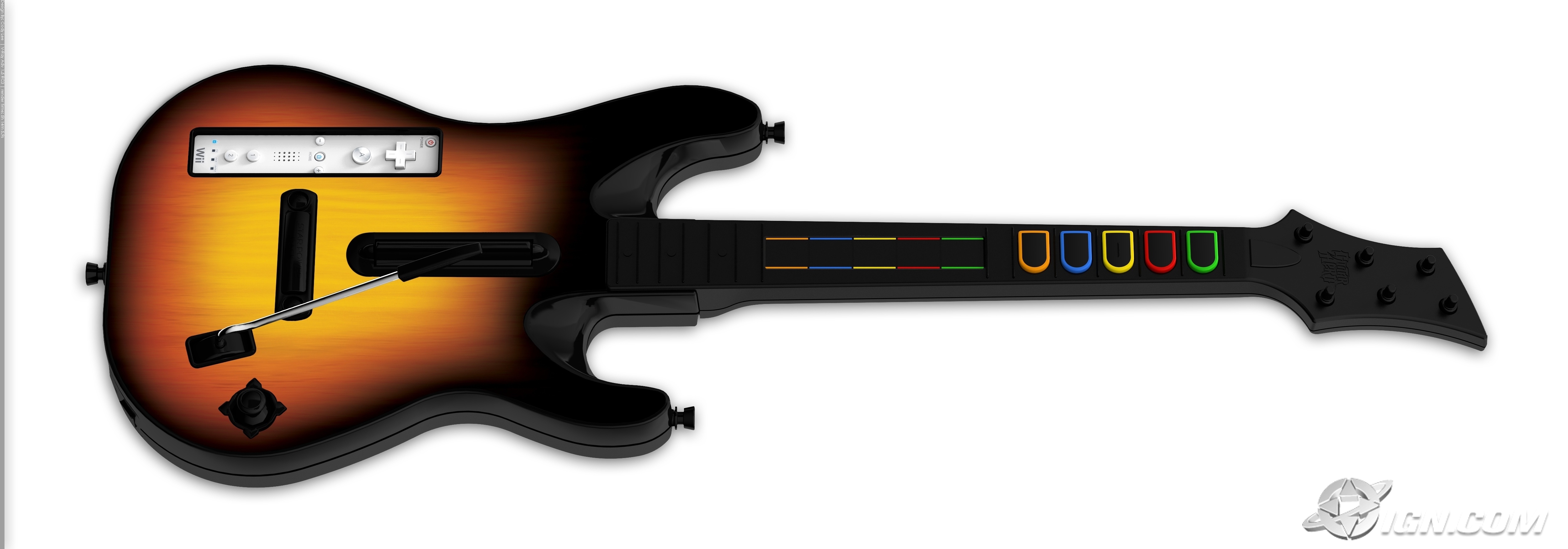
There are a bunch of guitar and drums devices out there that all report
similar data. To avoid reporting this as BTN_MISC or ABS_MISC, we
allocate some proper namespace for them. Note that most of these devices
are toys and we cannot report any sophisticated physics via this API.

I did some google-images research and tried to provide definitions that
work with all common devices. That's why I went with 4 toms, 4 cymbals,
one bass, one hi-hat. I haven't seen other drums and I doubt that we need
any additions to that. Anyway, the naming-scheme is intentionally done in
an extensible way.

For guitars, we support 5 frets (normally aligned vertically, compared to
the real horizontal layouts), a single strum-bar with up/down directions,
an optional fret-board and a whammy-bar.

Most of the devices provide pressure values so I went with ABS_* bits. If
we ever support devices which only provide digital input, we have to
decide whether to emulate pressure data or add additional BTN_* bits.

If someone is not familiar with these devices, here are two pictures which
provide almost all introduced interfaces (or try the given keywords
with a google-image search):
  Guitar: ("guitar hero world tour guitar")
    http://images1.wikia.nocookie.net/__cb20120911023442/applezone/es/images/f/f9/Wii_Guitar.jpg
  Drums: ("guitar hero drums")
    http://oyster.ignimgs.com/franchises/images/03/55/35526_band-hero-drum-set-hands-on-20090929040735768.jpg

Signed-off-by: David Herrmann <dh.herrmann@gmail.com>
Acked-by: Dmitry Torokhov <dmitry.torokhov@gmail.com>
Signed-off-by: Jiri Kosina <jkosina@suse.cz>
RFC 4443 has defined two additional codes for ICMPv6 type 1 (destination
unreachable) messages:
        5 - Source address failed ingress/egress policy
	6 - Reject route to destination

Now they are treated as protocol error and icmpv6_err_convert() converts them
to EPROTO.

RFC 4443 says:
	"Codes 5 and 6 are more informative subsets of code 1."

Treat codes 5 and 6 as code 1 (EACCES)

Btw, connect() returning -EPROTO confuses firefox, so that fallback to
other/IPv4 addresses does not work:
https://bugzilla.mozilla.org/show_bug.cgi?id=910773

Signed-off-by: Jiri Bohac <jbohac@suse.cz>
Acked-by: Hannes Frederic Sowa <hannes@stressinduktion.org>
Signed-off-by: David S. Miller <davem@davemloft.net>
Marc Kleine-Budde says:

====================
this is a pull request for net-next. There are two patches from Gerhard
Sittig, which improves the clock handling on mpc5121. Oliver Hartkopp
provides a patch that adds a per rule limitation of frame hops.
====================

Signed-off-by: David S. Miller <davem@davemloft.net>
John W. Linville says:

====================
Please accept this batch of updates intended for the 3.12 stream.

For the mac80211 bits, Johannes says this:

"This time I have various improvements all over the place: IBSS, mesh,
testmode, AP client powersave handling, one of the rare rfkill patches
and some code cleanup."

Also for mac80211:

"And I also have some more changes for -next, just a few small fixes and
improvements, nothing really stands out."

And for iwlwifi:

"This time I have some powersave work (notably uAPSD support), CQM
offloads, support for a new firmware API and various code cleanups."

Regarding the Bluetooth bits, Gustavo says:

"Patches to 3.12, here we have:

* implementation of a proper tty_port for RFCOMM devices, this fixes some
issues people were seeing lately in the kernel.
* Add voice_setting option for SCO, it is used for SCO Codec selection
* bugfixes, small improvements and clean ups"

For the NFC bits, Samuel says:

"With this one we have:

- A few pn533 improvements and minor fixes. Testing our pn533 driver
  against Google's NCI stack triggered a few issues that we fixed now.
  We also added Tx fragmentation support to this driver.

- More NFC secure element handling. We added a GET_SE netlink command
  for getting all the discovered secure elements, and we defined 2
  additional secure element netlink event (transaction and connectivity).
  We also fixed a couple of typos and copy-paste bugs from the secure
  element handling code.

- Firmware download support for the pn544 driver. This chipset can enter a
  special mode where it's waiting for firmware blobs to replace the
  already flashed one. We now support that mode."

With repect to the ath tree, Kalle says:

"New features in ath10k are rx/tx checsumming in hw and survey scan
implemented by Michal. Also he made fixes to different areas of the
driver, most notable being fixing the case when using two streams and
reducing the number of interface combinations to avoid firmware crashes.
Bartosz did a clean related to how we handle SoC power save in PCI
layer.

For ath6kl Mohammed and Vasanth sent each a patch to fix two infrequent
crashes."

I also pulled the wireless tree into wireless-next to support a
request from Johannes.  On top of all that, there are the usual
sort of driver updates.  The mwifiex, brcmfmac, brcmsmac, ath9k,
and rt2x00 drivers all get some attention, as does the bcma bus and
a few other random bits here and there.
====================

Signed-off-by: David S. Miller <davem@davemloft.net>
To build user programs that call the NVMe ioctls, we need to have a
user header file.  Catch up to the new way of doing that by splitting
the header file into kernel and uapi portions.

Signed-off-by: Matthew Wilcox <matthew.r.wilcox@intel.com>
Here's the big tty/serial driver pull request for 3.12-rc1.

 Lots of n_tty reworks to resolve some very long-standing issues, removing the
 3-4 different locks that were taken for every character.  This code has been
 beaten on for a long time in linux-next with no reported regressions.

 Other than that, a range of serial and tty driver updates and revisions.  Full
 details in the shortlog.

 Signed-off-by: Greg Kroah-Hartman <gregkh@linuxfoundation.org>
 -----BEGIN PGP SIGNATURE-----
 Version: GnuPG v2.0.21 (GNU/Linux)

 iEYEABECAAYFAlIlI6UACgkQMUfUDdst+ym7kgCgmysv/TVeqsdvmkiO2eEB4+xs
 ddwAoMqkJ/enCJ2f+fC8y2Wz+5+kDrU7
 =CiCp
 -----END PGP SIGNATURE-----

Merge tag 'tty-3.12-rc1' of git://git.kernel.org/pub/scm/linux/kernel/git/gregkh/tty

Pull tty/serial driver patches from Greg KH:
 "Here's the big tty/serial driver pull request for 3.12-rc1.

  Lots of n_tty reworks to resolve some very long-standing issues,
  removing the 3-4 different locks that were taken for every character.
  This code has been beaten on for a long time in linux-next with no
  reported regressions.

  Other than that, a range of serial and tty driver updates and
  revisions.  Full details in the shortlog"

* tag 'tty-3.12-rc1' of git://git.kernel.org/pub/scm/linux/kernel/git/gregkh/tty: (226 commits)
  hvc_xen: Remove unnecessary __GFP_ZERO from kzalloc
  serial: imx: initialize the local variable
  tty: ar933x_uart: add device tree support and binding documentation
  tty: ar933x_uart: allow to build the driver as a module
  ARM: dts: msm: Update uartdm compatible strings
  devicetree: serial: Document msm_serial bindings
  serial: unify serial bindings into a single dir
  serial: fsl-imx-uart: Cleanup duplicate device tree binding
  tty: ar933x_uart: use config_enabled() macro to clean up ifdefs
  tty: ar933x_uart: remove superfluous assignment of ar933x_uart_driver.nr
  tty: ar933x_uart: use the clk API to get the uart clock
  tty: serial: cpm_uart: Adding proper request of GPIO used by cpm_uart driver
  serial: sirf: fix the amount of serial ports
  serial: sirf: define macro for some magic numbers of USP
  serial: icom: move array overflow checks earlier
  TTY: amiserial, remove unnecessary platform_set_drvdata()
  serial: st-asc: remove unnecessary platform_set_drvdata()
  msm_serial: Send more than 1 character on the console w/ UARTDM
  msm_serial: Add support for non-GSBI UARTDM devices
  msm_serial: Switch clock consumer strings and simplify code
  ...
When an event is disabled the "tracking" events selected by the 'mmap',
'comm' and 'task' bits of struct perf_event_attr, are also disabled.
However, the information those events provide is necessary to resolve
symbols for when the main event is re-enabled.

The "tracking" events can be kept enabled by putting them on another
event, but that requires an event that otherwise does nothing.  A new
software event PERF_COUNT_SW_DUMMY is added for that purpose.

Signed-off-by: Adrian Hunter <adrian.hunter@intel.com>
Acked-by: Peter Zijlstra <peterz@infradead.org>
Cc: David Ahern <dsahern@gmail.com>
Cc: Frederic Weisbecker <fweisbec@gmail.com>
Cc: Ingo Molnar <mingo@redhat.com>
Cc: Jiri Olsa <jolsa@redhat.com>
Cc: Mike Galbraith <efault@gmx.de>
Cc: Namhyung Kim <namhyung@gmail.com>
Cc: Paul Mackerras <paulus@samba.org>
Cc: Peter Zijlstra <a.p.zijlstra@chello.nl>
Cc: Stephane Eranian <eranian@google.com>
Link: http://lkml.kernel.org/r/1377975053-3811-2-git-send-email-adrian.hunter@intel.com
Signed-off-by: Arnaldo Carvalho de Melo <acme@redhat.com>
If PERF_SAMPLE_BRANCH_STACK is enabled then samples are returned
with the format { u64 from, to, flags } but the flags layout
is not specified.

This field has the type struct perf_branch_entry; move this
definition into include/uapi/linux/perf_event.h so users can
access these fields.

This is similar to the existing inclusion of perf_mem_data_src in
the include/uapi/linux/perf_event.h file.

Signed-off-by: Vince Weaver <vincent.weaver@maine.edu>
Acked-by: Stephane Eranian <eranian@google.com>
Signed-off-by: Peter Zijlstra <peterz@infradead.org>
Link: http://lkml.kernel.org/r/alpine.DEB.2.10.1308231544420.1889@vincent-weaver-1.um.maine.edu
Signed-off-by: Ingo Molnar <mingo@kernel.org>
Adds a new PERF_RECORD_MMAP2 record type which is essence
an expanded version of PERF_RECORD_MMAP.

Used to request mmap records with more information about
the mapping, including device major, minor and the inode
number and generation for mappings associated with files
or shared memory segments. Works for code and data
(with attr->mmap_data set).

Existing PERF_RECORD_MMAP record is unmodified by this patch.

Signed-off-by: Stephane Eranian <eranian@google.com>
Signed-off-by: Peter Zijlstra <peterz@infradead.org>
Cc: Al Viro <viro@zeniv.linux.org.uk>
Link: http://lkml.kernel.org/r/1377079825-19057-2-git-send-email-eranian@google.com
[ Added Al to the Cc:. Are the ino, maj/min exports of vma->vm_file OK? ]
Signed-off-by: Ingo Molnar <mingo@kernel.org>
Signed-off-by: Mike Frysinger <vapier@gentoo.org>
Signed-off-by: Josef Bacik <jbacik@fusionio.com>
Signed-off-by: Chris Mason <chris.mason@fusionio.com>
This patch adds an ioctl, BTRFS_IOC_FILE_EXTENT_SAME which will try to
de-duplicate a list of extents across a range of files.

Internally, the ioctl re-uses code from the clone ioctl. This avoids
rewriting a large chunk of extent handling code.

Userspace passes in an array of file, offset pairs along with a length
argument. The ioctl will then (for each dedupe) do a byte-by-byte comparison
of the user data before deduping the extent. Status and number of bytes
deduped are returned for each operation.

Signed-off-by: Mark Fasheh <mfasheh@suse.de>
Reviewed-by: Zach Brown <zab@redhat.com>
Signed-off-by: Josef Bacik <jbacik@fusionio.com>
Signed-off-by: Chris Mason <chris.mason@fusionio.com>
This patch adds IPv6 support to vxlan device, as the new version
RFC already mentions it:

   http://tools.ietf.org/html/draft-mahalingam-dutt-dcops-vxlan-03

Cc: David Stevens <dlstevens@us.ibm.com>
Cc: Stephen Hemminger <stephen@networkplumber.org>
Cc: David S. Miller <davem@davemloft.net>
Signed-off-by: Cong Wang <amwang@redhat.com>
Signed-off-by: David S. Miller <davem@davemloft.net>
- Uses perfect flow match (not stochastic hash like SFQ/FQ_codel)
- Uses the new_flow/old_flow separation from FQ_codel
- New flows get an initial credit allowing IW10 without added delay.
- Special FIFO queue for high prio packets (no need for PRIO + FQ)
- Uses a hash table of RB trees to locate the flows at enqueue() time
- Smart on demand gc (at enqueue() time, RB tree lookup evicts old
  unused flows)
- Dynamic memory allocations.
- Designed to allow millions of concurrent flows per Qdisc.
- Small memory footprint : ~8K per Qdisc, and 104 bytes per flow.
- Single high resolution timer for throttled flows (if any).
- One RB tree to link throttled flows.
- Ability to have a max rate per flow. We might add a socket option
  to add per socket limitation.

Attempts have been made to add TCP pacing in TCP stack, but this
seems to add complex code to an already complex stack.

TCP pacing is welcomed for flows having idle times, as the cwnd
permits TCP stack to queue a possibly large number of packets.

This removes the 'slow start after idle' choice, hitting badly
large BDP flows, and applications delivering chunks of data
as video streams.

Nicely spaced packets :
Here interface is 10Gbit, but flow bottleneck is ~20Mbit

cwin is big, yet FQ avoids the typical bursts generated by TCP
(as in netperf TCP_RR -- -r 100000,100000)

15:01:23.545279 IP A > B: . 78193:81089(2896) ack 65248 win 3125 <nop,nop,timestamp 1115 11597805>
15:01:23.545394 IP B > A: . ack 81089 win 3668 <nop,nop,timestamp 11597985 1115>
15:01:23.546488 IP A > B: . 81089:83985(2896) ack 65248 win 3125 <nop,nop,timestamp 1115 11597805>
15:01:23.546565 IP B > A: . ack 83985 win 3668 <nop,nop,timestamp 11597986 1115>
15:01:23.547713 IP A > B: . 83985:86881(2896) ack 65248 win 3125 <nop,nop,timestamp 1115 11597805>
15:01:23.547778 IP B > A: . ack 86881 win 3668 <nop,nop,timestamp 11597987 1115>
15:01:23.548911 IP A > B: . 86881:89777(2896) ack 65248 win 3125 <nop,nop,timestamp 1115 11597805>
15:01:23.548949 IP B > A: . ack 89777 win 3668 <nop,nop,timestamp 11597988 1115>
15:01:23.550116 IP A > B: . 89777:92673(2896) ack 65248 win 3125 <nop,nop,timestamp 1115 11597805>
15:01:23.550182 IP B > A: . ack 92673 win 3668 <nop,nop,timestamp 11597989 1115>
15:01:23.551333 IP A > B: . 92673:95569(2896) ack 65248 win 3125 <nop,nop,timestamp 1115 11597805>
15:01:23.551406 IP B > A: . ack 95569 win 3668 <nop,nop,timestamp 11597991 1115>
15:01:23.552539 IP A > B: . 95569:98465(2896) ack 65248 win 3125 <nop,nop,timestamp 1115 11597805>
15:01:23.552576 IP B > A: . ack 98465 win 3668 <nop,nop,timestamp 11597992 1115>
15:01:23.553756 IP A > B: . 98465:99913(1448) ack 65248 win 3125 <nop,nop,timestamp 1115 11597805>
15:01:23.554138 IP A > B: P 99913:100001(88) ack 65248 win 3125 <nop,nop,timestamp 1115 11597805>
15:01:23.554204 IP B > A: . ack 100001 win 3668 <nop,nop,timestamp 11597993 1115>
15:01:23.554234 IP B > A: . 65248:68144(2896) ack 100001 win 3668 <nop,nop,timestamp 11597993 1115>
15:01:23.555620 IP B > A: . 68144:71040(2896) ack 100001 win 3668 <nop,nop,timestamp 11597993 1115>
15:01:23.557005 IP B > A: . 71040:73936(2896) ack 100001 win 3668 <nop,nop,timestamp 11597993 1115>
15:01:23.558390 IP B > A: . 73936:76832(2896) ack 100001 win 3668 <nop,nop,timestamp 11597993 1115>
15:01:23.559773 IP B > A: . 76832:79728(2896) ack 100001 win 3668 <nop,nop,timestamp 11597993 1115>
15:01:23.561158 IP B > A: . 79728:82624(2896) ack 100001 win 3668 <nop,nop,timestamp 11597994 1115>
15:01:23.562543 IP B > A: . 82624:85520(2896) ack 100001 win 3668 <nop,nop,timestamp 11597994 1115>
15:01:23.563928 IP B > A: . 85520:88416(2896) ack 100001 win 3668 <nop,nop,timestamp 11597994 1115>
15:01:23.565313 IP B > A: . 88416:91312(2896) ack 100001 win 3668 <nop,nop,timestamp 11597994 1115>
15:01:23.566698 IP B > A: . 91312:94208(2896) ack 100001 win 3668 <nop,nop,timestamp 11597994 1115>
15:01:23.568083 IP B > A: . 94208:97104(2896) ack 100001 win 3668 <nop,nop,timestamp 11597994 1115>
15:01:23.569467 IP B > A: . 97104:100000(2896) ack 100001 win 3668 <nop,nop,timestamp 11597994 1115>
15:01:23.570852 IP B > A: . 100000:102896(2896) ack 100001 win 3668 <nop,nop,timestamp 11597994 1115>
15:01:23.572237 IP B > A: . 102896:105792(2896) ack 100001 win 3668 <nop,nop,timestamp 11597994 1115>
15:01:23.573639 IP B > A: . 105792:108688(2896) ack 100001 win 3668 <nop,nop,timestamp 11597994 1115>
15:01:23.575024 IP B > A: . 108688:111584(2896) ack 100001 win 3668 <nop,nop,timestamp 11597994 1115>
15:01:23.576408 IP B > A: . 111584:114480(2896) ack 100001 win 3668 <nop,nop,timestamp 11597994 1115>
15:01:23.577793 IP B > A: . 114480:117376(2896) ack 100001 win 3668 <nop,nop,timestamp 11597994 1115>

TCP timestamps show that most packets from B were queued in the same ms
timeframe (TSval 1159799{3,4}), but FQ managed to send them right
in time to avoid a big burst.

In slow start or steady state, very few packets are throttled [1]

FQ gets a bunch of tunables as :

  limit : max number of packets on whole Qdisc (default 10000)

  flow_limit : max number of packets per flow (default 100)

  quantum : the credit per RR round (default is 2 MTU)

  initial_quantum : initial credit for new flows (default is 10 MTU)

  maxrate : max per flow rate (default : unlimited)

  buckets : number of RB trees (default : 1024) in hash table.
               (consumes 8 bytes per bucket)

  [no]pacing : disable/enable pacing (default is enable)

All of them can be changed on a live qdisc.

$ tc qd add dev eth0 root fq help
Usage: ... fq [ limit PACKETS ] [ flow_limit PACKETS ]
              [ quantum BYTES ] [ initial_quantum BYTES ]
              [ maxrate RATE  ] [ buckets NUMBER ]
              [ [no]pacing ]

$ tc -s -d qd
qdisc fq 8002: dev eth0 root refcnt 32 limit 10000p flow_limit 100p buckets 256 quantum 3028 initial_quantum 15140
 Sent 216532416 bytes 148395 pkt (dropped 0, overlimits 0 requeues 14)
 backlog 0b 0p requeues 14
  511 flows, 511 inactive, 0 throttled
  110 gc, 0 highprio, 0 retrans, 1143 throttled, 0 flows_plimit

[1] Except if initial srtt is overestimated, as if using
cached srtt in tcp metrics. We'll provide a fix for this issue.

Signed-off-by: Eric Dumazet <edumazet@google.com>
Cc: Yuchung Cheng <ycheng@google.com>
Cc: Neal Cardwell <ncardwell@google.com>
Signed-off-by: David S. Miller <davem@davemloft.net>
Usually the received CAN frames can be processed/routed as much as 'max_hops'
times (which is given at module load time of the can-gw module).
Introduce a new configuration option to reduce the number of possible hops
for a specific gateway rule to a value smaller then max_hops.

Signed-off-by: Oliver Hartkopp <socketcan@hartkopp.net>
Signed-off-by: Marc Kleine-Budde <mkl@pengutronix.de>
We currently allow for different fanout scheduling policies in pf_packet
such as scheduling by skb's rxhash, round-robin, by cpu, and rollover.
Also allow for a random, equidistributed selection of the socket from the
fanout process group.

Signed-off-by: Daniel Borkmann <dborkman@redhat.com>
Signed-off-by: David S. Miller <davem@davemloft.net>
This patch implements RFC6980: Drop fragmented ndisc packets by
default. If a fragmented ndisc packet is received the user is informed
that it is possible to disable the check.

Cc: Fernando Gont <fernando@gont.com.ar>
Cc: YOSHIFUJI Hideaki <yoshfuji@linux-ipv6.org>
Signed-off-by: Hannes Frederic Sowa <hannes@stressinduktion.org>
Signed-off-by: David S. Miller <davem@davemloft.net>
The event stream is not always parsable because the format of a sample
is dependent on the sample_type of the selected event.  When there is
more than one selected event and the sample_types are not the same then
parsing becomes problematic.  A sample can be matched to its selected
event using the ID that is allocated when the event is opened.
Unfortunately, to get the ID from the sample means first parsing it.

This patch adds a new sample format bit PERF_SAMPLE_IDENTIFER that puts
the ID at a fixed position so that the ID can be retrieved without
parsing the sample.  For sample events, that is the first position
immediately after the header.  For non-sample events, that is the last
position.

In this respect parsing samples requires that the sample_type and ID
values are recorded.  For example, perf tools records struct
perf_event_attr and the IDs within the perf.data file.  Those must be
read first before it is possible to parse samples found later in the
perf.data file.

Signed-off-by: Adrian Hunter <adrian.hunter@intel.com>
Tested-by: Stephane Eranian <eranian@google.com>
Acked-by: Peter Zijlstra <peterz@infradead.org>
Cc: David Ahern <dsahern@gmail.com>
Cc: Frederic Weisbecker <fweisbec@gmail.com>
Cc: Ingo Molnar <mingo@kernel.org>
Cc: Jiri Olsa <jolsa@redhat.com>
Cc: Mike Galbraith <efault@gmx.de>
Cc: Namhyung Kim <namhyung@gmail.com>
Cc: Paul Mackerras <paulus@samba.org>
Cc: Peter Zijlstra <peterz@infradead.org>
Cc: Stephane Eranian <eranian@google.com>
Link: http://lkml.kernel.org/r/1377591794-30553-6-git-send-email-adrian.hunter@intel.com
Signed-off-by: Arnaldo Carvalho de Melo <acme@redhat.com>
SYN_* events are special and not enabled via set_bit() for devices. Hence,
they haven't been really needed, yet. However, user-space can still make
great use of that for int->string debugging helpers or alike.
Also, I haven't seen any reason not to define these, so here they are.
Signed-off-by: David Herrmann <dh.herrmann@gmail.com>
Acked-by: Peter Hutterer <peter.hutterer@who-t.net>
Signed-off-by: Dmitry Torokhov <dmitry.torokhov@gmail.com>
This file uses the ioctl helpers (_IOR/_IOW/etc...), so include ioctl.h
for the definitions.
Signed-off-by: Mike Frysinger <vapier@gentoo.org>
Cc: Harald Welte <laforge@gnumonks.org>
Signed-off-by: Andrew Morton <akpm@linux-foundation.org>
Signed-off-by: Linus Torvalds <torvalds@linux-foundation.org>
These offsets are not used, and in some cases are completely reserved
even in the spec, but I'm adding them for completeness just to match
the diagrams in the spec, e.g., PCIe spec r3.0, sec 7.8.
Signed-off-by: Bjorn Helgaas <bhelgaas@google.com>
The convention of showing bits in a mask of the full register width, e.g.,
"0x00000007" instead of "0x07" for a field in a 32-bit register, is common
but not universal in this file. This patch makes it consistently used at
least for the PCIe capability.
Whitespace and zero-extension changes only; no functional change.
Signed-off-by: Bjorn Helgaas <bhelgaas@google.com>
pci_pcie_cap2() was replaced by pcie_capability_read_word() and similar
functions, so update the comment.
Signed-off-by: Bjorn Helgaas <bhelgaas@google.com>
The PCI_EXP_TYPE_PCI_BRIDGE is a *PCIe* function that is a bridge to
PCI/PCI-X. See PCIe spec r3.0, sec 7.8.2.
Signed-off-by: Bjorn Helgaas <bhelgaas@google.com>
Jesse Gross says:
====================
A number of significant new features and optimizations for net-next/3.12.
Highlights are:
* "Megaflows", an optimization that allows userspace to specify which
flow fields were used to compute the results of the flow lookup.
This allows for a major reduction in flow setups (the major
performance bottleneck in Open vSwitch) without reducing flexibility.
* Converting netlink dump operations to use RCU, allowing for
additional parallelism in userspace.
* Matching and modifying SCTP protocol fields.
====================
Signed-off-by: David S. Miller <davem@davemloft.net>
This reverts commit c4415084218c68c5ee2fc583431e89a78d896b19.
Kevin writes:
Hmm, another OMAP serial patch that wasn't Cc'd to linux-omap
where OMAP users might have seen it. :(
I just bisected a strange problem in linux-next on OMAP3 down to
this patch. Reverting it fixes the problem.
On OMAP3530 Beagle and Overo, after boot, doing a 'cat
/proc/cpuinfo' was not returning to a prompt, suggesting
something strange with the FIFO. Hitting return gets me back to
a prompt.
Greg, this one should also be dropped from tty-next until it can
be further investgated and the problem solved.
Reported-by: Kevin Hilman <khilman@linaro.org>
Cc: Dmitry Fink <finik@ti.com>
Cc: Alexander Savchenko <oleksandr.savchenko@ti.com>
Signed-off-by: Greg Kroah-Hartman <gregkh@linuxfoundation.org>
Add a SYNPROXY for netfilter. The code is split into two parts, the synproxy
core with common functions and an address family specific target.
The SYNPROXY receives the connection request from the client, responds with
a SYN/ACK containing a SYN cookie and announcing a zero window and checks
whether the final ACK from the client contains a valid cookie.
It then establishes a connection to the original destination and, if
successful, sends a window update to the client with the window size
announced by the server.
Support for timestamps, SACK, window scaling and MSS options can be
statically configured as target parameters if the features of the server
are known. If timestamps are used, the timestamp value sent back to
the client in the SYN/ACK will be different from the real timestamp of
the server. In order to now break PAWS, the timestamps are translated in
the direction server->client.
Signed-off-by: Patrick McHardy <kaber@trash.net>
Tested-by: Martin Topholm <mph@one.com>
Signed-off-by: Jesper Dangaard Brouer <brouer@redhat.com>
Signed-off-by: Pablo Neira Ayuso <pablo@netfilter.org>
Split out sequence number adjustments from NAT and move them to the conntrack
core to make them usable for SYN proxying. The sequence number adjustment
information is moved to a seperate extend. The extend is added to new
conntracks when a NAT mapping is set up for a connection using a helper.
As a side effect, this saves 24 bytes per connection with NAT in the common
case that a connection does not have a helper assigned.
Signed-off-by: Patrick McHardy <kaber@trash.net>
Tested-by: Martin Topholm <mph@one.com>
Signed-off-by: Jesper Dangaard Brouer <brouer@redhat.com>
Signed-off-by: Pablo Neira Ayuso <pablo@netfilter.org>
All other PCIe capability register fields include "PCI_EXP" + <reg-name> +
<field-name>. This renames PCI_EXP_OBFF_MASK, PCI_EXP_IDO_REQ_EN,
PCI_EXP_LTR_EN, and related fields using the same convention.
No functional change.
Signed-off-by: Bjorn Helgaas <bhelgaas@google.com>
Acked-by: Samuel Ortiz <sameo@linux.intel.com> # for MFD driver
This patch adds support for rewriting SCTP src,dst ports similar to the
functionality already available for TCP/UDP.
Rewriting SCTP ports is expensive due to double-recalculation of the
SCTP checksums; this is performed to ensure that packets traversing OVS
with invalid checksums will continue to the destination with any
checksum corruption intact.
Reviewed-by: Simon Horman <horms@verge.net.au>
Signed-off-by: Joe Stringer <joe@wand.net.nz>
Signed-off-by: Ben Pfaff <blp@nicira.com>
Signed-off-by: Jesse Gross <jesse@nicira.com>
Conflicts:
	drivers/net/wireless/iwlwifi/pcie/trans.c
include/linux/inetdevice.h
The inetdevice.h conflict involves moving the IPV4_DEVCONF values
into a UAPI header, overlapping additions of some new entries.
The iwlwifi conflict is a context overlap.
Signed-off-by: David S. Miller <davem@davemloft.net>
This is to reserve a capablity number for upcoming support
of H_PUT_TCE_INDIRECT and H_STUFF_TCE pseries hypercalls
which support mulptiple DMA map/unmap operations per one call.

Signed-off-by: Alexey Kardashevskiy <aik@ozlabs.ru>
Signed-off-by: Gleb Natapov <gleb@redhat.com>
this is needed by both guest and host.

Originally-from: Srivatsa Vaddagiri <vatsa@linux.vnet.ibm.com>
Signed-off-by: Raghavendra K T <raghavendra.kt@linux.vnet.ibm.com>
Acked-by: Gleb Natapov <gleb@redhat.com>
Acked-by: Ingo Molnar <mingo@kernel.org>
Signed-off-by: Gleb Natapov <gleb@redhat.com>
Add wildcarded flow support in kernel datapath.

Wildcarded flow can improve OVS flow set up performance by avoid sending
matching new flows to the user space program. The exact performance boost
will largely dependent on wildcarded flow hit rate.

In case all new flows hits wildcard flows, the flow set up rate is
within 5% of that of linux bridge module.

Pravin has made significant contributions to this patch. Including API
clean ups and bug fixes.

Signed-off-by: Pravin B Shelar <pshelar@nicira.com>
Signed-off-by: Andy Zhou <azhou@nicira.com>
Signed-off-by: Jesse Gross <jesse@nicira.com>
Add flags intended to report various auxiliary information
and introduce the NL80211_RXMGMT_FLAG_ANSWERED flag to report
that the frame was already answered by the device.

Signed-off-by: Vladimir Kondratiev <qca_vkondrat@qca.qualcomm.com>
[REPLIED->ANSWERED, reword commit message]
Signed-off-by: Johannes Berg <johannes.berg@intel.com>
IP sends device configuration (see inet_fill_link_af) as an array
in the netlink information, but the indices in that array are not
exposed to userspace through any current santized header file.

It was available back in 2.6.32 (in /usr/include/linux/sysctl.h)
but was broken by:
  commit 02291680ffba92e5b5865bc0c5e7d1f3056b80ec
  Author: Eric W. Biederman <ebiederm@xmission.com>
  Date:   Sun Feb 14 03:25:51 2010 +0000

    net ipv4: Decouple ipv4 interface parameters from binary sysctl numbers

Eric was solving the sysctl problem but then the indices were re-exposed
by a later addition of devconf support for IPV4

  commit 9f0f7272ac9506f4c8c05cc597b7e376b0b9f3e4
  Author: Thomas Graf <tgraf@infradead.org>
  Date:   Tue Nov 16 04:32:48 2010 +0000

    ipv4: AF_INET link address family

Putting them in /usr/include/linux/ip.h seemed the logical match
for the DEVCONF_ definitions for IPV6 in /usr/include/linux/ip6.h

Signed-off-by: Stephen Hemminger <stephen@networkplumber.org>
Signed-off-by: David S. Miller <davem@davemloft.net>
The only thing we may have from tun device is the fprog, whic contains
the number of filter elements and a pointer to (user-space) memory
where the elements are. The program itself may not be available if the
device is persistent and detached.

Signed-off-by: Pavel Emelyanov <xemul@parallels.com>
Signed-off-by: David S. Miller <davem@davemloft.net>
There's a small problem with sk-filters on tun devices. Consider
an application doing this sequence of steps:

fd = open("/dev/net/tun");
ioctl(fd, TUNSETIFF, { .ifr_name = "tun0" });
ioctl(fd, TUNATTACHFILTER, &my_filter);
ioctl(fd, TUNSETPERSIST, 1);
close(fd);

At that point the tun0 will remain in the system and will keep in
mind that there should be a socket filter at address '&my_filter'.

If after that we do

fd = open("/dev/net/tun");
ioctl(fd, TUNSETIFF, { .ifr_name = "tun0" });

we most likely receive the -EFAULT error, since tun_attach() would
try to connect the filter back. But (!) if we provide a filter at
address &my_filter, then tun0 will be created and the "new" filter
would be attached, but application may not know about that.

This may create certain problems to anyone using tun-s, but it's
critical problem for c/r -- if we meet a persistent tun device
with a filter in mind, we will not be able to attach to it to dump
its state (flags, owner, address, vnethdr size, etc.).

The proposal is to allow to attach to tun device (with TUNSETIFF)
w/o attaching the filter to the tun-file's socket. After this
attach app may e.g clean the device by dropping the filter, it
doesn't want to have one, or (in case of c/r) get information
about the device with tun ioctls.

Signed-off-by: Pavel Emelyanov <xemul@parallels.com>
Signed-off-by: David S. Miller <davem@davemloft.net>
Tun devices cannot be created with ifidex user wants, but it's
required by checkpoint-restore project.

Long time ago such ability was implemented for rtnl_ops-based
interface for creating links (9c7dafbf net: Allow to create links
with given ifindex), but the only API for creating and managing
tuntap devices is ioctl-based and is evolving with adding new ones
(cde8b15f tuntap: add ioctl to attach or detach a file form tuntap
device).

Following that trend, here's how a new ioctl that sets the ifindex
for device, that _will_ be created by TUNSETIFF ioctl looks like.
So those who want a tuntap device with the ifindex N, should open
the tun device, call ioctl(fd, TUNSETIFINDEX, &N), then call TUNSETIFF.
If the index N is busy, then the register_netdev will find this out
and the ioctl would be failed with -EBUSY.

If setifindex is not called, then it will be generated as before.

Signed-off-by: Pavel Emelyanov <xemul@parallels.com>
Signed-off-by: David S. Miller <davem@davemloft.net>
XFS now supports three types of quotas (user, group and project).

Current version of Q_XGETSTAT has support for only two types of quotas.
In order to support three types of quotas, the interface, specifically
struct fs_quota_stat, need to be expanded. Current version of fs_quota_stat
does not allow expansion without breaking backward compatibility.

So, a quotactl command and new fs_quota_stat structure need to be added.

This patch adds a new command Q_XGETQSTATV to quotactl() which takes
a new data structure fs_quota_statv. This new data structure provides
support for future expansion and backward compatibility.

Callers of the new quotactl command have to set the version of the data
structure being passed, and kernel will fill as much data as requested.
If the kernel does not support the user-space provided version, EINVAL
will be returned. User-space can reduce the version number and call the same
quotactl again.

Signed-off-by: Chandra Seetharaman <sekharan@us.ibm.com>
Reviewed-by: Jan Kara <jack@suse.cz>
Reviewed-by: Rich Johnston <rjohnston@sgi.com>
Signed-off-by: Ben Myers <bpm@sgi.com>

[v2: Applied rjohnston's suggestions as per Chandra's request. -bpm]
Conflicts:
	net/netfilter/nf_conntrack_proto_tcp.c

The conflict had to do with overlapping changes dealing with
fixing the use of an "s32" to hold the value returned by
NAT_OFFSET().

Pablo Neira Ayuso says:

====================
The following batch contains Netfilter/IPVS updates for your net-next tree.
More specifically, they are:

* Trivial typo fix in xt_addrtype, from Phil Oester.

* Remove net_ratelimit in the conntrack logging for consistency with other
  logging subsystem, from Patrick McHardy.

* Remove unneeded includes from the recently added xt_connlabel support, from
  Florian Westphal.

* Allow to update conntracks via nfqueue, don't need NFQA_CFG_F_CONNTRACK for
  this, from Florian Westphal.

* Remove tproxy core, now that we have socket early demux, from Florian
  Westphal.

* A couple of patches to refactor conntrack event reporting to save a good
  bunch of lines, from Florian Westphal.

* Fix missing locking in NAT sequence adjustment, it did not manifested in
  any known bug so far, from Patrick McHardy.

* Change sequence number adjustment variable to 32 bits, to delay the
  possible early overflow in long standing connections, also from Patrick.

* Comestic cleanups for IPVS, from Dragos Foianu.

* Fix possible null dereference in IPVS in the SH scheduler, from Daniel
  Borkmann.

* Allow to attach conntrack expectations via nfqueue. Before this patch, you
  had to use ctnetlink instead, thus, we save the conntrack lookup.

* Export xt_rpfilter and xt_HMARK header files, from Nicolas Dichtel.
====================

Signed-off-by: David S. Miller <davem@davemloft.net>
Following patch adds vxlan vport type for openvswitch using
vxlan api. So now there is vxlan dependency for openvswitch.

CC: Jesse Gross <jesse@nicira.com>
Signed-off-by: Pravin B Shelar <pshelar@nicira.com>
Acked-by: Jesse Gross <jesse@nicira.com>
Signed-off-by: David S. Miller <davem@davemloft.net>
It is very common to have to calculate the total width and height of the
blanking and the full frame, so add a few defines that deal with that.

Signed-off-by: Hans Verkuil <hans.verkuil@cisco.com>
Acked-by: Lad, Prabhakar <prabhakar.csengg@gmail.com>
Signed-off-by: Mauro Carvalho Chehab <m.chehab@samsung.com>
This particular DMT timing definition was duplicated in the header.

Signed-off-by: Hans Verkuil <hans.verkuil@cisco.com>
Signed-off-by: Mauro Carvalho Chehab <m.chehab@samsung.com>
NV16M and NV61M are planar YCbCr 4:2:2 and YCrCb 4:2:2 formats with a
luma plane followed by an interleaved chroma plane. The planes are not
required to be contiguous in memory, and the formats can only be used
with the multi-planar formats API.

Signed-off-by: Laurent Pinchart <laurent.pinchart+renesas@ideasonboard.com>
Reviewed-by: Sylwester Nawrocki <s.nawrocki@samsung.com>
Reviewed-by: Sakari Ailus <sakari.ailus@iki.fi>
Acked-by: Hans Verkuil <hans.verkuil@cisco.com>
Signed-off-by: Mauro Carvalho Chehab <m.chehab@samsung.com>
Add a new fiemap flag which forces the all of the extents in an inode
to be cached in the extent_status tree.  This is critically important
when using AIO to a preallocated file, since if we need to read in
blocks from the extent tree, the io_submit(2) system call becomes
synchronous, and the AIO is no longer "A", which is bad.

In addition, for most files which have an external leaf tree block,
the cost of caching the information in the extent status tree will be
less than caching the entire 4k block in the buffer cache.  So it is
generally a win to keep the extent information cached.

Signed-off-by: "Theodore Ts'o" <tytso@mit.edu>
commit 56b765b79 ("htb: improved accuracy at high rates")
broke the "linklayer atm" handling.

 tc class add ... htb rate X ceil Y linklayer atm

The linklayer setting is implemented by modifying the rate table
which is send to the kernel.  No direct parameter were
transferred to the kernel indicating the linklayer setting.

The commit 56b765b79 ("htb: improved accuracy at high rates")
removed the use of the rate table system.

To keep compatible with older iproute2 utils, this patch detects
the linklayer by parsing the rate table.  It also supports future
versions of iproute2 to send this linklayer parameter to the
kernel directly. This is done by using the __reserved field in
struct tc_ratespec, to convey the choosen linklayer option, but
only using the lower 4 bits of this field.

Linklayer detection is limited to speeds below 100Mbit/s, because
at high rates the rtab is gets too inaccurate, so bad that
several fields contain the same values, this resembling the ATM
detect.  Fields even start to contain "0" time to send, e.g. at
1000Mbit/s sending a 96 bytes packet cost "0", thus the rtab have
been more broken than we first realized.

Signed-off-by: Jesper Dangaard Brouer <brouer@redhat.com>
Signed-off-by: David S. Miller <davem@davemloft.net>
-----BEGIN PGP SIGNATURE-----
 Version: GnuPG v2.0.19 (GNU/Linux)

 iQEcBAABAgAGBQJSCDSjAAoJEHm+PkMAQRiGDXMIAI7Loae0Oqb1eoeJkvjyZsBS
 OJDeeEcn+k58VbxVHyRdc7hGo4yI4tUZm172SpnOaM8sZ/ehPU7zBrwJK2lzX334
 /jAM3uvVPfxA2nu0I4paNpkED/NQ8NRRsYE1iTE8dzHXOH6dA3mgp5qfco50rQvx
 rvseXpME4KIAJEq4jnyFZF5+nuHiPueM9JftPmSSmJJ3/KY9kY1LESovyWd7ttg1
 jYSVPFal9J0E+tl2UQY5g9H16GqhhjYn+39Iei6Q5P4bL4ZubQgTRQTN9nyDc06Z
 ezQtGoqZ8kEz/2SyRlkda6PzjSEhgXlc8mCL5J7AW+dMhTHHx2IrosjiCA80kG8=
 =c0rK
 -----END PGP SIGNATURE-----

Merge tag 'v3.11-rc5' into perf/core

Merge Linux 3.11-rc5, to sync up with the latest upstream fixes since -rc1.

Signed-off-by: Ingo Molnar <mingo@kernel.org>
This file contains the API for the target "HMARK", hence it should be exported
to userland.

Signed-off-by: Nicolas Dichtel <nicolas.dichtel@6wind.com>
Signed-off-by: Pablo Neira Ayuso <pablo@netfilter.org>
This file contains the API for the match "rpfilter", hence it should be exported
to userland.

Signed-off-by: Nicolas Dichtel <nicolas.dichtel@6wind.com>
Signed-off-by: Pablo Neira Ayuso <pablo@netfilter.org>
Commit cab70040dfd95ee32144f02fade64f0cb94f31a0 ("net: igmp:
Reduce Unsolicited report interval to 1s when using IGMPv3") and
2690048c01f32bf45d1c1e1ab3079bc10ad2aea7 ("net: igmp: Allow user-space
configuration of igmp unsolicited report interval") by William Manley made
igmp unsolicited report intervals configurable per interface and corrected
the interval of unsolicited igmpv3 report messages resendings to 1s.

Same needs to be done for IPv6:

MLDv1 (RFC2710 7.10.): 10 seconds
MLDv2 (RFC3810 9.11.): 1 second

Both intervals are configurable via new procfs knobs
mldv1_unsolicited_report_interval and mldv2_unsolicited_report_interval.

(also added .force_mld_version to ipv6_devconf_dflt to bring structs in
line without semantic changes)

v2:
a) Joined documentation update for IPv4 and IPv6 MLD/IGMP
   unsolicited_report_interval procfs knobs.
b) incorporate stylistic feedback from William Manley

v3:
a) add new DEVCONF_* values to the end of the enum (thanks to David
   Miller)

Cc: Cong Wang <xiyou.wangcong@gmail.com>
Cc: William Manley <william.manley@youview.com>
Cc: Benjamin LaHaise <bcrl@kvack.org>
Cc: YOSHIFUJI Hideaki <yoshfuji@linux-ipv6.org>
Signed-off-by: Hannes Frederic Sowa <hannes@stressinduktion.org>
Signed-off-by: David S. Miller <davem@davemloft.net>
Result is added as an NFC_ATTR_FIRMWARE_DOWNLOAD_STATUS attribute
containing the standard errno positive value of the completion result.
This event will be sent when the firmare download operation is done and
will contain the operation result.

Signed-off-by: Eric Lapuyade <eric.lapuyade@intel.com>
Signed-off-by: Samuel Ortiz <sameo@linux.intel.com>
John W. Linville says:

====================
This is a batch of updates intended for 3.12.  It is mostly driver
stuff, although Johannes Berg and Simon Wunderlich make a good
showing with mac80211 bits (particularly some work on 5/10 MHz
channel support).

The usual suspects are mostly represented.  There are lots of updates
to iwlwifi, ath9k, ath10k, mwifiex, rt2x00, wil6210, as usual.
The bcma bus gets some love this time, as do cw1200, iwl4965, and a
few other bits here and there.  I don't think there is much unusual
here, FWIW.
====================

Signed-off-by: David S. Miller <davem@davemloft.net>
In order to fetch the discovered secure elements from an NFC controller,
we need to send a netlink command that will dump the list of available
SEs from NFC.

Signed-off-by: Samuel Ortiz <sameo@linux.intel.com>
The SE_CONNECTIVITY event is for an SE to request connection to e.g. a
modem. The SE_TRANSACTION one is sent when an application running on a
specific SE wants to notify the host CPU about the end of a transaction.
Those events respectively map to the EVT_CONNECTIVITY and the
EVT_TRANSACTION HCI events.

Signed-off-by: Samuel Ortiz <sameo@linux.intel.com>
Pptp driver has lots of byte order warnings from sparse.
This was because the on-the-wire header is in network byte order (obviously)
but the definition did not reflect that.

Also, the address structure to user space actually put the call id
in host order. Rather than break ABI compatibility, just acknowledge
the existing design.

Signed-off-by: Stephen Hemminger <stephen@networkplumber.org>
Signed-off-by: David S. Miller <davem@davemloft.net>
This patch adds the capability to attach expectations via nfnetlink_queue.
This is required by conntrack helpers that trigger expectations based on
the first packet seen like the TFTP and the DHCPv6 user-space helpers.

Signed-off-by: Pablo Neira Ayuso <pablo@netfilter.org>
Rename mib counter from "low latency" to "busy poll"

v1 also moved the counter to the ip MIB (suggested by Shawn Bohrer)
Eric Dumazet suggested that the current location is better.

So v2 just renames the counter to fit the new naming convention.

Signed-off-by: Eliezer Tamir <eliezer.tamir@linux.intel.com>
Signed-off-by: David S. Miller <davem@davemloft.net>
These are needed by both guest and host.

Originally-from: Srivatsa Vaddagiri <vatsa@linux.vnet.ibm.com>
Signed-off-by: Raghavendra K T <raghavendra.kt@linux.vnet.ibm.com>
Link: http://lkml.kernel.org/r/1376058122-8248-13-git-send-email-raghavendra.kt@linux.vnet.ibm.com
Acked-by: Gleb Natapov <gleb@redhat.com>
Acked-by: Ingo Molnar <mingo@kernel.org>
Signed-off-by: H. Peter Anvin <hpa@linux.intel.com>
With GRO/LRO processing, there is a problem because Ip[6]InReceives SNMP
counters do not count the number of frames, but number of aggregated
segments.

Its probably too late to change this now.

This patch adds four new counters, tracking number of frames, regardless
of LRO/GRO, and on a per ECN status basis, for IPv4 and IPv6.

Ip[6]NoECTPkts : Number of packets received with NOECT
Ip[6]ECT1Pkts  : Number of packets received with ECT(1)
Ip[6]ECT0Pkts  : Number of packets received with ECT(0)
Ip[6]CEPkts    : Number of packets received with Congestion Experienced

lph37:~# nstat | egrep "Pkts|InReceive"
IpInReceives                    1634137            0.0
Ip6InReceives                   3714107            0.0
Ip6InNoECTPkts                  19205              0.0
Ip6InECT0Pkts                   52651828           0.0
IpExtInNoECTPkts                33630              0.0
IpExtInECT0Pkts                 15581379           0.0
IpExtInCEPkts                   6                  0.0

Signed-off-by: Eric Dumazet <edumazet@google.com>
Signed-off-by: David S. Miller <davem@davemloft.net>
The only way to get the event ID is by reading the event fd,
followed by parsing the ID value out of the returned data.

While this is ok for current read format used by perf tool,
it is not ok when we use PERF_FORMAT_GROUP format.

With this format the data are returned for the whole group
and there's no way to find out what ID belongs to our fd
(if we are not group leader event).

Adding a simple ioctl that returns event primary ID for given fd.

Signed-off-by: Jiri Olsa <jolsa@redhat.com>
Acked-by: Namhyung Kim <namhyung@kernel.org>
Acked-by: Peter Zijlstra <a.p.zijlstra@chello.nl>
Cc: Corey Ashford <cjashfor@linux.vnet.ibm.com>
Cc: Frederic Weisbecker <fweisbec@gmail.com>
Cc: Namhyung Kim <namhyung@kernel.org>
Cc: Paul Mackerras <paulus@samba.org>
Cc: Peter Zijlstra <a.p.zijlstra@chello.nl>
Link: http://lkml.kernel.org/n/tip-v1bn5cto707jn0bon34afqr1@git.kernel.org
Signed-off-by: Arnaldo Carvalho de Melo <acme@redhat.com>
This change brings the suppressor attribute names into line; it also changes
the data types to provide a more consistent interface.

While -1 indicates that the suppressor is not enabled, values >= 0 for
suppress_prefixlen or suppress_ifgroup  reject routing decisions violating the
constraint.

This changes the previously presented behaviour of suppress_prefixlen, where a
prefix length _less_ than the attribute value was rejected. After this change,
a prefix length less than *or* equal to the value is considered a violation of
the rule constraint.

It also changes the default values for default and newly added rules (disabling
any suppression for those).

Signed-off-by: Stefan Tomanek <stefan.tomanek@wertarbyte.de>
Signed-off-by: David S. Miller <davem@davemloft.net>
This change adds the ability to suppress a routing decision based upon the
interface group the selected interface belongs to. This allows it to
exclude specific devices from a routing decision.

Signed-off-by: Stefan Tomanek <stefan.tomanek@wertarbyte.de>
Signed-off-by: David S. Miller <davem@davemloft.net>
Use the #define where appropriate.

Add #include <linux/if_ether.h>
where appropriate too.

Signed-off-by: Joe Perches <joe@perches.com>
Signed-off-by: David S. Miller <davem@davemloft.net>
To allow channel switch announcements within beacons, add
the channel switch command to nl80211/cfg80211. This is
implementation is intended for AP and (later) IBSS mode.

Signed-off-by: Simon Wunderlich <siwu@hrz.tu-chemnitz.de>
Signed-off-by: Mathias Kretschmer <mathias.kretschmer@fokus.fraunhofer.de>
Signed-off-by: Johannes Berg <johannes.berg@intel.com>
This change adds a new operation to the fib_rules_ops struct; it allows the
suppression of routing decisions if certain criteria are not met by its
results.

The first implemented constraint is a minimum prefix length added to the
structures of routing rules. If a rule is added with a minimum prefix length
>0, only routes meeting this threshold will be considered. Any other (more
general) routing table entries will be ignored.

When configuring a system with multiple network uplinks and default routes, it
is often convinient to reference the main routing table multiple times - but
omitting the default route. Using this patch and a modified "ip" utility, this
can be achieved by using the following command sequence:

  $ ip route add table secuplink default via 10.42.23.1

  $ ip rule add pref 100            table main prefixlength 1
  $ ip rule add pref 150 fwmark 0xA table secuplink

With this setup, packets marked 0xA will be processed by the additional routing
table "secuplink", but only if no suitable route in the main routing table can
be found. By using a minimal prefixlength of 1, the default route (/0) of the
table "main" is hidden to packets processed by rule 100; packets traveling to
destinations with more specific routing entries are processed as usual.

Signed-off-by: Stefan Tomanek <stefan.tomanek@wertarbyte.de>
Signed-off-by: David S. Miller <davem@davemloft.net>
HID core provides the same functionality and can convert the input event
to a raw output report. We can thus drop UHID_OUTPUT_EV and rely on the
mandatory UHID_OUTPUT.

User-space wasn't able to do anything with UHID_OUTPUT_EV, anyway. They
don't have access to the report fields.

Signed-off-by: David Herrmann <dh.herrmann@gmail.com>
Acked-by: Benjamin Tissoires <benjamin.tissoires@redhat.com>
Signed-off-by: Jiri Kosina <jkosina@suse.cz>
Signed-off-by: Jiri Pirko <jiri@resnulli.us>
Acked-by: Ben Hutchings <bhutchings@solarflare.com>
Signed-off-by: Narendra K <narendra_k@dell.com>
Signed-off-by: David S. Miller <davem@davemloft.net>
Loading a firmware into a target is typically called firmware
download, not firmware upload. So we rename the netlink API to
NFC_CMD_FW_DOWNLOAD in order to avoid any terminology confusion from
userspace.

Signed-off-by: Samuel Ortiz <sameo@linux.intel.com>
buffer settings.  (Regression since v3.4 inclusive.)
 -----BEGIN PGP SIGNATURE-----
 Version: GnuPG v2.0.20 (GNU/Linux)

 iQIcBAABAgAGBQJR9s/GAAoJEHnzb7JUXXnQUQ0QAL+E3JIrifLNLvkWLPzBc/hP
 VyFqrBWvpMWGrAXmF6HtyTkSsvde7q2sTgwwFg4wamSctXT7jVNCaoS0vJ+tXv4F
 +mXlGtyQcQV6RrCTeHnH4lwsEe2sb3YbHbwZ8/GPVJQOWpmwXqM7Ikj6mG2p6qVU
 bOBztCnkbugSzcp+bdF0DtMyNkh8gDombnqyCKMjDvJq5oAR8l/wHPPqMed0r+kZ
 Yk66p2LqqMqs6yOGC6ftNSRCO8D9KlGCQH4ydwUgiN7vSElZClDqpb8mVYzhPj0H
 35rE+gc2SGcbvJO3ypWmQDPlT0kwU52KO9t0KLKNbHYbutzw5jRmYjkiGwy4GqMC
 cGWNTakuDyUK2hStXKwVEmdGI/5bl7UPTGYresczNxQlaYr9JtEy85QYadW2sNPZ
 BL4psLTbcM4ovoLdtqxsHeD8vtYZIfd4ajPuvczQu/W9NgsjScL3x67Nq/bK1mBo
 uybrwaJR4U7ulfxjNME+ed7NiJMrppaweT5vFnM7/JbmcOgfiakuoOf2gxAU7y7D
 xCU4PqvO/mSR+BRN8oYQDTkyzXtdgxhr7od1vGQHLwnSq7IhBybaSZkoTtDahtVY
 L7L9TGT5cQ1fZbhtZbgIxrjr0RIVKF/ZLmR/s5vm1Y7UyPvDbbGxYXfeqsuypFy/
 /Y8FZqlSE60MivSVpyAA
 =L5a0
 -----END PGP SIGNATURE-----

Merge tag 'firewire-fix' of git://git.kernel.org/pub/scm/linux/kernel/git/ieee1394/linux1394

Pull firewire regression fix from Stefan Richter:
 "This fixes corrupted video capture, seen with IIDC/DCAM video and
  certain buffer settings.  (Regression since v3.4 inclusive.)"

* tag 'firewire-fix' of git://git.kernel.org/pub/scm/linux/kernel/git/ieee1394/linux1394:
  firewire: fix libdc1394/FlyCap2 iso event regression
For small packets we can simplify xmit processing
by linearizing buffers with the header:
most packets seem to have enough head room
we can use for this purpose.
Since existing hypervisors require that header
is the first s/g element, we need a feature bit
for this.

Signed-off-by: Michael S. Tsirkin <mst@redhat.com>
Signed-off-by: Rusty Russell <rusty@rustcorp.com.au>
Signed-off-by: David S. Miller <davem@davemloft.net>
Commit 18d627113b83 (firewire: prevent dropping of completed iso packet
header data) was intended to be an obvious bug fix, but libdc1394 and
FlyCap2 depend on the old behaviour by ignoring all returned information
and thus not noticing that not all packets have been received yet.  The
result was that the video frame buffers would be saved before they
contained the correct data.

Reintroduce the old behaviour for old clients.

Tested-by: Stepan Salenikovich <stepan.salenikovich@gmail.com>
Tested-by: Josep Bosch <jep250@gmail.com>
Cc: <stable@vger.kernel.org> # 3.4+
Signed-off-by: Clemens Ladisch <clemens@ladisch.de>
Signed-off-by: Stefan Richter <stefanr@s5r6.in-berlin.de>
This patch adds support to ASC (asynchronous serial controller)
driver, which is basically a standard serial driver. This IP is common
across all the ST parts for settop box platforms.

ASC is embedded in ST COMMS IP block. It supports Rx & Tx functionality.
It support all industry standard baud rates.

Signed-off-by: Srinivas Kandagatla <srinivas.kandagatla@st.com>
CC: Stephen Gallimore <stephen.gallimore@st.com>
CC: Stuart Menefy <stuart.menefy@st.com>
CC: Arnd Bergmann <arnd@arndb.de>
CC: Greg Kroah-Hartman <gregkh@linuxfoundation.org>
Signed-off-by: Greg Kroah-Hartman <gregkh@linuxfoundation.org>
Current logic results in interrupt storm since the fifo
is constantly below the threshold level. Change the logic
to fill all the available spaces in the fifo as long as
we have data to minimize the possibilty of underflow and
elimiate excessive interrupts.

Signed-off-by: Dmitry Fink <finik@ti.com>
Signed-off-by: Alexander Savchenko <oleksandr.savchenko@ti.com>
Signed-off-by: Greg Kroah-Hartman <gregkh@linuxfoundation.org>
Since everybody sets kstrdup()ed constant string to "struct xattr"->name but
nobody modifies "struct xattr"->name , we can omit kstrdup() and its failure
checking by constifying ->name member of "struct xattr".

Signed-off-by: Tetsuo Handa <penguin-kernel@I-love.SAKURA.ne.jp>
Reviewed-by: Joel Becker <jlbec@evilplan.org> [ocfs2]
Acked-by: Serge E. Hallyn <serge.hallyn@ubuntu.com>
Acked-by: Casey Schaufler <casey@schaufler-ca.com>
Acked-by: Mimi Zohar <zohar@linux.vnet.ibm.com>
Reviewed-by: Paul Moore <paul@paul-moore.com>
Tested-by: Paul Moore <paul@paul-moore.com>
Acked-by: Eric Paris <eparis@redhat.com>
Signed-off-by: James Morris <james.l.morris@oracle.com>
Idea of this patch is to add optional limitation of number of
unsent bytes in TCP sockets, to reduce usage of kernel memory.

TCP receiver might announce a big window, and TCP sender autotuning
might allow a large amount of bytes in write queue, but this has little
performance impact if a large part of this buffering is wasted :

Write queue needs to be large only to deal with large BDP, not
necessarily to cope with scheduling delays (incoming ACKS make room
for the application to queue more bytes)

For most workloads, using a value of 128 KB or less is OK to give
applications enough time to react to POLLOUT events in time
(or being awaken in a blocking sendmsg())

This patch adds two ways to set the limit :

1) Per socket option TCP_NOTSENT_LOWAT

2) A sysctl (/proc/sys/net/ipv4/tcp_notsent_lowat) for sockets
not using TCP_NOTSENT_LOWAT socket option (or setting a zero value)
Default value being UINT_MAX (0xFFFFFFFF), meaning this has no effect.

This changes poll()/select()/epoll() to report POLLOUT
only if number of unsent bytes is below tp->nosent_lowat

Note this might increase number of sendmsg()/sendfile() calls
when using non blocking sockets,
and increase number of context switches for blocking sockets.

Note this is not related to SO_SNDLOWAT (as SO_SNDLOWAT is
defined as :
 Specify the minimum number of bytes in the buffer until
 the socket layer will pass the data to the protocol)

Tested:

netperf sessions, and watching /proc/net/protocols "memory" column for TCP

With 200 concurrent netperf -t TCP_STREAM sessions, amount of kernel memory
used by TCP buffers shrinks by ~55 % (20567 pages instead of 45458)

lpq83:~# echo -1 >/proc/sys/net/ipv4/tcp_notsent_lowat
lpq83:~# (super_netperf 200 -t TCP_STREAM -H remote -l 90 &); sleep 60 ; grep TCP /proc/net/protocols
TCPv6     1880      2   45458   no     208   yes  ipv6        y  y  y  y  y  y  y  y  y  y  y  y  y  n  y  y  y  y  y
TCP       1696    508   45458   no     208   yes  kernel      y  y  y  y  y  y  y  y  y  y  y  y  y  n  y  y  y  y  y

lpq83:~# echo 131072 >/proc/sys/net/ipv4/tcp_notsent_lowat
lpq83:~# (super_netperf 200 -t TCP_STREAM -H remote -l 90 &); sleep 60 ; grep TCP /proc/net/protocols
TCPv6     1880      2   20567   no     208   yes  ipv6        y  y  y  y  y  y  y  y  y  y  y  y  y  n  y  y  y  y  y
TCP       1696    508   20567   no     208   yes  kernel      y  y  y  y  y  y  y  y  y  y  y  y  y  n  y  y  y  y  y

Using 128KB has no bad effect on the throughput or cpu usage
of a single flow, although there is an increase of context switches.

A bonus is that we hold socket lock for a shorter amount
of time and should improve latencies of ACK processing.

lpq83:~# echo -1 >/proc/sys/net/ipv4/tcp_notsent_lowat
lpq83:~# perf stat -e context-switches ./netperf -H 7.7.7.84 -t omni -l 20 -c -i10,3
OMNI Send TEST from 0.0.0.0 (0.0.0.0) port 0 AF_INET to 7.7.7.84 () port 0 AF_INET : +/-2.500% @ 99% conf.
Local       Remote      Local  Elapsed Throughput Throughput  Local Local  Remote Remote Local   Remote  Service
Send Socket Recv Socket Send   Time               Units       CPU   CPU    CPU    CPU    Service Service Demand
Size        Size        Size   (sec)                          Util  Util   Util   Util   Demand  Demand  Units
Final       Final                                             %     Method %      Method
1651584     6291456     16384  20.00   17447.90   10^6bits/s  3.13  S      -1.00  U      0.353   -1.000  usec/KB

 Performance counter stats for './netperf -H 7.7.7.84 -t omni -l 20 -c -i10,3':

           412,514 context-switches

     200.034645535 seconds time elapsed

lpq83:~# echo 131072 >/proc/sys/net/ipv4/tcp_notsent_lowat
lpq83:~# perf stat -e context-switches ./netperf -H 7.7.7.84 -t omni -l 20 -c -i10,3
OMNI Send TEST from 0.0.0.0 (0.0.0.0) port 0 AF_INET to 7.7.7.84 () port 0 AF_INET : +/-2.500% @ 99% conf.
Local       Remote      Local  Elapsed Throughput Throughput  Local Local  Remote Remote Local   Remote  Service
Send Socket Recv Socket Send   Time               Units       CPU   CPU    CPU    CPU    Service Service Demand
Size        Size        Size   (sec)                          Util  Util   Util   Util   Demand  Demand  Units
Final       Final                                             %     Method %      Method
1593240     6291456     16384  20.00   17321.16   10^6bits/s  3.35  S      -1.00  U      0.381   -1.000  usec/KB

 Performance counter stats for './netperf -H 7.7.7.84 -t omni -l 20 -c -i10,3':

         2,675,818 context-switches

     200.029651391 seconds time elapsed

Signed-off-by: Eric Dumazet <edumazet@google.com>
Cc: Neal Cardwell <ncardwell@google.com>
Cc: Yuchung Cheng <ycheng@google.com>
Acked-By: Yuchung Cheng <ycheng@google.com>
Signed-off-by: David S. Miller <davem@davemloft.net>
The SCTP mailing list address to send patches or questions
to is linux-sctp@vger.kernel.org and not
lksctp-developers@lists.sourceforge.net anymore. Therefore,
update all occurences.

Signed-off-by: Daniel Borkmann <dborkman@redhat.com>
Acked-by: Neil Horman <nhorman@tuxdriver.com>
Acked-by: Vlad Yasevich <vyasevich@gmail.com>
Signed-off-by: David S. Miller <davem@davemloft.net>
For modern CPUs, perf clock is directly related to TSC.  TSC
can be calculated from perf clock and vice versa using a simple
calculation.  Two of the three componenets of that calculation
are already exported in struct perf_event_mmap_page.  This patch
exports the third.

Signed-off-by: Adrian Hunter <adrian.hunter@intel.com>
Signed-off-by: Peter Zijlstra <a.p.zijlstra@chello.nl>
Cc: "H. Peter Anvin" <hpa@zytor.com>
Link: http://lkml.kernel.org/r/1372425741-1676-3-git-send-email-adrian.hunter@intel.com
Signed-off-by: Ingo Molnar <mingo@kernel.org>
The capabilities bits must not be "union'ed" together.
Put them in a separate struct.

Signed-off-by: Adrian Hunter <adrian.hunter@intel.com>
Signed-off-by: Peter Zijlstra <a.p.zijlstra@chello.nl>
Link: http://lkml.kernel.org/r/1372425741-1676-2-git-send-email-adrian.hunter@intel.com
Signed-off-by: Ingo Molnar <mingo@kernel.org>
Due to a discussion with Adrian I had a good look at the perf_event_type record
layout and found the documentation to be somewhat unclear.

Cc: Adrian Hunter <adrian.hunter@intel.com>
Signed-off-by: Peter Zijlstra <peterz@infradead.org>
Link: http://lkml.kernel.org/r/20130716150907.GL23818@dyad.programming.kicks-ass.net
Signed-off-by: Ingo Molnar <mingo@kernel.org>
This patch adds transmit time stamping to the tun/tap driver. Similar
support already exists for UDP, can, and raw packets.

Signed-off-by: Richard Cochran <richardcochran@gmail.com>
Signed-off-by: David S. Miller <davem@davemloft.net>
The USB_MAXCHILDREN symbol is used in include/uapi/linux/usb/ch11.h, a
user-mode header, even though it is defined in include/linux/usb.h,
which is kernel-only.  This causes compile-time errors when user
programs try to #include linux/usb/ch11.h.

This patch fixes the problem by moving the definition of USB_MAXCHILDREN
into ch11.h.  It also gets rid of unneeded parentheses.

Signed-off-by: Alan Stern <stern@rowland.harvard.edu>
Signed-off-by: Greg Kroah-Hartman <gregkh@linuxfoundation.org>
To allow scanning and working with 5 MHz and 10 MHz BSS, extend the
inform bss commands and add wrappers to take 5 and 10 MHz bss into
account.

Signed-off-by: Simon Wunderlich <siwu@hrz.tu-chemnitz.de>
Signed-off-by: Mathias Kretschmer <mathias.kretschmer@fokus.fraunhofer.de>
Signed-off-by: Johannes Berg <johannes@sipsolutions.net>
In most cases, host that receives IPv4 and IPv6 multicast/broadcast
packets does not do anything with these packets. Therefore the
reception of these unwanted packets causes unnecessary processing
and power consumption.

Packet coalesce feature helps to reduce number of received
interrupts to host by buffering these packets in firmware/hardware
for some predefined time. Received interrupt will be generated when
one of the following events occur.
a) Expiration of hardware timer whose expiration time is set to
maximum coalescing delay of matching coalesce rule.
b) Coalescing buffer in hardware reaches it's limit.
c) Packet doesn't match any of the configured coalesce rules.

This patch adds set/get configuration support for packet coalesce.
User needs to configure following parameters for creating a coalesce
rule.
a) Maximum coalescing delay
b) List of packet patterns which needs to be matched
c) Condition for coalescence. pattern 'match' or 'no match'
Multiple such rules can be created.

This feature needs to be advertised during driver initialization.
Drivers are supposed to do required firmware/hardware settings based
on user configuration.

Signed-off-by: Amitkumar Karwar <akarwar@marvell.com>
Signed-off-by: Bing Zhao <bzhao@marvell.com>
[fix kernel-doc, change free function, fix copy/paste error]
Signed-off-by: Johannes Berg <johannes@sipsolutions.net>
Currently packet patterns and it's enum/structures are used only
for WoWLAN feature. As we intend to reuse them for new feature
packet coalesce, they are renamed in this patch.

Older names are kept for backward compatibility purpose.

Signed-off-by: Amitkumar Karwar <akarwar@marvell.com>
Signed-off-by: Bing Zhao <bzhao@marvell.com>
Signed-off-by: Johannes Berg <johannes@sipsolutions.net>
Pull MIPS updates from Ralf Baechle:
 "MIPS updates:

   - All the things that didn't make 3.10.
   - Removes the Windriver PPMC platform.  Nobody will miss it.
   - Remove a workaround from kernel/irq/irqdomain.c which was there
     exclusivly for MIPS.  Patch by Grant Likely.
   - More small improvments for the SEAD 3 platform
   - Improvments on the BMIPS / SMP support for the BCM63xx series.
   - Various cleanups of dead leftovers.
   - Platform support for the Cavium Octeon-based EdgeRouter Lite.

  Two large KVM patchsets didn't make it for this pull request because
  their respective authors are vacationing"

* 'upstream' of git://git.linux-mips.org/pub/scm/ralf/upstream-linus: (124 commits)
  MIPS: Kconfig: Add missing MODULES dependency to VPE_LOADER
  MIPS: BCM63xx: CLK: Add dummy clk_{set,round}_rate() functions
  MIPS: SEAD3: Disable L2 cache on SEAD-3.
  MIPS: BCM63xx: Enable second core SMP on BCM6328 if available
  MIPS: BCM63xx: Add SMP support to prom.c
  MIPS: define write{b,w,l,q}_relaxed
  MIPS: Expose missing pci_io{map,unmap} declarations
  MIPS: Malta: Update GCMP detection.
  Revert "MIPS: make CAC_ADDR and UNCAC_ADDR account for PHYS_OFFSET"
  MIPS: APSP: Remove <asm/kspd.h>
  SSB: Kconfig: Amend SSB_EMBEDDED dependencies
  MIPS: microMIPS: Fix improper definition of ISA exception bit.
  MIPS: Don't try to decode microMIPS branch instructions where they cannot exist.
  MIPS: Declare emulate_load_store_microMIPS as a static function.
  MIPS: Fix typos and cleanup comment
  MIPS: Cleanup indentation and whitespace
  MIPS: BMIPS: support booting from physical CPU other than 0
  MIPS: Only set cpu_has_mmips if SYS_SUPPORTS_MICROMIPS
  MIPS: GIC: Fix gic_set_affinity infinite loop
  MIPS: Don't save/restore OCTEON wide multiplier state on syscalls.
  ...
Pull media updates from Mauro Carvalho Chehab:
 "This series contain:
   - new i2c video drivers: ml86v7667 (video decoder),
                            ths8200 (video encoder)
   - a new video driver for EasyCap cards based on Fushicai USBTV007
   - Improved support for OF and embedded systems, with V4L2 async
     initialization and a better support for clocks
   - API cleanups on the ioctls used by the v4l2 debug tool
   - Lots of cleanups
   - As usual, several driver improvements and new cards additions
   - Revert two changesets that change the minimal symbol rate for
     stv0399, as request by Manu
   - Update MAINTAINERS and other files to point to my new e-mail"

* 'v4l_for_linus' of git://git.kernel.org/pub/scm/linux/kernel/git/mchehab/linux-media: (378 commits)
  MAINTAINERS & ABI: Update to point to my new email
  [media] stb0899: restore minimal rate to 5Mbauds
  [media] exynos4-is: Correct colorspace handling at FIMC-LITE
  [media] exynos4-is: Set valid initial format on FIMC.n subdevs
  [media] exynos4-is: Set valid initial format on FIMC-IS-ISP subdev pads
  [media] exynos4-is: Fix format propagation on FIMC-IS-ISP subdev
  [media] exynos4-is: Set valid initial format at FIMC-LITE
  [media] exynos4-is: Fix format propagation on FIMC-LITE.n subdevs
  [media] MAINTAINERS: Update S5P/Exynos FIMC driver entry
  [media] Documentation: Update driver's directory in video4linux/fimc.txt
  [media] exynos4-is: Change fimc-is firmware file names
  [media] exynos4-is: Add support for Exynos5250 MIPI-CSIS
  [media] exynos4-is: Add Exynos5250 SoC support to fimc-lite driver
  [media] exynos4-is: Drop drvdata handling in fimc-lite for non-dt platforms
  [media] media: i2c: tvp514x: remove manual setting of subdev name
  [media] media: i2c: tvp7002: remove manual setting of subdev name
  [media] mem2mem: set missing v4l2_dev pointer
  [media] wl128x: add missing struct v4l2_device
  [media] tvp514x: Fix init seqeunce
  [media] saa7134: Fix sparse warnings by adding __user annotation
  ...
framework for storage arrays that dynamically reconfigure their
 preferred paths for different device regions.

 Fix a bug in the verity target that prevented its use with some
 specific sizes of devices.

 Improve some locking mechanisms in the device-mapper core and bufio.

 Add Mike Snitzer as a device-mapper maintainer.

 A few more clean-ups and fixes.
 -----BEGIN PGP SIGNATURE-----
 Version: GnuPG v1.4.11 (GNU/Linux)

 iQIcBAABAgAGBQJR3ehdAAoJEK2W1qbAHj1nseUP+gPgoX2YTBiKW/fQnbixb11c
 0BExXiHtHgVnxQP4aJo8BJRFW9/DAN740UvKb2XjjbNChIQ47j6vOLCCzJ+97wW+
 FCJ48pltsacgywvm5e3BbnwmcmpQXKk1Wd+1/9beWbcib9IzVB2B06Esv3HRtQZj
 cQbIkeeTGbrSnsiAWSQh2xsNqjv1YObUohs43uG+Pa0WmdE1KebAYfkgEvi0b+E6
 ehSsvAMqYRgkLvYdYTxRNJtC+H3pkucS6r42Q/tZj2YciU3tc0v6rsFW9Ey+l0E7
 c5KaUAKk5e3HAhFvJ4ydlj7r1cu7G49rixIBJ60lX86QBwmZ8js5EEPliw0ZoWI+
 av1P+9gLsxaQTH/Cw8jJW4xK7hYAZAvn//iNVBAATATd65nmQImHNWWMjr205Kw9
 9XOeFUxAdnM7ITKXJkFf3vH2tFrRAKgXiR57im5ZuLMOFYWjR6EYE870+GCWSya8
 Dhzj0Mb8IFHrelEbRWicNbD5IaAxvfQ6/sTvXBiV642jImkQIyIj+PBiIvsq8fTH
 LKNL1l545R5aOHSU4TXnseq3TcIqElx0KsPTJuZq+q/2UfvMe9Lv9g+ld5CywfH1
 1HkEB75yWPvEfOtIac9tzQSt3KnF01fC2QMYZE4rSiYs8KPgln9pxo+UulUaZzId
 8Gch3/C5cBBCHjMJtv/b
 =s5m4
 -----END PGP SIGNATURE-----

Merge tag 'dm-3.11-changes' of git://git.kernel.org/pub/scm/linux/kernel/git/agk/linux-dm

Pull device-mapper changes from Alasdair G Kergon:
 "Add a device-mapper target called dm-switch to provide a multipath
  framework for storage arrays that dynamically reconfigure their
  preferred paths for different device regions.

  Fix a bug in the verity target that prevented its use with some
  specific sizes of devices.

  Improve some locking mechanisms in the device-mapper core and bufio.

  Add Mike Snitzer as a device-mapper maintainer.

  A few more clean-ups and fixes"

* tag 'dm-3.11-changes' of git://git.kernel.org/pub/scm/linux/kernel/git/agk/linux-dm:
  dm: add switch target
  dm: update maintainers
  dm: optimize reorder structure
  dm: optimize use SRCU and RCU
  dm bufio: submit writes outside lock
  dm cache: fix arm link errors with inline
  dm verity: use __ffs and __fls
  dm flakey: correct ctr alloc failure mesg
  dm verity: remove pointless comparison
  dm: use __GFP_HIGHMEM in __vmalloc
  dm verity: fix inability to use a few specific devices sizes
  dm ioctl: set noio flag to avoid __vmalloc deadlock
  dm mpath: fix ioctl deadlock when no paths
This patch removes "io_lock" and "map_lock" in struct mapped_device and
"holders" in struct dm_table and replaces these mechanisms with
sleepable-rcu.

Previously, the code would call "dm_get_live_table" and "dm_table_put" to
get and release table. Now, the code is changed to call "dm_get_live_table"
and "dm_put_live_table". dm_get_live_table locks sleepable-rcu and
dm_put_live_table unlocks it.

dm_get_live_table_fast/dm_put_live_table_fast can be used instead of
dm_get_live_table/dm_put_live_table. These *_fast functions use
non-sleepable RCU, so the caller must not block between them.

If the code changes active or inactive dm table, it must call
dm_sync_table before destroying the old table.

Signed-off-by: Mikulas Patocka <mpatocka@redhat.com>
Signed-off-by: Jun'ichi Nomura <j-nomura@ce.jp.nec.com>
Signed-off-by: Alasdair G Kergon <agk@redhat.com>
Largely hugepage support for vfio/type1 iommu and surrounding cleanups and fixes.
 -----BEGIN PGP SIGNATURE-----
 Version: GnuPG v1.4.13 (GNU/Linux)

 iQIcBAABAgAGBQJR2uNvAAoJECObm247sIsiJRYQAJK15MfXgJq2PtBABNvFUAOG
 nqUvLgBgM5Ow1NI0Rzh9jkNohNqCvXDFGaWXXnsaX83hIpi59GFK31W2E3SiFCj3
 xISA9SUnm7Kjt9LAF6HTNz805zBkshIOk4MCx6HlezVWSRlWwT3rZzI4dI2fMvl8
 iPRk1Ion3QSQui99HWfXv/rtezAIzgZqsFqPC6DjWRfN7LcdEtKtcQwnrSb5GGY9
 3TIRY9IRYTSfJ2yjSz5f5258JxoDG5sR8dTMkgG2Gm92iGvGcPGpzQWPzVc4t+TO
 PdTqtv9ftEyAJKsYTFjPIod8XbzJBa1FSPadVAIfwF0JCDcsSFjoWGp+RzMQQSF8
 MK3VsnQ/pqJfs2nJHDQbWbKu0qWYPntvOCdojZ4679ceDTd0t515npfYeDQuX8yU
 fAA5rB46mDXjyxikTP574NdnkcGjbAj7EOCp7s+WTsVPGQQ3mId/3fQw0Wg7bE6v
 jaJqdRj70SNTRHs8DFLQhvSZgpef4RzepE4sRBZqzY4vWd4riNcAC3Got+F2rQy3
 X4hcHHU/5LGLoGMxOJQmuBfKVM8RAgikq6w2RfttVMLeKCknKtJ29OnotKilvILh
 W8nAOGxRnkmONFfHakNJtLl5tQJ4FQXc2cG8OeIIhHgheJjUxL72/zv8bBxOo7rY
 jUBjtZ5riQXc/ck4FEGI
 =9+Jh
 -----END PGP SIGNATURE-----

Merge tag 'vfio-v3.11' of git://github.com/awilliam/linux-vfio

Pull vfio updates from Alex Williamson:
 "Largely hugepage support for vfio/type1 iommu and surrounding cleanups
  and fixes"

* tag 'vfio-v3.11' of git://github.com/awilliam/linux-vfio:
  vfio/type1: Fix leak on error path
  vfio: Limit group opens
  vfio/type1: Fix missed frees and zero sized removes
  vfio: fix documentation
  vfio: Provide module option to disable vfio_iommu_type1 hugepage support
  vfio: hugepage support for vfio_iommu_type1
  vfio: Convert type1 iommu to use rbtree
Pull networking updates from David Miller:
 "This is a re-do of the net-next pull request for the current merge
  window.  The only difference from the one I made the other day is that
  this has Eliezer's interface renames and the timeout handling changes
  made based upon your feedback, as well as a few bug fixes that have
  trickeled in.

  Highlights:

   1) Low latency device polling, eliminating the cost of interrupt
      handling and context switches.  Allows direct polling of a network
      device from socket operations, such as recvmsg() and poll().

      Currently ixgbe, mlx4, and bnx2x support this feature.

      Full high level description, performance numbers, and design in
      commit 0a4db187a999 ("Merge branch 'll_poll'")

      From Eliezer Tamir.

   2) With the routing cache removed, ip_check_mc_rcu() gets exercised
      more than ever before in the case where we have lots of multicast
      addresses.  Use a hash table instead of a simple linked list, from
      Eric Dumazet.

   3) Add driver for Atheros CQA98xx 802.11ac wireless devices, from
      Bartosz Markowski, Janusz Dziedzic, Kalle Valo, Marek Kwaczynski,
      Marek Puzyniak, Michal Kazior, and Sujith Manoharan.

   4) Support reporting the TUN device persist flag to userspace, from
      Pavel Emelyanov.

   5) Allow controlling network device VF link state using netlink, from
      Rony Efraim.

   6) Support GRE tunneling in openvswitch, from Pravin B Shelar.

   7) Adjust SOCK_MIN_RCVBUF and SOCK_MIN_SNDBUF for modern times, from
      Daniel Borkmann and Eric Dumazet.

   8) Allow controlling of TCP quickack behavior on a per-route basis,
      from Cong Wang.

   9) Several bug fixes and improvements to vxlan from Stephen
      Hemminger, Pravin B Shelar, and Mike Rapoport.  In particular,
      support receiving on multiple UDP ports.

  10) Major cleanups, particular in the area of debugging and cookie
      lifetime handline, to the SCTP protocol code.  From Daniel
      Borkmann.

  11) Allow packets to cross network namespaces when traversing tunnel
      devices.  From Nicolas Dichtel.

  12) Allow monitoring netlink traffic via AF_PACKET sockets, in a
      manner akin to how we monitor real network traffic via ptype_all.
      From Daniel Borkmann.

  13) Several bug fixes and improvements for the new alx device driver,
      from Johannes Berg.

  14) Fix scalability issues in the netem packet scheduler's time queue,
      by using an rbtree.  From Eric Dumazet.

  15) Several bug fixes in TCP loss recovery handling, from Yuchung
      Cheng.

  16) Add support for GSO segmentation of MPLS packets, from Simon
      Horman.

  17) Make network notifiers have a real data type for the opaque
      pointer that's passed into them.  Use this to properly handle
      network device flag changes in arp_netdev_event().  From Jiri
      Pirko and Timo Teräs.

  18) Convert several drivers over to module_pci_driver(), from Peter
      Huewe.

  19) tcp_fixup_rcvbuf() can loop 500 times over loopback, just use a
      O(1) calculation instead.  From Eric Dumazet.

  20) Support setting of explicit tunnel peer addresses in ipv6, just
      like ipv4.  From Nicolas Dichtel.

  21) Protect x86 BPF JIT against spraying attacks, from Eric Dumazet.

  22) Prevent a single high rate flow from overruning an individual cpu
      during RX packet processing via selective flow shedding.  From
      Willem de Bruijn.

  23) Don't use spinlocks in TCP md5 signing fast paths, from Eric
      Dumazet.

  24) Don't just drop GSO packets which are above the TBF scheduler's
      burst limit, chop them up so they are in-bounds instead.  Also
      from Eric Dumazet.

  25) VLAN offloads are missed when configured on top of a bridge, fix
      from Vlad Yasevich.

  26) Support IPV6 in ping sockets.  From Lorenzo Colitti.

  27) Receive flow steering targets should be updated at poll() time
      too, from David Majnemer.

  28) Fix several corner case regressions in PMTU/redirect handling due
      to the routing cache removal, from Timo Teräs.

  29) We have to be mindful of ipv4 mapped ipv6 sockets in
      upd_v6_push_pending_frames().  From Hannes Frederic Sowa.

  30) Fix L2TP sequence number handling bugs, from James Chapman."

* git://git.kernel.org/pub/scm/linux/kernel/git/davem/net-next: (1214 commits)
  drivers/net: caif: fix wrong rtnl_is_locked() usage
  drivers/net: enic: release rtnl_lock on error-path
  vhost-net: fix use-after-free in vhost_net_flush
  net: mv643xx_eth: do not use port number as platform device id
  net: sctp: confirm route during forward progress
  virtio_net: fix race in RX VQ processing
  virtio: support unlocked queue poll
  net/cadence/macb: fix bug/typo in extracting gem_irq_read_clear bit
  Documentation: Fix references to defunct linux-net@vger.kernel.org
  net/fs: change busy poll time accounting
  net: rename low latency sockets functions to busy poll
  bridge: fix some kernel warning in multicast timer
  sfc: Fix memory leak when discarding scattered packets
  sit: fix tunnel update via netlink
  dt:net:stmmac: Add dt specific phy reset callback support.
  dt:net:stmmac: Add support to dwmac version 3.610 and 3.710
  dt:net:stmmac: Allocate platform data only if its NULL.
  net:stmmac: fix memleak in the open method
  ipv6: rt6_check_neigh should successfully verify neigh if no NUD information are available
  net: ipv6: fix wrong ping_v6_sendmsg return value
  ...
Merge second patch-bomb from Andrew Morton:
 - misc fixes
 - audit stuff
 - fanotify/inotify/dnotify things
 - most of the rest of MM.  The new cache shrinker code from Glauber and
   Dave Chinner probably isn't quite stabilized yet.
 - ptrace
 - ipc
 - partitions
 - reboot cleanups
 - add LZ4 decompressor, use it for kernel compression

* emailed patches from Andrew Morton <akpm@linux-foundation.org>: (118 commits)
  lib/scatterlist: error handling in __sg_alloc_table()
  scsi_debug: fix do_device_access() with wrap around range
  crypto: talitos: use sg_pcopy_to_buffer()
  lib/scatterlist: introduce sg_pcopy_from_buffer() and sg_pcopy_to_buffer()
  lib/scatterlist: factor out sg_miter_get_next_page() from sg_miter_next()
  crypto: add lz4 Cryptographic API
  lib: add lz4 compressor module
  arm: add support for LZ4-compressed kernel
  lib: add support for LZ4-compressed kernel
  decompressor: add LZ4 decompressor module
  lib: add weak clz/ctz functions
  reboot: move arch/x86 reboot= handling to generic kernel
  reboot: arm: change reboot_mode to use enum reboot_mode
  reboot: arm: prepare reboot_mode for moving to generic kernel code
  reboot: arm: remove unused restart_mode fields from some arm subarchs
  reboot: unicore32: prepare reboot_mode for moving to generic kernel code
  reboot: x86: prepare reboot_mode for moving to generic kernel code
  reboot: checkpatch.pl the new kernel/reboot.c file
  reboot: move shutdown/reboot related functions to kernel/reboot.c
  reboot: remove -stable friendly PF_THREAD_BOUND define
  ...
Pull btrfs update from Chris Mason:
 "These are the usual mixture of bugs, cleanups and performance fixes.
  Miao has some really nice tuning of our crc code as well as our
  transaction commits.

  Josef is peeling off more and more problems related to early enospc,
  and has a number of important bug fixes in here too"

* 'for-linus' of git://git.kernel.org/pub/scm/linux/kernel/git/mason/linux-btrfs: (81 commits)
  Btrfs: wait ordered range before doing direct io
  Btrfs: only do the tree_mod_log_free_eb if this is our last ref
  Btrfs: hold the tree mod lock in __tree_mod_log_rewind
  Btrfs: make backref walking code handle skinny metadata
  Btrfs: fix crash regarding to ulist_add_merge
  Btrfs: fix several potential problems in copy_nocow_pages_for_inode
  Btrfs: cleanup the code of copy_nocow_pages_for_inode()
  Btrfs: fix oops when recovering the file data by scrub function
  Btrfs: make the chunk allocator completely tree lockless
  Btrfs: cleanup orphaned root orphan item
  Btrfs: fix wrong mirror number tuning
  Btrfs: cleanup redundant code in btrfs_submit_direct()
  Btrfs: remove btrfs_sector_sum structure
  Btrfs: check if we can nocow if we don't have data space
  Btrfs: stop using try_to_writeback_inodes_sb_nr to flush delalloc
  Btrfs: use a percpu to keep track of possibly pinned bytes
  Btrfs: check for actual acls rather than just xattrs when caching no acl
  Btrfs: move btrfs_truncate_page to btrfs_cont_expand instead of btrfs_truncate
  Btrfs: optimize reada_for_balance
  Btrfs: optimize read_block_for_search
  ...
This patch, originally from Android kernel, adds vfat ioctl command
FAT_IOCTL_GET_VOLUME_ID, with this command we can get the vfat volume ID
using following code:

	ioctl(fd, FAT_IOCTL_GET_VOLUME_ID, &volume_ID)

This patch is a modified version of the patch by Mike Lockwood, with
changes from Dmitry Pervushin, who noticed the original patch makes some
volume IDs abiguous with error returns: for example, if volume id is
0xFFFFFDAD, that matches -ENOIOCTLCMD, we get "FFFFFFFF" from the user
space.

So add a parameter to ioctl to get the correct volume ID.

Android uses vfat volume ID to identify different sd card, when a new sd
card is inserted to device, android can scan the media on it and pop up
new contents.

Signed-off-by: Bintian Wang <bintian.wang@linaro.org>
Cc: dmitry pervushin <dpervushin@gmail.com>
Cc: Mike Lockwood <lockwood@android.com>
Cc: Colin Cross <ccross@android.com>
Acked-by: OGAWA Hirofumi <hirofumi@mail.parknet.co.jp>
Cc: John Stultz <john.stultz@linaro.org>
Cc: Sean McNeil <sean@mcneil.com>
Signed-off-by: Andrew Morton <akpm@linux-foundation.org>
Signed-off-by: Linus Torvalds <torvalds@linux-foundation.org>
Pull HID updates from Jiri Kosina:
 - HID battery handling cleanup by David Herrmann
 - ELO 4000/4500 driver, which has been finally ported to be proper HID
   driver by Jiri Slaby
 - ps3remote driver functionality is now provided by generic sony
   driver, by Jiri Kosina
 - PS2/3 Buzz controllers support, by Colin Leitner
 - rework of wiimote driver including full extensions hotpluggin
   support, sub-device modularization and speaker support by David
   Herrmann

* 'for-linus' of git://git.kernel.org/pub/scm/linux/kernel/git/jikos/hid: (55 commits)
  HID: wacom: Intuos4 battery charging changes
  HID: i2c-hid: support sending HID output reports using the output register
  HID: kye: Add report fixup for Genius Gila Gaming mouse
  HID: wiimote: support Nintendo Wii U Pro Controller
  Input: make gamepad API keycodes more clear
  input: document gamepad API and add extra keycodes
  HID: explain out-of-range check better
  HID: fix false positive out of range values
  HID: wiimote: fix coccinelle warnings
  HID: roccat: check cdev_add return value
  HID: fold ps3remote driver into generic Sony driver
  HID: hyperv: convert alloc+memcpy to memdup
  HID: core: fix reporting of raw events
  HID: wiimote: discard invalid EXT data reports
  HID: wiimote: fix classic controller parsing
  HID: wiimote: init EXT/MP during device detection
  HID: wiimote: fix DRM debug-attr to correctly parse input
  HID: wiimote: add MP quirks
  HID: wiimote: remove old static extension support
  HID: wiimote: add "bboard_calib" attribute
  ...
Pull powerpc updates from Ben Herrenschmidt:
 "This is the powerpc changes for the 3.11 merge window.  In addition to
  the usual bug fixes and small updates, the main highlights are:

   - Support for transparent huge pages by Aneesh Kumar for 64-bit
     server processors.  This allows the use of 16M pages as transparent
     huge pages on kernels compiled with a 64K base page size.

   - Base VFIO support for KVM on power by Alexey Kardashevskiy

   - Wiring up of our nvram to the pstore infrastructure, including
     putting compressed oopses in there by Aruna Balakrishnaiah

   - Move, rework and improve our "EEH" (basically PCI error handling
     and recovery) infrastructure.  It is no longer specific to pseries
     but is now usable by the new "powernv" platform as well (no
     hypervisor) by Gavin Shan.

   - I fixed some bugs in our math-emu instruction decoding and made it
     usable to emulate some optional FP instructions on processors with
     hard FP that lack them (such as fsqrt on Freescale embedded
     processors).

   - Support for Power8 "Event Based Branch" facility by Michael
     Ellerman.  This facility allows what is basically "userspace
     interrupts" for performance monitor events.

   - A bunch of Transactional Memory vs.  Signals bug fixes and HW
     breakpoint/watchpoint fixes by Michael Neuling.

  And more ...  I appologize in advance if I've failed to highlight
  something that somebody deemed worth it."

* 'next' of git://git.kernel.org/pub/scm/linux/kernel/git/benh/powerpc: (156 commits)
  pstore: Add hsize argument in write_buf call of pstore_ftrace_call
  powerpc/fsl: add MPIC timer wakeup support
  powerpc/mpic: create mpic subsystem object
  powerpc/mpic: add global timer support
  powerpc/mpic: add irq_set_wake support
  powerpc/85xx: enable coreint for all the 64bit boards
  powerpc/8xx: Erroneous double irq_eoi() on CPM IRQ in MPC8xx
  powerpc/fsl: Enable CONFIG_E1000E in mpc85xx_smp_defconfig
  powerpc/mpic: Add get_version API both for internal and external use
  powerpc: Handle both new style and old style reserve maps
  powerpc/hw_brk: Fix off by one error when validating DAWR region end
  powerpc/pseries: Support compression of oops text via pstore
  powerpc/pseries: Re-organise the oops compression code
  pstore: Pass header size in the pstore write callback
  powerpc/powernv: Fix iommu initialization again
  powerpc/pseries: Inform the hypervisor we are using EBB regs
  powerpc/perf: Add power8 EBB support
  powerpc/perf: Core EBB support for 64-bit book3s
  powerpc/perf: Drop MMCRA from thread_struct
  powerpc/perf: Don't enable if we have zero events
  ...
Merge first patch-bomb from Andrew Morton:
 - various misc bits
 - I'm been patchmonkeying ocfs2 for a while, as Joel and Mark have been
   distracted.  There has been quite a bit of activity.
 - About half the MM queue
 - Some backlight bits
 - Various lib/ updates
 - checkpatch updates
 - zillions more little rtc patches
 - ptrace
 - signals
 - exec
 - procfs
 - rapidio
 - nbd
 - aoe
 - pps
 - memstick
 - tools/testing/selftests updates

* emailed patches from Andrew Morton <akpm@linux-foundation.org>: (445 commits)
  tools/testing/selftests: don't assume the x bit is set on scripts
  selftests: add .gitignore for kcmp
  selftests: fix clean target in kcmp Makefile
  selftests: add .gitignore for vm
  selftests: add hugetlbfstest
  self-test: fix make clean
  selftests: exit 1 on failure
  kernel/resource.c: remove the unneeded assignment in function __find_resource
  aio: fix wrong comment in aio_complete()
  drivers/w1/slaves/w1_ds2408.c: add magic sequence to disable P0 test mode
  drivers/memstick/host/r592.c: convert to module_pci_driver
  drivers/memstick/host/jmb38x_ms: convert to module_pci_driver
  pps-gpio: add device-tree binding and support
  drivers/pps/clients/pps-gpio.c: convert to module_platform_driver
  drivers/pps/clients/pps-gpio.c: convert to devm_* helpers
  drivers/parport/share.c: use kzalloc
  Documentation/accounting/getdelays.c: avoid strncpy in accounting tool
  aoe: update internal version number to v83
  aoe: update copyright date
  aoe: perform I/O completions in parallel
  ...
PCI device hotplug
     - Add pci_alloc_dev() interface (Gu Zheng)
     - Add pci_bus_get()/put() for reference counting (Jiang Liu)
     - Fix SR-IOV reference count issues (Jiang Liu)
     - Remove unused acpi_pci_roots list (Jiang Liu)

   MSI
     - Conserve interrupt resources on x86 (Alexander Gordeev)

   AER
     - Force fatal severity when component has been reset (Betty Dall)
     - Reset link below Root Port as well as Downstream Port (Betty Dall)
     - Fix "Firmware first" flag setting (Bjorn Helgaas)
     - Don't parse HEST for non-PCIe devices (Bjorn Helgaas)

   ASPM
     - Warn when we can't disable ASPM as driver requests (Bjorn Helgaas)

   Miscellaneous
     - Add CircuitCo PCI IDs (Darren Hart)
     - Add AMD CZ SATA and SMBus PCI IDs (Shane Huang)
     - Work around Ivytown NTB BAR size issue (Jon Mason)
     - Detect invalid initial BAR values (Kevin Hao)
     - Add pcibios_release_device() (Sebastian Ott)
     - Fix powerpc & sparc PCI_UNKNOWN power state usage (Bjorn Helgaas)
 -----BEGIN PGP SIGNATURE-----
 Version: GnuPG v1.4.11 (GNU/Linux)

 iQIcBAABAgAGBQJR0dhDAAoJEFmIoMA60/r8AUoP/RrKOXC2GGZCqUIKjUyxaCU+
 NXwaNhjfRuge5lZHE8fUAnYVveFTv0iNo8if/md866/pS4il3vxaMWRhZrBddXqe
 juyxPUGaOb5NmI2C+g5ebQ1xHhnOU6kWrgQ5kQk5GmJdm6BpiWDCFaalyioYj27v
 FoN/25IG+5EtJjP6kRdQGFZq+RYOqlBfQp4fdFmY5bDsQiCLREH6YWHeNSkH+t1I
 Eh84WESqGzgaZyCb9QKM2AcU/HMKLux4VXAYp9idVr3tH1j9b/klQI7xNW7sPnkY
 LIzKTcfF89iXkhxc7zrF0O/n5rC5Cp7LQpiFMV6yCT3w25yWpq9itOwqcZ/nfCv6
 fje8P1B2lwGrizkwKKLcosTzWkJewvfLkVye90WS3g0i3zlijF4pfEiw3a2ujA91
 MP9/JmX+ZZ5QeGyPuFmYJyMlInH4vtSdegl9jtaeuX4cOnuMP+Ouxnxc+mH2bOfl
 Z5/K1OSCYLfb27uWM7od2lgb+GFHLMP+RMy073h0ZMpDvM6EnZy5iu1zU9+yJO4S
 8/aRhBz4h+YEBinnXOJvHzMfu3wQQ7UvXZqEspgsug2Z5xHvxhMLhrJQgpVUSdsW
 Nrdm1dNdACV/cvt/lWzUE7SmUaOua/r/cVmViF2ryeRET7t65in+5NHXmXP8ET+r
 1WA7pbykfegC9uY84PaK
 =X3Lo
 -----END PGP SIGNATURE-----

Merge tag 'pci-v3.11-changes' of git://git.kernel.org/pub/scm/linux/kernel/git/helgaas/pci

Pull PCI changes from Bjorn Helgaas:
 "PCI device hotplug
    - Add pci_alloc_dev() interface (Gu Zheng)
    - Add pci_bus_get()/put() for reference counting (Jiang Liu)
    - Fix SR-IOV reference count issues (Jiang Liu)
    - Remove unused acpi_pci_roots list (Jiang Liu)

  MSI
    - Conserve interrupt resources on x86 (Alexander Gordeev)

  AER
    - Force fatal severity when component has been reset (Betty Dall)
    - Reset link below Root Port as well as Downstream Port (Betty Dall)
    - Fix "Firmware first" flag setting (Bjorn Helgaas)
    - Don't parse HEST for non-PCIe devices (Bjorn Helgaas)

  ASPM
    - Warn when we can't disable ASPM as driver requests (Bjorn Helgaas)

  Miscellaneous
    - Add CircuitCo PCI IDs (Darren Hart)
    - Add AMD CZ SATA and SMBus PCI IDs (Shane Huang)
    - Work around Ivytown NTB BAR size issue (Jon Mason)
    - Detect invalid initial BAR values (Kevin Hao)
    - Add pcibios_release_device() (Sebastian Ott)
    - Fix powerpc & sparc PCI_UNKNOWN power state usage (Bjorn Helgaas)"

* tag 'pci-v3.11-changes' of git://git.kernel.org/pub/scm/linux/kernel/git/helgaas/pci: (51 commits)
  MAINTAINERS: Add ACPI folks for ACPI-related things under drivers/pci
  PCI: Add CircuitCo vendor ID and subsystem ID
  PCI: Use pdev->pm_cap instead of pci_find_capability(..,PCI_CAP_ID_PM)
  PCI: Return early on allocation failures to unindent mainline code
  PCI: Simplify IOV implementation and fix reference count races
  PCI: Drop redundant setting of bus->is_added in virtfn_add_bus()
  unicore32/PCI: Remove redundant call of pci_bus_add_devices()
  m68k/PCI: Remove redundant call of pci_bus_add_devices()
  PCI / ACPI / PM: Use correct power state strings in messages
  PCI: Fix comment typo for pcie_pme_remove()
  PCI: Rename pci_release_bus_bridge_dev() to pci_release_host_bridge_dev()
  PCI: Fix refcount issue in pci_create_root_bus() error recovery path
  ia64/PCI: Clean up pci_scan_root_bus() usage
  PCI/AER: Reset link for devices below Root Port or Downstream Port
  ACPI / APEI: Force fatal AER severity when component has been reset
  PCI/AER: Remove "extern" from function declarations
  PCI/AER: Move AER severity defines to aer.h
  PCI/AER: Set dev->__aer_firmware_first only for matching devices
  PCI/AER: Factor out HEST device type matching
  PCI/AER: Don't parse HEST table for non-PCIe devices
  ...
crtools uses a parasite code for dumping processes.  The parasite code is
injected into a process with help PTRACE_SEIZE.

Currently crtools blocks signals from a parasite code.  If a process has
pending signals, crtools wait while a process handles these signals.

This method is not suitable for stopped tasks.  A stopped task can have a
few pending signals, when we will try to execute a parasite code, we will
need to drop SIGSTOP, but all other signals must remain pending, because a
state of processes must not be changed during checkpointing.

This patch adds two ptrace commands to set/get signal-blocked mask.

I think gdb can use this commands too.

[akpm@linux-foundation.org: be consistent with brace layout]
Signed-off-by: Andrey Vagin <avagin@openvz.org>
Reviewed-by: Oleg Nesterov <oleg@redhat.com>
Cc: Roland McGrath <roland@redhat.com>
Cc: Michael Kerrisk <mtk.manpages@gmail.com>
Cc: Pavel Emelyanov <xemul@parallels.com>
Cc: Cyrill Gorcunov <gorcunov@openvz.org>
Signed-off-by: Andrew Morton <akpm@linux-foundation.org>
Signed-off-by: Linus Torvalds <torvalds@linux-foundation.org>
Conflicts:
	drivers/net/ethernet/freescale/fec_main.c
	drivers/net/ethernet/renesas/sh_eth.c
	net/ipv4/gre.c

The GRE conflict is between a bug fix (kfree_skb --> kfree_skb_list)
and the splitting of the gre.c code into seperate files.

The FEC conflict was two sets of changes adding ethtool support code
in an "!CONFIG_M5272" CPP protected block.

Finally the sh_eth.c conflict was between one commit add bits set
in the .eesr_err_check mask whilst another commit removed the
.tx_error_check member and assignments.

Signed-off-by: David S. Miller <davem@davemloft.net>
Cheers,
 Rusty.
 -----BEGIN PGP SIGNATURE-----
 Version: GnuPG v1.4.12 (GNU/Linux)

 iQIcBAABAgAGBQJR0NO+AAoJENkgDmzRrbjxS0YP/RoI5WguUDVx8tIdS29pwe9L
 Z5U0uIDUBZkNftlvvkdqdGjU1MeejxoMIs6cMz6ScY6YEI7li1AzuNApRadflnMx
 Do9u999NylI6q2oCLrt9y/eliJ/p5hkeCbhDrGdCgB7rPCjEAp/+Eu9Kq7FO8AYr
 Qu0rpLjvJ/5c5lsLAmUn95lZZ/uc/EPHasfZDiR8eGHRoAvPeyJ5qR06MpHFcl33
 2EKwR8RCYP9yUdqWnSKlC4LTuIpNK/BjEpHcQK2UPSn49vR8B3gVz5VXNP/7nIYQ
 hCr3VGoEOBoAlsD38IuKycXQ7vmBTU2hq7bQPq7Z6wyH96Sb6xFmVqT1Dm7uAI4+
 3OU69ugQb7WM3hQjeRRFvn5WjPqu8THwJKU7vhEf+xA09+v09QFjbHoEFabrFDlo
 MqVVhelkT6Mo8bBrxl8sZc/CG+aSl/kLQfyXWIcR2MQEAlfYKOYuDz+5TXtMZHaR
 SwlxgE2wbPP54v27yQWfBWY4d7dtJ+OX25GW1yzJdsNUFg7fQ9zzMnrv1prsUlog
 bxs4P0JcBOMLZx2IWm0R2kmbRFYjPgj6Kr3VnrIhZGesG1cwQB2QNvEPEkCtl6kq
 8HdX8Tua3dpfKAhDxnlztpVcJUmTuLn95jMWjW1KhCcjOqqJbaElq9ubplP2eMtr
 7zlfzFq9RsBKG0+J98Gt
 =vZYj
 -----END PGP SIGNATURE-----
mergetag object b3087e48ce20be784fae1dbabc2e42e2ad0f21bc
 type commit
 tag virtio-next-for-linus
 tagger Rusty Russell <rusty@rustcorp.com.au> 1372639977 +0930

 Was away, but it's all trivial and been sitting in linux-next.  So if you don't
 pull, no electrons will be harmed.

 Thanks,
 Rusty.
 -----BEGIN PGP SIGNATURE-----
 Version: GnuPG v1.4.12 (GNU/Linux)

 iQIcBAABAgAGBQJR0NMjAAoJENkgDmzRrbjxf3EQALoIAuQAjiEcHTGkLd/hGMJk
 mDiN14CXNH0siKASlCfcAxudJxKfIRM1tYzMFV1e7DtC7ZAH43m/SYBmXC4hRpIz
 nHsv57xtUg8bGZgb2OZKX/L0rqiE5wxtK7ZWGIPh3aE4uZKif+YvSBNJniO/HRTl
 UVDbrp+sbZzbT8NIHQ8d2vdtfG7rCNRkVaaETxk1wguu2TGJkyt0xuU3zT54We0L
 M8rJuHyTplgEMuDUydmNi9uNPZJZZY7QqoZ7s+ubXELo2FcFeyqWP2oHZnywESok
 fWOfhgdgIgmTED/eXS9wGwB7+K6azKg2chA23QZ91ncX/Ts141sEAd9ezwuQZc+5
 VS/Lo2mRvWbEcG78uYGUz+ukltZv0Og6uOvfSfCrALcVA4pYNFJTjbRu+Io+qAml
 082byeBUT/eurZr7xE30b4aTvZV2bYfqFkVynjF9ugNvTTjMiruw8uAzep6DD1gl
 38XRwtrk6MHLAFuxsyNV1FgunIWB6zvXNjMTUUVDLAQCbZwxZArr9gDd4zUG9VTS
 EbA9TIulSMMLUve5zZQyByqRLlzmzDVghMOZVbYUOQN4uNxbAPoXZ87tpiRhk8Oc
 XW+LRABjwZOjiQ9SDWRxxb8p2WTVyjuwIOTE0pLCuEBw6RFmjGga+PzH9rDygJnF
 zEIbVDRT9Jj7rOtxSabE
 =p6z7
 -----END PGP SIGNATURE-----

Merge tags 'modules-next-for-linus' and 'virtio-next-for-linus' of git://git.kernel.org/pub/scm/linux/kernel/git/rusty/linux

Pull trivial module and virtio fixes from Rusty Russell.

Apparently these were meant for 3.10, but came in after the release.

* tag 'modules-next-for-linus' of git://git.kernel.org/pub/scm/linux/kernel/git/rusty/linux:
  modpost.c: Add .text.unlikely to TEXT_SECTIONS

* tag 'virtio-next-for-linus' of git://git.kernel.org/pub/scm/linux/kernel/git/rusty/linux:
  virtio: remove virtqueue_add_buf().
  lguest: rename i386_head.S
  virtio_blk: Add missing 'static' qualifiers
  virtio: console: Add emergency writeonly register to config space
  virtio_pci: better macro exported in uapi
- KVM and Xen ports to AArch64
 - Hugetlbfs and transparent huge pages support for arm64
 - Applied Micro X-Gene Kconfig entry and dts file
 - Cache flushing improvements
 -----BEGIN PGP SIGNATURE-----
 Version: GnuPG v1.4.9 (GNU/Linux)

 iQIcBAABAgAGBQJR0bZAAAoJEGvWsS0AyF7xTEEP/R/aRoqWwbVAMlwAhujq616O
 t4RzIyBXZXqxS9I+raokCX4mgYxdeisJlzN2hoq73VEX2BQlXZoYh8vmfY9WeNSM
 2pdfif2HF7oo9ymCRyqfuhbumPrTyJhpbguzOYrxPqpp2f1hv2D8hbUJEFj429yL
 UjqTFoONngfouZmAlwrPGZQKhBI95vvN53yvDMH0PWfvpm07DKGIQMYp20y0pj8j
 slhLH3bh2kfpS1cf23JtH6IICwWD2pXW0POo569CfZry6bI74xve+Trcsm7iPnsO
 PSI1P046ME1mu3SBbKwiPIdN/FQqWwTHW07fvMmH/xuXu3Zs/mxgzi7vDzDrVvTg
 PJSbKWD6N/IPPwKS/gCUmWWDASO0bXx3KlDuRZqAjbRojs0UPUOTUhzJM/BHUms1
 vY2QS9lAm02LmZZrk1LeKKP85gB+qKQvHuOVhIOldWeLGKtsNufz1kynz6YTqsLq
 uUB55KwbhQ7q8+aoY6lWujqiTXMoLkBgGdjHs2I407PAv7ZjlhRWk2fIry7xJifp
 rKu2cIlWsRe4CGvGI410NvIJFrGvJAV4wA43sgBDjPumyILgT/5jw9r3RpJEBZZs
 akw/Bl1CbL+gMjyoPUWgcWZdRkUCE0eLrgyMOmaYfst8cOTaWw4dWLvUG/bBZg+Y
 mGnuEQUQtAPadk8P/Sv3
 =PZ/e
 -----END PGP SIGNATURE-----

Merge tag 'arm64-upstream' of git://git.kernel.org/pub/scm/linux/kernel/git/cmarinas/linux-aarch64

Pull ARM64 updates from Catalin Marinas:
 "Main features:
   - KVM and Xen ports to AArch64
   - Hugetlbfs and transparent huge pages support for arm64
   - Applied Micro X-Gene Kconfig entry and dts file
   - Cache flushing improvements

  For arm64 huge pages support, there are x86 changes moving part of
  arch/x86/mm/hugetlbpage.c into mm/hugetlb.c to be re-used by arm64"

* tag 'arm64-upstream' of git://git.kernel.org/pub/scm/linux/kernel/git/cmarinas/linux-aarch64: (66 commits)
  arm64: Add initial DTS for APM X-Gene Storm SOC and APM Mustang board
  arm64: Add defines for APM ARMv8 implementation
  arm64: Enable APM X-Gene SOC family in the defconfig
  arm64: Add Kconfig option for APM X-Gene SOC family
  arm64/Makefile: provide vdso_install target
  ARM64: mm: THP support.
  ARM64: mm: Raise MAX_ORDER for 64KB pages and THP.
  ARM64: mm: HugeTLB support.
  ARM64: mm: Move PTE_PROT_NONE bit.
  ARM64: mm: Make PAGE_NONE pages read only and no-execute.
  ARM64: mm: Restore memblock limit when map_mem finished.
  mm: thp: Correct the HPAGE_PMD_ORDER check.
  x86: mm: Remove general hugetlb code from x86.
  mm: hugetlb: Copy general hugetlb code from x86 to mm.
  x86: mm: Remove x86 version of huge_pmd_share.
  mm: hugetlb: Copy huge_pmd_share from x86 to mm.
  arm64: KVM: document kernel object mappings in HYP
  arm64: KVM: MAINTAINERS update
  arm64: KVM: userspace API documentation
  arm64: KVM: enable initialization of a 32bit vcpu
  ...
Pull asm/x86 changes from Ingo Molnar:
 "Misc changes, with a bigger processor-flags cleanup/reorganization by
  Peter Anvin"

* 'x86-asm-for-linus' of git://git.kernel.org/pub/scm/linux/kernel/git/tip/tip:
  x86, asm, cleanup: Replace open-coded control register values with symbolic
  x86, processor-flags: Fix the datatypes and add bit number defines
  x86: Rename X86_CR4_RDWRGSFS to X86_CR4_FSGSBASE
  x86, flags: Rename X86_EFLAGS_BIT1 to X86_EFLAGS_FIXED
  linux/const.h: Add _BITUL() and _BITULL()
  x86/vdso: Convert use of typedef ctl_table to struct ctl_table
  x86: __force_order doesn't need to be an actual variable
Pull perf updates from Ingo Molnar:
 "Kernel improvements:

   - watchdog driver improvements by Li Zefan
   - Power7 CPI stack events related improvements by Sukadev Bhattiprolu
   - event multiplexing via hrtimers and other improvements by Stephane
     Eranian
   - kernel stack use optimization by Andrew Hunter
   - AMD IOMMU uncore PMU support by Suravee Suthikulpanit
   - NMI handling rate-limits by Dave Hansen
   - various hw_breakpoint fixes by Oleg Nesterov
   - hw_breakpoint overflow period sampling and related signal handling
     fixes by Jiri Olsa
   - Intel Haswell PMU support by Andi Kleen

  Tooling improvements:

   - Reset SIGTERM handler in workload child process, fix from David
     Ahern.
   - Makefile reorganization, prep work for Kconfig patches, from Jiri
     Olsa.
   - Add automated make test suite, from Jiri Olsa.
   - Add --percent-limit option to 'top' and 'report', from Namhyung
     Kim.
   - Sorting improvements, from Namhyung Kim.
   - Expand definition of sysfs format attribute, from Michael Ellerman.

  Tooling fixes:

   - 'perf tests' fixes from Jiri Olsa.
   - Make Power7 CPI stack events available in sysfs, from Sukadev
     Bhattiprolu.
   - Handle death by SIGTERM in 'perf record', fix from David Ahern.
   - Fix printing of perf_event_paranoid message, from David Ahern.
   - Handle realloc failures in 'perf kvm', from David Ahern.
   - Fix divide by 0 in variance, from David Ahern.
   - Save parent pid in thread struct, from David Ahern.
   - Handle JITed code in shared memory, from Andi Kleen.
   - Fixes for 'perf diff', from Jiri Olsa.
   - Remove some unused struct members, from Jiri Olsa.
   - Add missing liblk.a dependency for python/perf.so, fix from Jiri
     Olsa.
   - Respect CROSS_COMPILE in liblk.a, from Rabin Vincent.
   - No need to do locking when adding hists in perf report, only 'top'
     needs that, from Namhyung Kim.
   - Fix alignment of symbol column in in the hists browser (top,
     report) when -v is given, from NAmhyung Kim.
   - Fix 'perf top' -E option behavior, from Namhyung Kim.
   - Fix bug in isupper() and islower(), from Sukadev Bhattiprolu.
   - Fix compile errors in bp_signal 'perf test', from Sukadev
     Bhattiprolu.

  ... and more things"

* 'perf-core-for-linus' of git://git.kernel.org/pub/scm/linux/kernel/git/tip/tip: (102 commits)
  perf/x86: Disable PEBS-LL in intel_pmu_pebs_disable()
  perf/x86: Fix shared register mutual exclusion enforcement
  perf/x86/intel: Support full width counting
  x86: Add NMI duration tracepoints
  perf: Drop sample rate when sampling is too slow
  x86: Warn when NMI handlers take large amounts of time
  hw_breakpoint: Introduce "struct bp_cpuinfo"
  hw_breakpoint: Simplify *register_wide_hw_breakpoint()
  hw_breakpoint: Introduce cpumask_of_bp()
  hw_breakpoint: Simplify the "weight" usage in toggle_bp_slot() paths
  hw_breakpoint: Simplify list/idx mess in toggle_bp_slot() paths
  perf/x86/intel: Add mem-loads/stores support for Haswell
  perf/x86/intel: Support Haswell/v4 LBR format
  perf/x86/intel: Move NMI clearing to end of PMI handler
  perf/x86/intel: Add Haswell PEBS support
  perf/x86/intel: Add simple Haswell PMU support
  perf/x86/intel: Add Haswell PEBS record support
  perf/x86/intel: Fix sparse warning
  perf/x86/amd: AMD IOMMU Performance Counter PERF uncore PMU implementation
  perf/x86/amd: Add IOMMU Performance Counter resource management
  ...
These are changes that arrived a little late before the merge
 window or that have multiple dependencies on previous branches
 so they did not fit into one of the earlier ones. There
 are 10 branches merged here, a total of 39 non-merge commits.
 Contents are a mixed bag for the above reasons:

 * Two new SoC platforms: ST microelectronics stixxxx and
   the TI 'Nspire' graphing calculator. These should have
   been in the 'soc' branch but were a little late
 * Support for the Exynos 5420 variant in mach-exynos,
   which is based on the other exynos branches to avoid
   conflicts.
 * Various small changes for sh-mobile, ux500 and davinci
 * Common clk support for MSM

 Conflicts:
 * In Kconfig.debug, various additions trivially conflict,
   the list should be kept in alphabetical order when
   resolving.
 -----BEGIN PGP SIGNATURE-----
 Version: GnuPG v1.4.12 (GNU/Linux)

 iQIVAwUAUdLnl2CrR//JCVInAQIrKhAAwvtsGNe6j9nDuLEitWtQAmhHYZQyUJ8k
 o9j/1j1CqhE8C0bLRud8D4m1GxfxbGeRm2d0HoNbxda3FmntUufqBDi6neMiQiLO
 VltC5rOYL8Mday0Asc3SBfjBj8SZC2bypicKy5zUfzsObCBt343g1WvYffMDNmwH
 FveOQK6q2BKmO67cazc9tk5xmxjVwP/LB8r5mQtiXmMguw0R+ZIDDIP6xaURFkxX
 SAElleD2wtvpVHP1d6AKHpXN99u3xV3uoJjKljECEXdBzW/ZX8m7FG2tKY5xy368
 ta0Nhh2MSRnBhUYOH9uah4PQWYEsbZ+M/W+3J9tKRu6q9D/c/AAxILyXUY2tcHNC
 o1UwcUn1druirx3X1AW8HYAGNwW7BD3HANzIiUkQZG7ByfM4qCtUEo2SAFNIGBoR
 v1FMLhMPgMWotZnKrDQQd0anxkKIOFaSMRVgpQLW2jQt/B7sHLmEH2yDffkbSD76
 PQDThnW/dfm9dgeK+X4fPrveIMKbjQlbFz0okN+LPsUf8e1045HBgCi2A0lTIGWM
 kVVgXHKKXi8G8HBa4VyDlORVHXk1bJEheF+zlDvdk4fHkcf+H/OfvFG2O9TdIdpb
 ITXRyyteaRM4YIZpnJbzeeZDZXT89c2ah7xq36iM+L1ScidyntPquViXeasSc8r6
 pKu9ZDc0Mow=
 =cRu2
 -----END PGP SIGNATURE-----

Merge tag 'late-for-linus' of git://git.kernel.org/pub/scm/linux/kernel/git/arm/arm-soc

Pull ARM SoC late changes from Arnd Bergmann:
 "These are changes that arrived a little late before the merge window
  or that have multiple dependencies on previous branches so they did
  not fit into one of the earlier ones.  There are 10 branches merged
  here, a total of 39 non-merge commits.  Contents are a mixed bag for
  the above reasons:

   * Two new SoC platforms: ST microelectronics stixxxx and the TI
     'Nspire' graphing calculator.  These should have been in the 'soc'
     branch but were a little late
   * Support for the Exynos 5420 variant in mach-exynos, which is based
     on the other exynos branches to avoid conflicts.
   * Various small changes for sh-mobile, ux500 and davinci
   * Common clk support for MSM"

* tag 'late-for-linus' of git://git.kernel.org/pub/scm/linux/kernel/git/arm/arm-soc: (39 commits)
  ARM: ux500: bail out on alien cpus
  ARM: davinci: da850: adopt to pinctrl-single change for configuring multiple pins
  serial: sh-sci: Initialise variables before access in sci_set_termios()
  ARM: stih41x: Add B2020 board support
  ARM: stih41x: Add B2000 board support
  ARM: sti: Add DEBUG_LL console support
  ARM: sti: Add STiH416 SOC support
  ARM: sti: Add STiH415 SOC support
  ARM: msm: Migrate to common clock framework
  ARM: msm: Make proc_comm clock control into a platform driver
  ARM: msm: Prepare clk_get() users in mach-msm for clock-pcom driver
  ARM: msm: Remove clock-7x30.h include file
  ARM: msm: Remove custom clk_set_{max,min}_rate() API
  ARM: msm: Remove custom clk_set_flags() API
  msm: iommu: Use clk_set_rate() instead of clk_set_min_rate()
  msm: iommu: Convert to clk_prepare/unprepare
  msm_sdcc: Convert to clk_prepare/unprepare
  usb: otg: msm: Convert to clk_prepare/unprepare
  msm_serial: Use devm_clk_get() and properly return errors
  msm_serial: Convert to clk_prepare/unprepare
  ...
Here is the big TTY / Serial driver merge for 3.11-rc1.

 It's not all that big, nothing major changed in the tty api, which is a
 nice change, just a number of serial driver fixes and updates and new
 drivers, along with some n_tty fixes to help resolve some reported
 issues.

 All of these have been in the linux-next releases for a while, with the
 exception of the last revert patch, which was reported this past weekend
 by two different people as being needed.

 Signed-off-by: Greg Kroah-Hartman <gregkh@linuxfoundation.org>
 -----BEGIN PGP SIGNATURE-----
 Version: GnuPG v2.0.19 (GNU/Linux)

 iEYEABECAAYFAlHRtNIACgkQMUfUDdst+ymYgwCeKdyv9wRJ5cIWZt7Jz8ou3P/C
 76YAoIvMv+fwoFBpyud/sC8eAKGTQ6KB
 =Sjk6
 -----END PGP SIGNATURE-----

Merge tag 'tty-3.11-rc1' of git://git.kernel.org/pub/scm/linux/kernel/git/gregkh/tty

Pull tty/serial updates from Greg KH:
 "Here is the big TTY / Serial driver merge for 3.11-rc1.

  It's not all that big, nothing major changed in the tty api, which is
  a nice change, just a number of serial driver fixes and updates and
  new drivers, along with some n_tty fixes to help resolve some reported
  issues.

  All of these have been in the linux-next releases for a while, with
  the exception of the last revert patch, which was reported this past
  weekend by two different people as being needed."

* tag 'tty-3.11-rc1' of git://git.kernel.org/pub/scm/linux/kernel/git/gregkh/tty: (51 commits)
  Revert "serial: 8250_pci: add support for another kind of NetMos Technology PCI 9835 Multi-I/O Controller"
  pch_uart: Add uart_clk selection for the MinnowBoard
  tty: atmel_serial: prepare clk before calling enable
  tty: Reset itty for other pty
  n_tty: Buffer work should not reschedule itself
  n_tty: Fix unsafe update of available buffer space
  n_tty: Untangle read completion variables
  n_tty: Encapsulate minimum_to_wake within N_TTY
  serial: omap: Fix device tree based PM runtime
  serial: imx: Fix serial clock unbalance
  serial/mpc52xx_uart: fix kernel panic when system reboot
  serial: mfd: Add sysrq support
  serial: imx: enable the clocks for console
  tty: serial: add Freescale lpuart driver support
  serial: imx: Improve Kconfig text
  serial: imx: Allow module build
  serial: imx: Fix warning when !CONFIG_SERIAL_IMX_CONSOLE
  tty/serial/sirf: fix error propagation in sirfsoc_uart_probe()
  serial: omap: fix potential NULL pointer dereference in serial_omap_runtime_suspend()
  tty: serial: Enable uartlite for ARM zynq
  ...
John W. Linville says:

====================
Yet one more pull request for wireless updates intended for 3.11...

For the mac80211 bits, Johannes says:

"Here we have a few memory leak fixes related to BSS struct handling
mostly from Ben, including a fix for a more theoretical problem
(associating while a BSS struct times out) from myself, a compilation
warning fix from Arend, mesh fixes from Thomas, tracking the beacon
bitrate (Alex), a bandwidth change event fix (Ilan) and some initial
work for 5/10 MHz channels from Simon."

Regarding the iwlwifi bits, Johannes says:

"Emmanuel removed some unneeded/unsupported module parameters and adds a
Bluetooth 1x1 lookup-table for some upcoming products. From Alex I have
an older patch to add low-power receive support, this depended on a
mac80211 commit that only just came in with the merge from wireless-next
I did. Ilan made beacon timings better, and Eytan added some debug
statements for thermal throttling. I have a few cleanups, a fix for a
long-standing but rare warning, and, arguably the most important patch
here, the firmware API version bump for the 7260/3160 devices."

Also included is a Bluetooth pull -- Gustavo says:

"Here goes a set of patches to 3.11. The biggest work here is from Andre Guedes
on the move of the Discovery to use the new request framework. Other than that
Johan provided a bunch of fixes to the L2CAP code. The rest are just small
fixes and clean ups."

On top of all that, there are a variety of updates and fixes to
brcmfmac, rt2x00, wil6210, ath9k, ath10k, and a few others here and
there.  This also includes a pull of the wireless tree, in order to
prevent some merge conflicts.
====================

Signed-off-by: David S. Miller <davem@davemloft.net>
Add the firmware header format which is used by Broadcom Cable Modem
SoCs such as the BCM3368 SoC. We export the bcm_hcs firmware format
structure because it is used by user-land tools to create firmware
images for these SoCs and will later be used by a corresponding MTD
parser.

Signed-off-by: Florian Fainelli <florian@openwrt.org>
Cc: linux-mips@linux-mips.org
Cc: cernekee@gmail.com
Cc: jogo@openwrt.org
Patchwork: https://patchwork.linux-mips.org/patch/5496/
Signed-off-by: Ralf Baechle <ralf@linux-mips.org>
-----BEGIN PGP SIGNATURE-----
 Version: GnuPG v2.0.19 (GNU/Linux)

 iQEcBAABAgAGBQJR0K2gAAoJEHm+PkMAQRiGWsEH+gMZSN1qRm34hZ82q1Tx7HvL
 Eb/Gsl3Qw/7G2TlTqgjBUs36IdqV9O2cui/aa3/TfXvdvrx+0GlhRkEwQPc+ygcO
 Mvoyoke4tT4+4jVFdCg1J8avREsa28/6oaHs0ZZxuVmJBBLTJH7aXaNsGn6eU1q9
 9+p798MQis6naIiPC63somlZcCIiBhsuWCPWpEfLMn8G1HWAFTM3xXIbNBqe/brS
 bmIOfhomlIZ5dcdaXGvjtP3+KJhkNDwhkPC4tVYu8JqqgSlrE+a+EGyEuuGqKk10
 U+swiqyuD31uBI9ga54u/2FzSqDiAu6YOcMXevjo/m3g9XLdYbYLvN+nvN8alCQ=
 =Ob6Z
 -----END PGP SIGNATURE-----

Merge tag 'v3.10' into next

Merge 3.10 in order to get some of the last minute powerpc
changes, resolve conflicts and add additional fixes on top
of them.
Pablo Neira Ayuso says:

====================
The following batch contains Netfilter/IPVS updates for net-next,
they are:

* Enforce policy to several nfnetlink subsystem, from Daniel
  Borkmann.

* Use xt_socket to match the third packet (to perform simplistic
  socket-based stateful filtering), from Eric Dumazet.

* Avoid large timeout for picked up from the middle TCP flows,
  from Florian Westphal.

* Exclude IPVS from struct net if IPVS is disabled and removal
  of unnecessary included header file, from JunweiZhang.

* Release SCTP connection immediately under load, to mimic current
  TCP behaviour, from Julian Anastasov.

* Replace and enhance SCTP state machine, from Julian Anastasov.

* Add tweak to reduce sync traffic in the presence of persistence,
  also from Julian Anastasov.

* Add tweak for the IPVS SH scheduler not to reject connections
  directed to a server, choose a new one instead, from Alexander
  Frolkin.

* Add support for sloppy TCP and SCTP modes, that creates state
  information on any packet, not only initial handshake packets,
  from Alexander Frolkin.
====================

Signed-off-by: David S. Miller <davem@davemloft.net>
The common case is that TCP/IP checksums have already been
verified, e.g. by hardware (rx checksum offload), or conntrack.

Userspace can use this flag to determine when the checksum
has not been validated yet.

If the flag is set, this doesn't necessarily mean that the packet has
an invalid checksum, e.g. if NIC doesn't support rx checksum.

Userspace that sucessfully enabled NFQA_CFG_F_GSO queue feature flag can
infer that IP/TCP checksum has already been validated if either the
SKB_INFO attribute is not present or the NFQA_SKB_CSUM_NOTVERIFIED
flag is unset.

Signed-off-by: Florian Westphal <fw@strlen.de>
Signed-off-by: Pablo Neira Ayuso <pablo@netfilter.org>
The comment for the FM_RX class was copied from the DV class unchanged.
Fixed.
Also made the FM_TX comment consistent with the others.

Signed-off-by: Hans Verkuil <hans.verkuil@cisco.com>
Acked-by: Laurent Pinchart <laurent.pinchart@ideasonboard.com>
Signed-off-by: Mauro Carvalho Chehab <mchehab@redhat.com>
HSCIF support by Ulrich Hecht.
 -----BEGIN PGP SIGNATURE-----
 Version: GnuPG v1.4.12 (GNU/Linux)

 iQIcBAABAgAGBQJRyqpMAAoJENfPZGlqN0++KbMP/3XPeCGPyiAvoEYFT68CTUE3
 vtyVU5APL7rJ7eCkuxXvBriJ8GRcL95NUwK7kss3kPDpSTkNf4UmVCgrs1mj2gjl
 8PxjxGzyeryDl/cILx1EOJYkmhm6TUjbeFrd2uFOxntbhItnCrEAHDwx7AxQhI79
 Enz3L0moU1v8rq/MBiyGKh1wD2UFgyzcqbxhsdxhDurgbhElfnccWxjK9DVXxCAP
 c9Lyc0GIC5CniI+LITgcbay93/2//5/ytSQTc3gDfbNkVk/8sa4HWyV4XLDNNCAz
 EclVD9fLBXHITVtid6c/Nxqnn+6W31LKKsR52XDYs8anT61YxoO6QHzEiXPpzEvF
 3NbR9Vv3EpgIe6NXn0JB5GwOvggJxWHNg9/8LspyZujtzS99fLe00L0ICEftfsVp
 62wUnvC/477DuXr5e/o8YrSvWxnKq51tqoFthWUEn6FkjoUYC8eNuCAnvKrODf4i
 y5FokvDepmhElLFOFWuCDahPeSy512WKtsGNLKzulwLF0zEmpkAitw6gtE044fsk
 FLtaA8SpmdgbH0NiLW0jFuNR4w36vPZ2g7mCqWGlkAxMC9jlitfWDvSG+KssqEL6
 ObgR3GyuYrHqVgB7vqGztqvZWekBSsQXdk5Y80mN15M+3qO5KwYjKo89U8lWMS4W
 zMq5g9o/qW7C9NnHCPA2
 =bnU/
 -----END PGP SIGNATURE-----

Merge tag 'renesas-sh-sci-for-v3.11' of git://git.kernel.org/pub/scm/linux/kernel/git/horms/renesas into next/late

Renesas sh-sci updates for v3.11

HSCIF support by Ulrich Hecht.

* tag 'renesas-sh-sci-for-v3.11' of git://git.kernel.org/pub/scm/linux/kernel/git/horms/renesas:
  serial: sh-sci: Initialise variables before access in sci_set_termios()
  ARM: shmobile: r8a7790: don't use external clock for SCIFs
  ARM: shmobile: r8a7790: HSCIF support
  serial: sh-sci: HSCIF support

Signed-off-by: Arnd Bergmann <arnd@arndb.de>
Shuffle the defines around so that it is clear that BTN_A, BTN_B, etc are
legacy definitions and not an accidental typos that need their own key codes.

Suggested-by: Dmitry Torokhov <dmitry.torokhov@gmail.com>
Signed-off-by: Jiri Kosina <jkosina@suse.cz>
Until today all gamepad input drivers report their data differently. It is
nearly impossible to write applications for more than one device in a
generic way. Therefore, this patch introduces a uniform gamepad API which
will be used for all new drivers.

Instead of mapping buttons by their labels, we now map them by position.
This allows applications to work with any gamepad regardless of the labels
on the buttons. Furthermore, we standardize the ABS_* codes for analog
triggers and sticks.

For D-Pads the long overdue BTN_DPAD_* codes are introduced. They should
be fairly obvious how to use. To avoid confusion, the action buttons now
have BTN_EAST/SOUTH/WEST/NORTH aliases.

Reported-by: Todd Showalter <todd@electronjump.com>
Acked-by: Dmitry Torokhov <dmitry.torokhov@gmail.com>
Signed-off-by: David Herrmann <dh.herrmann@gmail.com>
Signed-off-by: Jiri Kosina <jkosina@suse.cz>
Steffen Klassert says:

====================
Just one patch this time.

1) Drop packets when the matching SA is in larval state and add a
   statistic counter for that. From Fan Du.

Please pull or let me know if there are problems.
====================

Signed-off-by: David S. Miller <davem@davemloft.net>
By default the SH scheduler rejects connections that are hashed onto a
realserver of weight 0.  This patch adds a flag to make SH choose a
different realserver in this case, instead of rejecting the connection.

The patch also adds a flag to make SH include the source port (TCP, UDP,
SCTP) in the hash as well as the source address.  This basically allows
for deterministic round-robin load balancing (i.e., where any director
in a cluster of directors with identical config will send the same
packet the same way).

The flags are service flags (IP_VS_SVC_F_SCHED*) so that these options
can be set per service.  They are set using a new option to ipvsadm.

Signed-off-by: Alexander Frolkin <avf@eldamar.org.uk>
Acked-by: Julian Anastasov <ja@ssi.bg>
Signed-off-by: Simon Horman <horms@verge.net.au>
Add macros for single bit definitions of a specific type.  These are
similar to the BIT() macro that already exists, but with a few
exceptions:

1. The namespace is such that they can be used in uapi definitions.
2. The type is set with the _AC() macro to allow it to be used in
   assembly.
3. The type is explicitly specified to be UL or ULL.

Signed-off-by: H. Peter Anvin <hpa@linux.intel.com>
Link: http://lkml.kernel.org/n/tip-nbca8p7cg6jyjoit7klh3o91@git.kernel.org
This small patch adds the definition of ARPHRD_NETLINK which can for
example be used by netlink monitoring devices as device type. So that
sockaddr_ll can pick it up and based on that choose the correct packet
dissector.

Signed-off-by: Daniel Borkmann <dborkman@redhat.com>
Signed-off-by: David S. Miller <davem@davemloft.net>
We currently send all mappings to the iommu in PAGE_SIZE chunks,
which prevents the iommu from enabling support for larger page sizes.
We still need to pin pages, which means we step through them in
PAGE_SIZE chunks, but we can batch up contiguous physical memory
chunks to allow the iommu the opportunity to use larger pages.  The
approach here is a bit different that the one currently used for
legacy KVM device assignment.  Rather than looking at the vma page
size and using that as the maximum size to pass to the iommu, we
instead simply look at whether the next page is physically
contiguous.  This means we might ask the iommu to map a 4MB region,
while legacy KVM might limit itself to a maximum of 2MB.

Splitting our mapping path also allows us to be smarter about locked
memory because we can more easily unwind if the user attempts to
exceed the limit.  Therefore, rather than assuming that a mapping
will result in locked memory, we test each page as it is pinned to
determine whether it locks RAM vs an mmap'd MMIO region.  This should
result in better locking granularity and less locked page fudge
factors in userspace.

The unmap path uses the same algorithm as legacy KVM.  We don't want
to track the pfn for each mapping ourselves, but we need the pfn in
order to unpin pages.  We therefore ask the iommu for the iova to
physical address translation, ask it to unpin a page, and see how many
pages were actually unpinned.  iommus supporting large pages will
often return something bigger than a page here, which we know will be
physically contiguous and we can unpin a batch of pfns.  iommus not
supporting large mappings won't see an improvement in batching here as
they only unmap a page at a time.

With this change, we also make a clarification to the API for mapping
and unmapping DMA.  We can only guarantee unmaps at the same
granularity as used for the original mapping.  In other words,
unmapping a subregion of a previous mapping is not guaranteed and may
result in a larger or smaller unmapping than requested.  The size
field in the unmapping structure is updated to reflect this.
Previously this was unmodified on mapping, always returning the the
requested unmap size.  This is now updated to return the actual unmap
size on success, allowing userspace to appropriately track mappings.

Signed-off-by: Alex Williamson <alex.williamson@redhat.com>
This has been replaced by the new and much better VIDIOC_DBG_G_CHIP_INFO.

Signed-off-by: Hans Verkuil <hans.verkuil@cisco.com>
Signed-off-by: Mauro Carvalho Chehab <mchehab@redhat.com>
xt_socket module can be a nice replacement to conntrack module
in some cases (SYN filtering for example)

But it lacks the ability to match the 3rd packet of TCP
handshake (ACK coming from the client).

Add a XT_SOCKET_NOWILDCARD flag to disable the wildcard mechanism.

The wildcard is the legacy socket match behavior, that ignores
LISTEN sockets bound to INADDR_ANY (or ipv6 equivalent)

iptables -I INPUT -p tcp --syn -j SYN_CHAIN
iptables -I INPUT -m socket --nowildcard -j ACCEPT

Signed-off-by: Eric Dumazet <edumazet@google.com>
Cc: Patrick McHardy <kaber@trash.net>
Cc: Jesper Dangaard Brouer <brouer@redhat.com>
Signed-off-by: Pablo Neira Ayuso <pablo@netfilter.org>
* linus: (1465 commits)
  ARM: tegra30: clocks: Fix pciex clock registration
  lseek(fd, n, SEEK_END) does *not* go to eof - n
  Linux 3.10-rc6
  smp.h: Use local_irq_{save,restore}() in !SMP version of on_each_cpu().
  powerpc: Fix missing/delayed calls to irq_work
  powerpc: Fix emulation of illegal instructions on PowerNV platform
  powerpc: Fix stack overflow crash in resume_kernel when ftracing
  snd_pcm_link(): fix a leak...
  use can_lookup() instead of direct checks of ->i_op->lookup
  move exit_task_namespaces() outside of exit_notify()
  fput: task_work_add() can fail if the caller has passed exit_task_work()
  xfs: don't shutdown log recovery on validation errors
  xfs: ensure btree root split sets blkno correctly
  xfs: fix implicit padding in directory and attr CRC formats
  xfs: don't emit v5 superblock warnings on write
  mei: me: clear interrupts on the resume path
  mei: nfc: fix nfc device freeing
  mei: init: Flush scheduled work before resetting the device
  sctp: fully initialize sctp_outq in sctp_outq_init
  netiucv: Hold rtnl between name allocation and device registration.
  ...
VFIO implements platform independent stuff such as
a PCI driver, BAR access (via read/write on a file descriptor
or direct mapping when possible) and IRQ signaling.

The platform dependent part includes IOMMU initialization
and handling.  This implements an IOMMU driver for VFIO
which does mapping/unmapping pages for the guest IO and
provides information about DMA window (required by a POWER
guest).

Cc: David Gibson <david@gibson.dropbear.id.au>
Signed-off-by: Alexey Kardashevskiy <aik@ozlabs.ru>
Signed-off-by: Paul Mackerras <paulus@samba.org>
Acked-by: Alex Williamson <alex.williamson@redhat.com>
Signed-off-by: Benjamin Herrenschmidt <benh@kernel.crashing.org>
In previous discussions, I tried to find some reasonable heuristics
for delayed ACK, however this seems not possible, according to Eric:

	"ACKS might also be delayed because of bidirectional
	traffic, and is more controlled by the application
	response time. TCP stack can not easily estimate it."

	"ACK can be incredibly useful to recover from losses in
	a short time.

	The vast majority of TCP sessions are small lived, and we
	send one ACK per received segment anyway at beginning or
	retransmits to let the sender smoothly increase its cwnd,
	so an auto-tuning facility wont help them that much."

and according to David:

	"ACKs are the only information we have to detect loss.

	And, for the same reasons that TCP VEGAS is fundamentally
	broken, we cannot measure the pipe or some other
	receiver-side-visible piece of information to determine
	when it's "safe" to stretch ACK.

	And even if it's "safe", we should not do it so that losses are
	accurately detected and we don't spuriously retransmit.

	The only way to know when the bandwidth increases is to
	"test" it, by sending more and more packets until drops happen.
	That's why all successful congestion control algorithms must
	operate on explicited tested pieces of information.

	Similarly, it's not really possible to universally know if
	it's safe to stretch ACK or not."

It still makes sense to enable or disable quick ack mode like
what TCP_QUICK_ACK does.

Similar to TCP_QUICK_ACK option, but for people who can't
modify the source code and still wants to control
TCP delayed ACK behavior. As David suggested, this should belong
to per-path scope, since different pathes may want different
behaviors.

Cc: Eric Dumazet <eric.dumazet@gmail.com>
Cc: Rick Jones <rick.jones2@hp.com>
Cc: Stephen Hemminger <stephen@networkplumber.org>
Cc: "David S. Miller" <davem@davemloft.net>
Cc: Thomas Graf <tgraf@suug.ch>
CC: David Laight <David.Laight@ACULAB.COM>
Signed-off-by: Cong Wang <amwang@redhat.com>
Signed-off-by: David S. Miller <davem@davemloft.net>
The netlink_diag.h is in include/uapi/linux but not in the Kbuild necessary
to cause it to be exported by make headers_install.

Signed-off-by: Stephen Hemminger <stephen@networkplumber.org>
Signed-off-by: David S. Miller <davem@davemloft.net>
Add gre vport implementation.  Most of gre protocol processing
is pushed to gre module. It make use of gre demultiplexer
therefore it can co-exist with linux device based gre tunnels.

Signed-off-by: Pravin B Shelar <pshelar@nicira.com>
Acked-by: Jesse Gross <jesse@nicira.com>
Signed-off-by: David S. Miller <davem@davemloft.net>
Add ovs tunnel interface for set tunnel action for userspace.

Signed-off-by: Pravin B Shelar <pshelar@nicira.com>
Acked-by: Jesse Gross <jesse@nicira.com>
Signed-off-by: David S. Miller <davem@davemloft.net>
Conflicts:
	drivers/net/wireless/ath/ath9k/Kconfig
	drivers/net/xen-netback/netback.c
	net/batman-adv/bat_iv_ogm.c
	net/wireless/nl80211.c

The ath9k Kconfig conflict was a change of a Kconfig option name right
next to the deletion of another option.

The xen-netback conflict was overlapping changes involving the
handling of the notify list in xen_netbk_rx_action().

Batman conflict resolution provided by Antonio Quartulli, basically
keep everything in both conflict hunks.

The nl80211 conflict is a little more involved.  In 'net' we added a
dynamic memory allocation to nl80211_dump_wiphy() to fix a race that
Linus reported.  Meanwhile in 'net-next' the handlers were converted
to use pre and post doit handlers which use a flag to determine
whether to hold the RTNL mutex around the operation.

However, the dump handlers to not use this logic.  Instead they have
to explicitly do the locking.  There were apparent bugs in the
conversion of nl80211_dump_wiphy() in that we were not dropping the
RTNL mutex in all the return paths, and it seems we very much should
be doing so.  So I fixed that whilst handling the overlapping changes.

To simplify the initial returns, I take the RTNL mutex after we try
to allocate 'tb'.

Signed-off-by: David S. Miller <davem@davemloft.net>
Haswell has two additional LBR from flags for TSX: in_tx and
abort_tx, implemented as a new "v4" version of the LBR format.

Handle those in and adjust the sign extension code to still
correctly extend. The flags are exported similarly in the LBR
record to the existing misprediction flag

Signed-off-by: Andi Kleen <ak@linux.intel.com>
Cc: Andi Kleen <ak@linux.jf.intel.com>
Cc: Peter Zijlstra <a.p.zijlstra@chello.nl>
Cc: Arnaldo Carvalho de Melo <acme@redhat.com>
Link: http://lkml.kernel.org/r/1371515812-9646-6-git-send-email-andi@firstfloor.org
Signed-off-by: Ingo Molnar <mingo@kernel.org>
Add defines for 5 and 10 MHz channel width and fix channel
handling functions accordingly.

Also check for and report the WIPHY_FLAG_SUPPORTS_5_10_MHZ
capability.

Signed-off-by: Simon Wunderlich <siwu@hrz.tu-chemnitz.de>
Signed-off-by: Mathias Kretschmer <mathias.kretschmer@fokus.fraunhofer.de>
[fix spelling in comment]
Signed-off-by: Johannes Berg <johannes.berg@intel.com>
Files tipc.h and tipc_config.h were moved to uapi directory, but
the corresponding comments were not updated at the same time.

Signed-off-by: Ying Xue <ying.xue@windriver.com>
Signed-off-by: Paul Gortmaker <paul.gortmaker@windriver.com>
Signed-off-by: David S. Miller <davem@davemloft.net>
Adds support for "High Speed Serial Communications Interface with FIFO",
essentially a SCIF with 128-byte FIFOs and more accurate baud rate
generator.

Signed-off-by: Ulrich Hecht <ulrich.hecht@gmail.com>
Acked-by: Paul Mundt <lethal@linux-sh.org>
Acked-by: Greg Kroah-Hartman <gregkh@linuxfoundation.org>
Signed-off-by: Simon Horman <horms+renesas@verge.net.au>
Jesse Gross says:

====================
A few miscellaneous improvements and cleanups before the GRE tunnel
integration series. Intended for net-next/3.11.
====================

Signed-off-by: David S. Miller <davem@davemloft.net>
when user runs command btrfs dev del the raid requisite error if any
goes to the /var/log/messages, its not good idea to clutter messages
with these user (knowledge) errors, further user don't have to review
the system messages to know problem with the cli it should be dropped
to the user as part of the cli return.

to bring this feature created a set of the ERROR defined
BTRFS_ERROR_DEV* error codes and created their error string.

I expect this enum to be added with other error which we might
want to communicate to the user land

v3:
moved the code with in the file no logical change

v1->v2:
introduce error codes for the device mgmt usage

v1:
adds a parameter in the ioctl arg struct to carry the error string

Signed-off-by: Anand Jain <anand.jain@oracle.com>
Signed-off-by: Josef Bacik <jbacik@fusionio.com>
btrfs_qgroup_wait_for_completion waits until the currently running qgroup
operation completes. It returns immediately when no rescan process is in
progress. This is useful to automate things around the rescan process (e.g.
testing).

Signed-off-by: Jan Schmidt <list.btrfs@jan-o-sch.net>
Signed-off-by: Josef Bacik <jbacik@fusionio.com>
When an NFC driver or host controller stack discovers a secure element,
it will call nfc_add_se(). In order for userspace applications to use
these secure elements, a netlink event will then be sent with the SE
index and its type. With that information userspace applications can
decide wether or not to enable SEs, through their indexes.

Signed-off-by: Samuel Ortiz <sameo@linux.intel.com>
This API will allow NFC drivers to add and remove the secure elements
they know about or detect. Typically this should be called (asynchronously
or not) from the driver or the host interface stack detect_se hook.

Signed-off-by: Samuel Ortiz <sameo@linux.intel.com>
When using NFC-F we should copy the NFCID2 buffer that we got from
SENSF_RES through the ATR_REQ NFCID3 buffer. Not doing so violates
NFC Forum digital requirement #189.

Signed-off-by: Samuel Ortiz <sameo@linux.intel.com>
Add netlink directives and ndo entry to allow for controling
VF link, which can be in one of three states:

Auto - VF link state reflects the PF link state (default)

Up - VF link state is up, traffic from VF to VF works even if
the actual PF link is down

Down - VF link state is down, no traffic from/to this VF, can be of
use while configuring the VF

Signed-off-by: Rony Efraim <ronye@mellanox.com>
Signed-off-by: Or Gerlitz <ogerlitz@mellanox.com>
Signed-off-by: David S. Miller <davem@davemloft.net>
As several NFC chipsets can have their firmwares upgraded and
reflashed, this patchset adds a new netlink command to trigger
that the driver loads or flashes a new firmware. This will allows
userspace triggered firmware upgrade through netlink.
The firmware name or hint is passed as a parameter, and the driver
will eventually fetch the firmware binary through the request_firmware
API.
The cmd can only be executed when the nfc dev is not in use. Actual
firmware loading/flashing is an asynchronous operation. Result of the
operation shall send a new event up to user space through the nfc dev
multicast socket. During operation, the nfc dev is not openable and
thus not usable.

Signed-off-by: Eric Lapuyade <eric.lapuyade@intel.com>
Signed-off-by: Samuel Ortiz <sameo@linux.intel.com>
The TUN_PERSIST flag is not reported at all -- both TUNGETIFF, and sysfs
"flags" attribute skip one. Knowing whether a device is persistent or not
is critical for checkpoint-restore, thus I propose to add the read-only
IFF_PERSIST one for this.

Setting this new IFF_PERSIST is hardly possible, as TUNSETIFF doesn't check
for unknown flags being zero and thus there can be trash.

Signed-off-by: Pavel Emelyanov <xemul@parallels.com>
Signed-off-by: David S. Miller <davem@davemloft.net>
Wire the init of a 32bit vcpu by allowing 32bit modes in pstate,
and providing sensible defaults out of reset state.

This feature is of course conditioned by the presence of 32bit
capability on the physical CPU, and is checked by the KVM_CAP_ARM_EL1_32BIT
capability.

Reviewed-by: Catalin Marinas <catalin.marinas@arm.com>
Signed-off-by: Marc Zyngier <marc.zyngier@arm.com>
If a STA has a peer that it hasn't seen any tx activity
from for a certain length of time, the peer link is
expired. This means the inactive STA is removed from the
list of peers and that STA is not considered a peer again
unless it re-peers.  Previously, this inactivity time was
always 30 minutes.  Now, add it to the mesh configuration
and allow it to be configured.  Retain 30 minutes as a
default value.

Signed-off-by: Colleen Twitty <colleen@cozybit.com>
Signed-off-by: Johannes Berg <johannes.berg@intel.com>
struct gnet_stats_rate_est contains u32 fields, so the bytes per second
field can wrap at 34360Mbit.
Add a new gnet_stats_rate_est64 structure to get 64bit bps/pps fields,
and switch the kernel to use this structure natively.
This structure is dumped to user space as a new attribute :
TCA_STATS_RATE_EST64
Old tc command will now display the capped bps (to 34360Mbit), instead
of wrapped values, and updated tc command will display correct
information.
Old tc command output, after patch :
eric:~# tc -s -d qd sh dev lo
qdisc pfifo 8001: root refcnt 2 limit 1000p
Sent 80868245400 bytes 1978837 pkt (dropped 0, overlimits 0 requeues 0)
rate 34360Mbit 189696pps backlog 0b 0p requeues 0
This patch carefully reorganizes "struct Qdisc" layout to get optimal
performance on SMP.
Signed-off-by: Eric Dumazet <edumazet@google.com>
Cc: Ben Hutchings <bhutchings@solarflare.com>
Signed-off-by: David S. Miller <davem@davemloft.net>
Add a flag to control flood of unicast traffic. By default, flood is
on and the bridge will flood unicast traffic if it doesn't know
the destination. When the flag is turned off, unicast traffic
without an FDB will not be forwarded to the specified port.
Signed-off-by: Vlad Yasevich <vyasevic@redhat.com>
Reviewed-by: Michael S. Tsirkin <mst@redhat.com>
Signed-off-by: David S. Miller <davem@davemloft.net>
Allow user to control whether mac learning is enabled on the port.
By default, mac learning is enabled. Disabling mac learning will
cause new dynamic FDB entries to not be created for a particular port.
Signed-off-by: Vlad Yasevich <vyasevic@redhat.com>
Signed-off-by: Stephen Hemminger <stephen@networkplumber.org>
Signed-off-by: David S. Miller <davem@davemloft.net>
We use 0x7000000000000000ULL as 0x6000000000000000ULL is reserved for
ARM64.
Signed-off-by: David Daney <david.daney@cavium.com>
Signed-off-by: Gleb Natapov <gleb@redhat.com>
Adds an ndo_ll_poll method and the code that supports it.
This method can be used by low latency applications to busy-poll
Ethernet device queues directly from the socket code.
sysctl_net_ll_poll controls how many microseconds to poll.
Default is zero (disabled).
Individual protocol support will be added by subsequent patches.
Signed-off-by: Alexander Duyck <alexander.h.duyck@intel.com>
Signed-off-by: Jesse Brandeburg <jesse.brandeburg@intel.com>
Signed-off-by: Eliezer Tamir <eliezer.tamir@linux.intel.com>
Acked-by: Eric Dumazet <edumazet@google.com>
Tested-by: Willem de Bruijn <willemb@google.com>
Signed-off-by: David S. Miller <davem@davemloft.net>
Add Freescale lpuart driver support. The lpuart device
can be found on Vybrid VF610 and Layerscape LS-1 SoCs.
Signed-off-by: Jingchang Lu <b35083@freescale.com>
Signed-off-by: Greg Kroah-Hartman <gregkh@linuxfoundation.org>
Provide 64bit system register handling, modeled after the cp15
handling for ARM.
Reviewed-by: Christopher Covington <cov@codeaurora.org>
Reviewed-by: Catalin Marinas <catalin.marinas@arm.com>
Signed-off-by: Marc Zyngier <marc.zyngier@arm.com>
When host ping its peer, ICMP echo request packet triggers IPsec
policy, then host negotiates SA secret with its peer. After IKE
installed SA for OUT direction, but before SA for IN direction
installed, host get ICMP echo reply from its peer. At the time
being, the SA state for IN direction could be XFRM_STATE_ACQ,
then the received packet will be dropped after adding
LINUX_MIB_XFRMINSTATEINVALID statistic.
Adding a LINUX_MIB_XFRMACQUIREERROR statistic counter for such
scenario when SA in larval state is much clearer for user than
LINUX_MIB_XFRMINSTATEINVALID which indicates the SA is totally
bad.
Signed-off-by: Fan Du <fan.du@windriver.com>
Signed-off-by: Steffen Klassert <steffen.klassert@secunet.com>
An active monitor interface is one that is used for communication (via
injection). It is expected to ACK incoming unicast packets. This is
useful for running various 802.11 testing utilities that associate to an
AP via injection and manage the state in user space.
Signed-off-by: Felix Fietkau <nbd@openwrt.org>
Signed-off-by: Johannes Berg <johannes.berg@intel.com>
Add a comment which explains the real meaning of XCVR_INTERNAL (PHY and
Ethernet MAC in the same package/die) and XCVR_EXTERNAL (PHY and
Ethernet MAC in a different package/die). Most if not all of the drivers
setting their transceiver type already do it the way the comment
describes it.

Signed-off-by: Florian Fainelli <f.fainelli@gmail.com>
Reviewed-by: Ben Hutchings <bhutchings@solarflare.com>
Signed-off-by: David S. Miller <davem@davemloft.net>
VHT uses peer AID in the PARTIAL_AID field in TDLS frames. The current
design for TDLS is to first add a dummy STA entry before completing TDLS
Setup and then update information on this STA entry based on what was
received from the peer during the setup exchange.

In theory, this could use NL80211_ATTR_STA_AID to set the peer AID just
like this is used in AP mode to set the AID of an association station.
However, existing cfg80211 validation rules prevent this attribute from
being used with set_station operation. To avoid interoperability issues
between different kernel and user space version combinations, introduce
a new nl80211 attribute for the purpose of setting TDLS peer AID. This
attribute can be used in both the new_station and set_station
operations. It is not supposed to be allowed to change the AID value
during the lifetime of the STA entry, but that validation is left for
drivers to do in the change_station callback.

Signed-off-by: Jouni Malinen <jouni@qca.qualcomm.com>
Signed-off-by: Johannes Berg <johannes.berg@intel.com>
This patch adds an emerg_wr register (writeonly) in config space
of virtio console device which can be used for debugging.

Signed-off-by: Pranavkumar Sawargaonkar <pranavkumar@linaro.org>
Signed-off-by: Anup Patel <anup.patel@linaro.org>
Acked-by: Amit Shah <amit.shah@redhat.com>
Signed-off-by: Rusty Russell <rusty@rustcorp.com.au>
Macro VIRTIO_PCI_CONFIG assumes that userspace actually has a structure
with a field named msix_enabled.  Add VIRTIO_PCI_CONFIG_OFF that gets
the msix_enabled by value instead, to make it useful for userspace.  We
still keep VIRTIO_PCI_CONFIG around for now, in case some userspace uses
it.

Signed-off-by: Michael S. Tsirkin <mst@redhat.com>
Signed-off-by: Rusty Russell <rusty@rustcorp.com.au>
uapi should use __u32 not u32.
Fix a macro in virtio_console.h which uses u32.

Signed-off-by: Michael S. Tsirkin <mst@redhat.com>
Signed-off-by: Rusty Russell <rusty@rustcorp.com.au>
Cc: stable@kernel.org
Authentication takes place in userspace, but the beacon is
generated in the kernel.  Allow userspace to inform the
kernel of the authentication method so the appropriate
mesh config IE can be set prior to beacon generation when
joining the MBSS.

Signed-off-by: Colleen Twitty <colleen@cozybit.com>
Signed-off-by: Johannes Berg <johannes.berg@intel.com>
To support auto-loading of wireless modules from netlink users, add module
alias for nl80211 family.

This also adds NL80211_GENL_NAME constant to define the "nl80211" netlink
family name as part of uapi.

Signed-off-by: Marcel Holtmann <marcel@holtmann.org>
Signed-off-by: Johannes Berg <johannes.berg@intel.com>
Pull audit changes from Eric Paris:
 "Al used to send pull requests every couple of years but he told me to
  just start pushing them to you directly.

  Our touching outside of core audit code is pretty straight forward.  A
  couple of interface changes which hit net/.  A simple argument bug
  calling audit functions in namei.c and the removal of some assembly
  branch prediction code on ppc"

* git://git.infradead.org/users/eparis/audit: (31 commits)
  audit: fix message spacing printing auid
  Revert "audit: move kaudit thread start from auditd registration to kaudit init"
  audit: vfs: fix audit_inode call in O_CREAT case of do_last
  audit: Make testing for a valid loginuid explicit.
  audit: fix event coverage of AUDIT_ANOM_LINK
  audit: use spin_lock in audit_receive_msg to process tty logging
  audit: do not needlessly take a lock in tty_audit_exit
  audit: do not needlessly take a spinlock in copy_signal
  audit: add an option to control logging of passwords with pam_tty_audit
  audit: use spin_lock_irqsave/restore in audit tty code
  helper for some session id stuff
  audit: use a consistent audit helper to log lsm information
  audit: push loginuid and sessionid processing down
  audit: stop pushing loginid, uid, sessionid as arguments
  audit: remove the old depricated kernel interface
  audit: make validity checking generic
  audit: allow checking the type of audit message in the user filter
  audit: fix build break when AUDIT_DEBUG == 2
  audit: remove duplicate export of audit_enabled
  Audit: do not print error when LSMs disabled
  ...
Pull btrfs update from Chris Mason:
 "These are mostly fixes.  The biggest exceptions are Josef's skinny
  extents and Jan Schmidt's code to rebuild our quota indexes if they
  get out of sync (or you enable quotas on an existing filesystem).

  The skinny extents are off by default because they are a new variation
  on the extent allocation tree format.  btrfstune -x enables them, and
  the new format makes the extent allocation tree about 30% smaller.

  I rebased this a few days ago to rework Dave Sterba's crc checks on
  the super block, but almost all of these go back to rc6, since I
  though 3.9 was due any minute.

  The biggest missing fix is the tracepoint bug that was hit late in
  3.9.  I ran into problems with that in overnight testing and I'm still
  tracking it down.  I'll definitely have that fixed for rc2."

* 'for-linus' of git://git.kernel.org/pub/scm/linux/kernel/git/mason/linux-btrfs: (101 commits)
  Btrfs: allow superblock mismatch from older mkfs
  btrfs: enhance superblock checks
  btrfs: fix misleading variable name for flags
  btrfs: use unsigned long type for extent state bits
  Btrfs: improve the loop of scrub_stripe
  btrfs: read entire device info under lock
  btrfs: remove unused gfp mask parameter from release_extent_buffer callchain
  btrfs: handle errors returned from get_tree_block_key
  btrfs: make static code static & remove dead code
  Btrfs: deal with errors in write_dev_supers
  Btrfs: remove almost all of the BUG()'s from tree-log.c
  Btrfs: deal with free space cache errors while replaying log
  Btrfs: automatic rescan after "quota enable" command
  Btrfs: rescan for qgroups
  Btrfs: split btrfs_qgroup_account_ref into four functions
  Btrfs: allocate new chunks if the space is not enough for global rsv
  Btrfs: separate sequence numbers for delayed ref tracking and tree mod log
  btrfs: move leak debug code to functions
  Btrfs: return free space in cow error path
  Btrfs: set UUID in root_item for created trees
  ...
Protect the SIOCGCM* ioctl macros with parenthesis.

Reported-by: Paul Wouters <pwouters@redhat.com>
Signed-off-by: Josh Boyer <jwboyer@redhat.com>
Signed-off-by: David S. Miller <davem@davemloft.net>
audit rule additions containing "-F auid!=4294967295" were failing
with EINVAL because of a regression caused by e1760bd.

Apparently some userland audit rule sets want to know if loginuid uid
has been set and are using a test for auid != 4294967295 to determine
that.

In practice that is a horrible way to ask if a value has been set,
because it relies on subtle implementation details and will break
every time the uid implementation in the kernel changes.

So add a clean way to test if the audit loginuid has been set, and
silently convert the old idiom to the cleaner and more comprehensible
new idiom.

Cc: <stable@vger.kernel.org> # 3.7
Reported-By: Richard Guy Briggs <rgb@redhat.com>
Signed-off-by: "Eric W. Biederman" <ebiederm@xmission.com>
Tested-by: Richard Guy Briggs <rgb@redhat.com>
Signed-off-by: Eric Paris <eparis@redhat.com>
Pull fuse updates from Miklos Szeredi:
"This contains two patchsets from Maxim Patlasov.
The first reworks the request throttling so that only async requests
are throttled. Wakeup of waiting async requests is also optimized.
The second series adds support for async processing of direct IO which
optimizes direct IO and enables the use of the AIO userspace
interface."
* 'for-linus' of git://git.kernel.org/pub/scm/linux/kernel/git/mszeredi/fuse:
fuse: add flag to turn on async direct IO
fuse: truncate file if async dio failed
fuse: optimize short direct reads
fuse: enable asynchronous processing direct IO
fuse: make fuse_direct_io() aware about AIO
fuse: add support of async IO
fuse: move fuse_release_user_pages() up
fuse: optimize wake_up
fuse: implement exclusive wakeup for blocked_waitq
fuse: skip blocking on allocations of synchronous requests
fuse: add flag fc->initialized
fuse: make request allocations for background processing explicit
Pull networking fixes from David Miller:
"Just a small pile of fixes"
1) Fix race conditions in IP fragmentation LRU list handling, from
Konstantin Khlebnikov.
2) vfree() is no longer verboten in interrupts, so deferring is
pointless, from Al Viro.
3) Conversion from mutex to semaphore in netpoll left trylock test
inverted, caught by Dan Carpenter.
4) 3c59x uses wrong base address when releasing regions, from Sergei
Shtylyov.
5) Bounds checking in TIPC from Dan Carpenter.
6) Fastopen cookies should not be expired as aggressively as other TCP
metrics. From Eric Dumazet.
7) Fix retrieval of MAC address in ibmveth, from Ben Herrenschmidt.
8) Don't use "u16" in virtio user headers, from Stephen Hemminger
* git://git.kernel.org/pub/scm/linux/kernel/git/davem/net:
tipc: potential divide by zero in tipc_link_recv_fragment()
tipc: add a bounds check in link_recv_changeover_msg()
net/usb: new driver for RTL8152
3c59x: fix freeing nonexistent resource on driver unload
netpoll: inverted down_trylock() test
rps_dev_flow_table_release(): no need to delay vfree()
fib_trie: no need to delay vfree()
net: frag, fix race conditions in LRU list maintenance
tcp: do not expire TCP fastopen cookies
net/eth/ibmveth: Fixup retrieval of MAC address
virtio: don't expose u16 in userspace api
If qgroup tracking is out of sync, a rescan operation can be started. It
iterates the complete extent tree and recalculates all qgroup tracking data.
This is an expensive operation and should not be used unless required.
A filesystem under rescan can still be umounted. The rescan continues on the
next mount. Status information is provided with a separate ioctl while a
rescan operation is in progress.
Signed-off-by: Jan Schmidt <list.btrfs@jan-o-sch.net>
Signed-off-by: Josef Bacik <jbacik@fusionio.com>
Two new flags are added to allow omitting the stream header and the
end command for btrfs send streams. This is used in cases where you
send multiple snapshots back-to-back in one stream.
This used to be encoded like this (with 2 snapshots in this example):
<stream header> + <sequence of commands> + <end cmd> +
<stream header> + <sequence of commands> + <end cmd> + EOF
The new format (if the two new flags are used) is this one:
<stream header> + <sequence of commands> +
<sequence of commands> + <end cmd>
Note that the currently existing receivers treat <end cmd> only as
an indication that a new <stream header> is following. This means,
you can just skip the sequence <end cmd> <stream header> without
loosing compatibility. As long as an EOF is following, the currently
existing receivers handle the new format (if the two new flags are
used) exactly as the old one.
So what is the benefit of this change? The goal is to be able to use
a single stream (one TCP connection) to multiplex a request/response
handshake plus Btrfs send streams, all in the same stream. In this
case you cannot evaluate an EOF condition as an end of the Btrfs send
stream. You need something else, and the <end cmd> is just perfect
for this purpose.
The summary is:
The format change is driven by the need to send several Btrfs send
streams over a single TCP connections, with the ability for a repeated
request/response handshake in the middle. And this format change does
not break any existing tool, it is completely compatible.
You could compare the old behaviour of the Btrfs send stream to the
one of ftp where you need a seperate request/response channel and
newly opened data transfer channels for each file, while the new
behaviour is more like http using a single stream for everything.
Signed-off-by: Stefan Behrens <sbehrens@giantdisaster.de>
Signed-off-by: Josef Bacik <jbacik@fusionio.com>
Pull kvm updates from Gleb Natapov:
"Highlights of the updates are:
general:
- new emulated device API
- legacy device assignment is now optional
- irqfd interface is more generic and can be shared between arches
x86:
- VMCS shadow support and other nested VMX improvements
- APIC virtualization and Posted Interrupt hardware support
- Optimize mmio spte zapping
ppc:
- BookE: in-kernel MPIC emulation with irqfd support
- Book3S: in-kernel XICS emulation (incomplete)
- Book3S: HV: migration fixes
- BookE: more debug support preparation
- BookE: e6500 support
ARM:
- reworking of Hyp idmaps
s390:
- ioeventfd for virtio-ccw
And many other bug fixes, cleanups and improvements"
* tag 'kvm-3.10-1' of git://git.kernel.org/pub/scm/virt/kvm/kvm: (204 commits)
kvm: Add compat_ioctl for device control API
KVM: x86: Account for failing enable_irq_window for NMI window request
KVM: PPC: Book3S: Add API for in-kernel XICS emulation
kvm/ppc/mpic: fix missing unlock in set_base_addr()
kvm/ppc: Hold srcu lock when calling kvm_io_bus_read/write
kvm/ppc/mpic: remove users
kvm/ppc/mpic: fix mmio region lists when multiple guests used
kvm/ppc/mpic: remove default routes from documentation
kvm: KVM_CAP_IOMMU only available with device assignment
ARM: KVM: iterate over all CPUs for CPU compatibility check
KVM: ARM: Fix spelling in error message
ARM: KVM: define KVM_ARM_MAX_VCPUS unconditionally
KVM: ARM: Fix API documentation for ONE_REG encoding
ARM: KVM: promote vfp_host pointer to generic host cpu context
ARM: KVM: add architecture specific hook for capabilities
ARM: KVM: perform HYP initilization for hotplugged CPUs
ARM: KVM: switch to a dual-step HYP init code
ARM: KVM: rework HYP page table freeing
ARM: KVM: enforce maximum size for identity mapped code
ARM: KVM: move to a KVM provided HYP idmap
...
Programs using virtio headers outside of kernel will no longer
build because u16 type does not exist in userspace. All user ABI
must use __u16 typedef instead.
Bug introduce by:
commit 986a4f4d452dec004697f667439d27c3fda9c928
Author: Jason Wang <jasowang@redhat.com>
Date: Fri Dec 7 07:04:56 2012 +0000
virtio_net: multiqueue support
Signed-off-by: Stephen Hemminger <stephen@networkplumber.org>
Signed-off-by: David S. Miller <davem@davemloft.net>
Move HOSTFS_SUPER_MAGIC to <linux/magic.h> to be with it's magical
friends from other file systems.
Reported-by: Al Viro <viro@zeniv.linux.org.uk>
Signed-off-by: James Hogan <james.hogan@imgtec.com>
Signed-off-by: Al Viro <viro@zeniv.linux.org.uk>
I dived into lguest again, reworking the pagetable code so we can move
the switcher page: our fixmaps sometimes take more than 2MB now...
Cheers,
Rusty.
-----BEGIN PGP SIGNATURE-----
Version: GnuPG v1.4.12 (GNU/Linux)
iQIcBAABAgAGBQJRga7lAAoJENkgDmzRrbjx/yIQAKpqIBtxOJeYH3SY+Uoe7Cfp
toNYcpJEldvb0UcWN8M2cSZpHoxl1SUoq9djwcM29tcKa7EZAjHaGtb/Q1qMTDgv
+B3WAfiGU2pmXFxLAkbrlLNGnysy24JspqJQ5hcYV84EiBxQdZp+nCYgOphd+GMK
ww16vo9ya8jFjzt3GeRp/Heb3vEzV4Cp6BC3i0m8A3WNpEpbRb66pqXNk5o8ggJO
SxQOKSXmUM+0m+jKSul5xn3e2Ls2LOrZZ8/DIHA+gW66N4Zab7n2/j1Q9VRxb4lh
FqnR7KwgBX8OCh9IsBDqQYS7MohvMYge6eUdLtFrq84jvMleMEhrC8q9v2tucFUb
5t18CLwvyK7Gdg6UCKiZ7YSPcuURAILO16al9bh5IseeBDsuX+43VsvQoBmFn9k6
cLOVTZ6BlOmahK5PyRYFSvLa9Rxzr/05Mr7oYq9UgshD9io78dnqczFYIORF53rW
zD7C4HuTZfYJFfNd0wAJ0RfVXnf8QvDlMdo7zPC26DSXNWqj8OexCY0qqSWUB+2F
vcfJP6NkV4fZB8aawWIFUVwc64yqtt2uPVLa7ATZWqk16PgKrchGewmw3tiEwOgu
1l7xgffTRRUIJsqaCZoXdgw3yezcKRjuUBcOxL09lDAAhc+NxWNvzZBsKp66DwDk
yZQKn0OdXnuf0CeEOfFf
=1tYL
-----END PGP SIGNATURE-----
Merge tag 'virtio-next-for-linus' of git://git.kernel.org/pub/scm/linux/kernel/git/rusty/linux
Pull virtio & lguest updates from Rusty Russell:
"Lots of virtio work which wasn't quite ready for last merge window.
Plus I dived into lguest again, reworking the pagetable code so we can
move the switcher page: our fixmaps sometimes take more than 2MB now..."
Ugh. Annoying conflicts with the tcm_vhost -> vhost_scsi rename.
Hopefully correctly resolved.
* tag 'virtio-next-for-linus' of git://git.kernel.org/pub/scm/linux/kernel/git/rusty/linux: (57 commits)
caif_virtio: Remove bouncing email addresses
lguest: improve code readability in lg_cpu_start.
virtio-net: fill only rx queues which are being used
lguest: map Switcher below fixmap.
lguest: cache last cpu we ran on.
lguest: map Switcher text whenever we allocate a new pagetable.
lguest: don't share Switcher PTE pages between guests.
lguest: expost switcher_pages array (as lg_switcher_pages).
lguest: extract shadow PTE walking / allocating.
lguest: make check_gpte et. al return bool.
lguest: assume Switcher text is a single page.
lguest: rename switcher_page to switcher_pages.
lguest: remove RESERVE_MEM constant.
lguest: check vaddr not pgd for Switcher protection.
lguest: prepare to make SWITCHER_ADDR a variable.
virtio: console: replace EMFILE with EBUSY for already-open port
virtio-scsi: reset virtqueue affinity when doing cpu hotplug
virtio-scsi: introduce multiqueue support
virtio-scsi: push vq lock/unlock into virtscsi_vq_done
virtio-scsi: pass struct virtio_scsi to virtqueue completion function
...
Changes include extension to support PCI AER notification to userspace, byte granularity of PCI config space and access to unarchitected PCI config space, better protection around IOMMU driver accesses, default file mode fix, and a few misc cleanups.
-----BEGIN PGP SIGNATURE-----
Version: GnuPG v1.4.13 (GNU/Linux)
iQIcBAABAgAGBQJRgox9AAoJECObm247sIsizJwP/23KprR6BuRt168Obo+xC/lp
kj1E4Hd4XHx6T/5XRexa4GqhmyLqgoqbS19uj/K6ebY9rouVKo0V6OYNFDQiFR/F
yEGjYIBKV9/eBZMQI4RbZpZKGDXTeFrXyjsac1m51JrR3st8zsvZlNPE/TjzhSfz
jMnsCC99ZwIFjmptw/yWwgInswy1n9H9iICS14Xn1x7v71iyOE32reTG6M9HsPHe
Xm5F0K5iLQX8qoISHAomrTnFmCLxp5Y2qhh7nZWmC2gCbPBEnGdqx4prwzJayAaC
DAN8osaYldoKQuwI4wFYMICHxxCEFk8xU58FeKCmeQJZgomefVAoRKf86gAEsSLR
XHptBQOktWVKNFhzZWyOuAX3iua/hmWcOa05I6inycV1x2ZAGlNhvJnj1iKIphLk
+neBFAD9wDcAJZdXkfudq0jJ9jJTSAWBv8d+hozNfkjTVhF+wRnhZ7V6dZfb9+W6
kPGbgwqKApLoOabQbxbZ5Ftr6S7344prB/HAMywGa+xZfoxoYPxBHCi0rSTvUTWy
oWLtzrKRbjBDc0qF4eEK9RZlmVt2ZmCUnUB3kbWED4mrJAHu4LlFghnAloePrIZ3
kXlMARWbyw/E+1WIMO4Ito5+1s3zVsJJgzVsAQDJkTQw2aYDhns73/Y25Dj7x7QS
BKebrXnh2xVCN6OIu+eX
=F0Cc
-----END PGP SIGNATURE-----
Merge tag 'vfio-for-v3.10' of git://github.com/awilliam/linux-vfio
Pull vfio updates from Alex Williamson:
"Changes include extension to support PCI AER notification to
userspace, byte granularity of PCI config space and access to
unarchitected PCI config space, better protection around IOMMU driver
accesses, default file mode fix, and a few misc cleanups."
* tag 'vfio-for-v3.10' of git://github.com/awilliam/linux-vfio:
vfio: Set container device mode
vfio: Use down_reads to protect iommu disconnects
vfio: Convert container->group_lock to rwsem
PCI/VFIO: use pcie_flags_reg instead of access PCI-E Capabilities Register
vfio-pci: Enable raw access to unassigned config space
vfio-pci: Use byte granularity in config map
vfio: make local function vfio_pci_intx_unmask_handler() static
VFIO-AER: Vfio-pci driver changes for supporting AER
VFIO: Wrapper for getting reference to vfio_device
Here are vhost cleanups and fixes by Asias He and myself.
They affect both vhost-net and vhost-scsi devices.
They also *depend* on both net-next and target-pending,
where the net and target commits these changes depend on
are already merged.
So merging through the common vhost tree.
Signed-off-by: Michael S. Tsirkin <mst@redhat.com>
-----BEGIN PGP SIGNATURE-----
Version: GnuPG v1.4.13 (GNU/Linux)
iQEcBAABAgAGBQJRgkPOAAoJECgfDbjSjVRp5n8H/jacEkZuZ9WPrNh0YOlmUU1M
AHrqzdwSPTt5Ic/auqMGgZuMwjLAx22L0JxDjJ2sCjEva3oYajkgBD1q/ebZ09jw
icemjmq0anXK8QC1gKC6g9olkfxvKAK+x/Tw6Y0WB4wq6zPm5yOJPBirKFx30FX8
d8+U4QlyH0NijvohSBgKfxfko/dlIfLvsSb2TZu/fTde66xm+M+CE+9pdIyfGOuq
mnsM7bzoZg7EN61YTi6d8pdgVbV7n6AqAYuJqmuILkARj2LvznjmoMUtxG7/SlAX
nZYuRX2JRoay+cXEqg8T+lzCeXekXkedgx4L9cmn4zwjYL5PXVB1zLU9k8vU/y4=
=dk7h
-----END PGP SIGNATURE-----
Merge tag 'for_linus' of git://git.kernel.org/pub/scm/linux/kernel/git/mst/vhost
Pull vhost cleanups and fixes from Michael Tsirkin:
"Here are vhost cleanups and fixes by Asias He and myself. They affect
both vhost-net and vhost-scsi devices. They also *depend* on both
net-next and target-pending, where the net and target commits these
changes depend on are already merged. So merging through the common
vhost tree."
* tag 'for_linus' of git://git.kernel.org/pub/scm/linux/kernel/git/mst/vhost:
vhost_scsi: module rename
tcm_vhost: header split up
vhost: src file renames
vhost: fix error handling in RESET_OWNER ioctl
tcm_vhost: remove virtio-net.h dependency
vhost: move per-vq net specific fields out to net
tcm_vhost: document inflight ref-counting use
vhost: move vhost-net zerocopy fields to net.c
tcm_vhost: Wait for pending requests in vhost_scsi_flush()
vhost: Allow device specific fields per vq
Pull powerpc update from Benjamin Herrenschmidt:
"The main highlights this time around are:
- A pile of addition POWER8 bits and nits, such as updated
performance counter support (Michael Ellerman), new branch history
buffer support (Anshuman Khandual), base support for the new PCI
host bridge when not using the hypervisor (Gavin Shan) and other
random related bits and fixes from various contributors.
- Some rework of our page table format by Aneesh Kumar which fixes a
thing or two and paves the way for THP support. THP itself will
not make it this time around however.
- More Freescale updates, including Altivec support on the new e6500
cores, new PCI controller support, and a pile of new boards support
and updates.
- The usual batch of trivial cleanups & fixes"
* 'next' of git://git.kernel.org/pub/scm/linux/kernel/git/benh/powerpc: (156 commits)
powerpc: Fix build error for book3e
powerpc: Context switch the new EBB SPRs
powerpc: Turn on the EBB H/FSCR bits
powerpc: Replace CPU_FTR_BCTAR with CPU_FTR_ARCH_207S
powerpc: Setup BHRB instructions facility in HFSCR for POWER8
powerpc: Fix interrupt range check on debug exception
powerpc: Update tlbie/tlbiel as per ISA doc
powerpc: Print page size info during boot
powerpc: print both base and actual page size on hash failure
powerpc: Fix hpte_decode to use the correct decoding for page sizes
powerpc: Decode the pte-lp-encoding bits correctly.
powerpc: Use encode avpn where we need only avpn values
powerpc: Reduce PTE table memory wastage
powerpc: Move the pte free routines from common header
powerpc: Reduce the PTE_INDEX_SIZE
powerpc: Switch 16GB and 16MB explicit hugepages to a different page table format
powerpc: New hugepage directory format
powerpc: Don't truncate pgd_index wrongly
powerpc: Don't hard code the size of pte page
powerpc: Save DAR and DSISR in pt_regs on MCE
...
This adds the API for userspace to instantiate an XICS device in a VM
and connect VCPUs to it. The API consists of a new device type for
the KVM_CREATE_DEVICE ioctl, a new capability KVM_CAP_IRQ_XICS, which
functions similarly to KVM_CAP_IRQ_MPIC, and the KVM_IRQ_LINE ioctl,
which is used to assert and deassert interrupt inputs of the XICS.
The XICS device has one attribute group, KVM_DEV_XICS_GRP_SOURCES.
Each attribute within this group corresponds to the state of one
interrupt source. The attribute number is the same as the interrupt
source number.
This does not support irq routing or irqfd yet.
Signed-off-by: Paul Mackerras <paulus@samba.org>
Acked-by: David Gibson <david@gibson.dropbear.id.au>
Signed-off-by: Alexander Graf <agraf@suse.de>
move uapi parts to vhost.h
move .c private parts to .c itself
Signed-off-by: Michael S. Tsirkin <mst@redhat.com>
Reviewed-by: Asias He <asias@redhat.com>
Acked-by: Nicholas Bellinger <nab@linux-iscsi.org>
Pull networking updates from David Miller:
"Highlights (1721 non-merge commits, this has to be a record of some
sort):
1) Add 'random' mode to team driver, from Jiri Pirko and Eric
Dumazet.
2) Make it so that any driver that supports configuration of multiple
MAC addresses can provide the forwarding database add and del
calls by providing a default implementation and hooking that up if
the driver doesn't have an explicit set of handlers. From Vlad
Yasevich.
3) Support GSO segmentation over tunnels and other encapsulating
devices such as VXLAN, from Pravin B Shelar.
4) Support L2 GRE tunnels in the flow dissector, from Michael Dalton.
5) Implement Tail Loss Probe (TLP) detection in TCP, from Nandita
Dukkipati.
6) In the PHY layer, allow supporting wake-on-lan in situations where
the PHY registers have to be written for it to be configured.
Use it to support wake-on-lan in mv643xx_eth.
From Michael Stapelberg.
7) Significantly improve firewire IPV6 support, from YOSHIFUJI
Hideaki.
8) Allow multiple packets to be sent in a single transmission using
network coding in batman-adv, from Martin Hundebøll.
9) Add support for T5 cxgb4 chips, from Santosh Rastapur.
10) Generalize the VXLAN forwarding tables so that there is more
flexibility in configurating various aspects of the endpoints.
From David Stevens.
11) Support RSS and TSO in hardware over GRE tunnels in bxn2x driver,
from Dmitry Kravkov.
12) Zero copy support in nfnelink_queue, from Eric Dumazet and Pablo
Neira Ayuso.
13) Start adding networking selftests.
14) In situations of overload on the same AF_PACKET fanout socket, or
per-cpu packet receive queue, minimize drop by distributing the
load to other cpus/fanouts. From Willem de Bruijn and Eric
Dumazet.
15) Add support for new payload offset BPF instruction, from Daniel
Borkmann.
16) Convert several drivers over to mdoule_platform_driver(), from
Sachin Kamat.
17) Provide a minimal BPF JIT image disassembler userspace tool, from
Daniel Borkmann.
18) Rewrite F-RTO implementation in TCP to match the final
specification of it in RFC4138 and RFC5682. From Yuchung Cheng.
19) Provide netlink socket diag of netlink sockets ("Yo dawg, I hear
you like netlink, so I implemented netlink dumping of netlink
sockets.") From Andrey Vagin.
20) Remove ugly passing of rtnetlink attributes into rtnl_doit
functions, from Thomas Graf.
21) Allow userspace to be able to see if a configuration change occurs
in the middle of an address or device list dump, from Nicolas
Dichtel.
22) Support RFC3168 ECN protection for ipv6 fragments, from Hannes
Frederic Sowa.
23) Increase accuracy of packet length used by packet scheduler, from
Jason Wang.
24) Beginning set of changes to make ipv4/ipv6 fragment handling more
scalable and less susceptible to overload and locking contention,
from Jesper Dangaard Brouer.
25) Get rid of using non-type-safe NLMSG_* macros and use nlmsg_*()
instead. From Hong Zhiguo.
26) Optimize route usage in IPVS by avoiding reference counting where
possible, from Julian Anastasov.
27) Convert IPVS schedulers to RCU, also from Julian Anastasov.
28) Support cpu fanouts in xt_NFQUEUE netfilter target, from Holger
Eitzenberger.
29) Network namespace support for nf_log, ebt_log, xt_LOG, ipt_ULOG,
nfnetlink_log, and nfnetlink_queue. From Gao feng.
30) Implement RFC3168 ECN protection, from Hannes Frederic Sowa.
31) Support several new r8169 chips, from Hayes Wang.
32) Support tokenized interface identifiers in ipv6, from Daniel
Borkmann.
33) Use usbnet_link_change() helper in USB net driver, from Ming Lei.
34) Add 802.1ad vlan offload support, from Patrick McHardy.
35) Support mmap() based netlink communication, also from Patrick
McHardy.
36) Support HW timestamping in mlx4 driver, from Amir Vadai.
37) Rationalize AF_PACKET packet timestamping when transmitting, from
Willem de Bruijn and Daniel Borkmann.
38) Bring parity to what's provided by /proc/net/packet socket dumping
and the info provided by netlink socket dumping of AF_PACKET
sockets. From Nicolas Dichtel.
39) Fix peeking beyond zero sized SKBs in AF_UNIX, from Benjamin
Poirier"
* git://git.kernel.org/pub/scm/linux/kernel/git/davem/net-next: (1722 commits)
filter: fix va_list build error
af_unix: fix a fatal race with bit fields
bnx2x: Prevent memory leak when cnic is absent
bnx2x: correct reading of speed capabilities
net: sctp: attribute printl with __printf for gcc fmt checks
netlink: kconfig: move mmap i/o into netlink kconfig
netpoll: convert mutex into a semaphore
netlink: Fix skb ref counting.
net_sched: act_ipt forward compat with xtables
mlx4_en: fix a build error on 32bit arches
Revert "bnx2x: allow nvram test to run when device is down"
bridge: avoid OOPS if root port not found
drivers: net: cpsw: fix kernel warn on cpsw irq enable
sh_eth: use random MAC address if no valid one supplied
3c509.c: call SET_NETDEV_DEV for all device types (ISA/ISAPnP/EISA)
tg3: fix to append hardware time stamping flags
unix/stream: fix peeking with an offset larger than data in queue
unix/dgram: fix peeking with an offset larger than data in queue
unix/dgram: peek beyond 0-sized skbs
openvswitch: Remove unneeded ovs_netdev_get_ifindex()
...
Pull input updates from Dmitry Torokhov:
"Assorted fixes and cleanups to the existing drivers plus a new driver
for IMS Passenger Control Unit device they use for ther in-flight
entertainment system."
* 'for-linus' of git://git.kernel.org/pub/scm/linux/kernel/git/dtor/input: (44 commits)
Input: trackpoint - Optimize trackpoint init to use power-on reset
Input: apbps2 - convert to devm_ioremap_resource()
Input: ALPS - use %ph to print buffers
ARM - shmobile: Armadillo800EVA: Move st1232 reset pin handling
Input: st1232 - add reset pin handling
Input: st1232 - convert to devm_* infrastructure
Input: MT - handle semi-mt devices in core
Input: adxl34x - use spi_get_drvdata()
Input: ad7877 - use spi_get_drvdata() and spi_set_drvdata()
Input: ads7846 - use spi_get_drvdata() and spi_set_drvdata()
Input: ims-pcu - fix a memory leak on error
Input: sysrq - supplement reset sequence with timeout functionality
Input: tegra-kbc - support for defining row/columns based on SoC
Input: imx_keypad - switch to using managed resources
Input: arc_ps2 - add support for device tree
Input: mma8450 - fix signed 12bits to 32bits conversion
Input: eeti_ts - remove redundant null check
Input: edt-ft5x06 - remove redundant null check before kfree
Input: ad714x - add CONFIG_PM_SLEEP to suspend/resume functions
Input: adxl34x - add CONFIG_PM_SLEEP to suspend/resume functions
...
Without async DIO write requests to a single file were always serialized.
With async DIO that's no longer the case.
So don't turn on async DIO by default for fear of breaking backward
compatibility.
Signed-off-by: Miklos Szeredi <mszeredi@suse.cz>
Merge third batch of fixes from Andrew Morton:
"Most of the rest. I still have two large patchsets against AIO and
IPC, but they're a bit stuck behind other trees and I'm about to
vanish for six days.
- random fixlets
- inotify
- more of the MM queue
- show_stack() cleanups
- DMI update
- kthread/workqueue things
- compat cleanups
- epoll udpates
- binfmt updates
- nilfs2
- hfs
- hfsplus
- ptrace
- kmod
- coredump
- kexec
- rbtree
- pids
- pidns
- pps
- semaphore tweaks
- some w1 patches
- relay updates
- core Kconfig changes
- sysrq tweaks"
* emailed patches from Andrew Morton <akpm@linux-foundation.org>: (109 commits)
Documentation/sysrq: fix inconstistent help message of sysrq key
ethernet/emac/sysrq: fix inconstistent help message of sysrq key
sparc/sysrq: fix inconstistent help message of sysrq key
powerpc/xmon/sysrq: fix inconstistent help message of sysrq key
ARM/etm/sysrq: fix inconstistent help message of sysrq key
power/sysrq: fix inconstistent help message of sysrq key
kgdb/sysrq: fix inconstistent help message of sysrq key
lib/decompress.c: fix initconst
notifier-error-inject: fix module names in Kconfig
kernel/sys.c: make prctl(PR_SET_MM) generally available
UAPI: remove empty Kbuild files
menuconfig: print more info for symbol without prompts
init/Kconfig: re-order CONFIG_EXPERT options to fix menuconfig display
kconfig menu: move Virtualization drivers near other virtualization options
Kconfig: consolidate CONFIG_DEBUG_STRICT_USER_COPY_CHECKS
relay: use macro PAGE_ALIGN instead of FIX_SIZE
kernel/relay.c: move FIX_SIZE macro into relay.c
kernel/relay.c: remove unused function argument actor
drivers/w1/slaves/w1_ds2760.c: fix the error handling in w1_ds2760_add_slave()
drivers/w1/slaves/w1_ds2781.c: fix the error handling in w1_ds2781_add_slave()
...
This patch adds a new ptrace request PTRACE_PEEKSIGINFO.
This request is used to retrieve information about pending signals
starting with the specified sequence number. Siginfo_t structures are
copied from the child into the buffer starting at "data".
The argument "addr" is a pointer to struct ptrace_peeksiginfo_args.
struct ptrace_peeksiginfo_args {
u64 off; /* from which siginfo to start */
u32 flags;
s32 nr; /* how may siginfos to take */
};
"nr" has type "s32", because ptrace() returns "long", which has 32 bits on
i386 and a negative values is used for errors.
Currently here is only one flag PTRACE_PEEKSIGINFO_SHARED for dumping
signals from process-wide queue. If this flag is not set, signals are
read from a per-thread queue.
The request PTRACE_PEEKSIGINFO returns a number of dumped signals. If a
signal with the specified sequence number doesn't exist, ptrace returns
zero. The request returns an error, if no signal has been dumped.
Errors:
EINVAL - one or more specified flags are not supported or nr is negative
EFAULT - buf or addr is outside your accessible address space.
A result siginfo contains a kernel part of si_code which usually striped,
but it's required for queuing the same siginfo back during restore of
pending signals.
This functionality is required for checkpointing pending signals. Pedro
Alves suggested using it in "gdb" to peek at pending signals. gdb already
uses PTRACE_GETSIGINFO to get the siginfo for the signal which was already
dequeued. This functionality allows gdb to look at the pending signals
which were not reported yet.
The prototype of this code was developed by Oleg Nesterov.
Signed-off-by: Andrew Vagin <avagin@openvz.org>
Cc: Roland McGrath <roland@redhat.com>
Cc: Oleg Nesterov <oleg@redhat.com>
Cc: "Paul E. McKenney" <paulmck@linux.vnet.ibm.com>
Cc: David Howells <dhowells@redhat.com>
Cc: Dave Jones <davej@redhat.com>
Cc: "Michael Kerrisk (man-pages)" <mtk.manpages@gmail.com>
Cc: Pavel Emelyanov <xemul@parallels.com>
Cc: Linus Torvalds <torvalds@linux-foundation.org>
Cc: Pedro Alves <palves@redhat.com>
Signed-off-by: Andrew Morton <akpm@linux-foundation.org>
Signed-off-by: Linus Torvalds <torvalds@linux-foundation.org>
Pull security subsystem update from James Morris:
"Just some minor updates across the subsystem"
* 'for-linus' of git://git.kernel.org/pub/scm/linux/kernel/git/jmorris/linux-security:
ima: eliminate passing d_name.name to process_measurement()
TPM: Retry SaveState command in suspend path
tpm/tpm_i2c_infineon: Add small comment about return value of __i2c_transfer
tpm/tpm_i2c_infineon.c: Add OF attributes type and name to the of_device_id table entries
tpm_i2c_stm_st33: Remove duplicate inclusion of header files
tpm: Add support for new Infineon I2C TPM (SLB 9645 TT 1.2 I2C)
char/tpm: Convert struct i2c_msg initialization to C99 format
drivers/char/tpm/tpm_ppi: use strlcpy instead of strncpy
tpm/tpm_i2c_stm_st33: formatting and white space changes
Smack: include magic.h in smackfs.c
selinux: make security_sb_clone_mnt_opts return an error on context mismatch
seccomp: allow BPF_XOR based ALU instructions.
Fix NULL pointer dereference in smack_inode_unlink() and smack_inode_rmdir()
Smack: add support for modification of existing rules
smack: SMACK_MAGIC to include/uapi/linux/magic.h
Smack: add missing support for transmute bit in smack_str_from_perm()
Smack: prevent revoke-subject from failing when unseen label is written to it
tomoyo: use DEFINE_SRCU() to define tomoyo_ss
tomoyo: use DEFINE_SRCU() to define tomoyo_ss
Most commands are entered one line at a time and processed as complete lines
in non-canonical mode. Commands that interactively require a password, enter
canonical mode to do this while shutting off echo. This pair of features
(icanon and !echo) can be used to avoid logging passwords by audit while still
logging the rest of the command.
Adding a member (log_passwd) to the struct audit_tty_status passed in by
pam_tty_audit allows control of canonical mode without echo per task.
Signed-off-by: Richard Guy Briggs <rgb@redhat.com>
Signed-off-by: Eric Paris <eparis@redhat.com>
- Various fixes for the interrupting perf counter handling in metag's
perf backend.
- Add OProfile support based on perf.
- Sets up cache partitions for SMP so bootloader doesn't have to.
- Patch from Paul Bolle to remove ARCH_POPULATES_NODE_MAP again
(touches microblaze too).
- Add TLS pointer regset to metag ptrace api.
- Add exported metag DSP extended context handling header <asm/ech.h>.
- Increase defconfig log buffer size to 128KiB.
- Various fixes, typos, missing exports.
-----BEGIN PGP SIGNATURE-----
Version: GnuPG v1.4.13 (GNU/Linux)
iQIcBAABAgAGBQJRf8FdAAoJEKHZs+irPybfY68P/3Orph99480CpWq2gNjGgzrU
0xTpVaF+7/qmfdCBPi3byZXX+RdNXQC3MrSzf3pFBcLsEs5JpTngvOzrqR+ZJBg3
83p5Gv7m/Gtl67s3rymiex7eM3AnTu4TmwXGv2C7Equ7kwq21jQbgxXoOq1YSBdk
hsT/eNDUwfFV6WCSexsG7svt23LVCoaT0hwo0HniEG/ej3ezPSTJ9Y0WuZR0oDfx
EBl6INcNr8yhhS7UPLZhqF5oDJWpu22zPv14g8FXrAF/QXvfBSjH49xUtOOt1TYS
VFOHDAQCjPMEJDltkxKcDUtNw1WW5i1y0HMcblAHFpa1YYZQdy4JwR1vgZxJs9eW
2wNFo0omUi/EU0s98AvVKU1hs4aDpVovENVGpzIEbkkFWsDDT2G6Pp30uHSrmZRb
yvn87JwijPOgLnc8xrN/7jeWJ9fP/KX08YTS7/8H7U7PZBos9aSAqp/V0yD2e+Sh
xSqzo2xYAey+yNCGvuyx/AePjIP/EblQI+/zjDoGcFS+OhvwK9N1TN0s1rGk7xG8
KXjke4xcaxP9a+p8TQAf/m9DTmXxXjIcK99HZ4oKv5IrEWZI4P8aFRq/H/N7aZTt
+vscajLQpprFnd0FsnzD+ntuCrc/fMofz3l29kW7uRpRJghf4KJCxyRho40KDvsB
31L4HvWrU8m/FhVhJ+2q
=JhIi
-----END PGP SIGNATURE-----
Merge tag 'metag-for-v3.10-rc1' of git://git.kernel.org/pub/scm/linux/kernel/git/jhogan/metag
Pull arch/metag update from James Hogan:
- Various fixes for the interrupting perf counter handling in metag's
perf backend.
- Add OProfile support based on perf.
- Sets up cache partitions for SMP so bootloader doesn't have to.
- Patch from Paul Bolle to remove ARCH_POPULATES_NODE_MAP again
(touches microblaze too).
- Add TLS pointer regset to metag ptrace api.
- Add exported metag DSP extended context handling header <asm/ech.h>.
- Increase defconfig log buffer size to 128KiB.
- Various fixes, typos, missing exports.
* tag 'metag-for-v3.10-rc1' of git://git.kernel.org/pub/scm/linux/kernel/git/jhogan/metag:
metag: defconfigs: increase log buffer 8KiB => 128KiB
metag: avoid unnecessary builtin dtb rebuilds
metag: add exported <asm/ech.h> for extended context handling
metag: export _metag_da_present and cpu_2_hwthread_id
metag: ptrace: Implement NT_METAG_TLS
memblock: Kill ARCH_POPULATES_NODE_MAP once more
metag: cachepart: fix get_global_dcache_size() typo
metag: cachepart: take into account small cache bits
metag: smp: copy cache partition and enable GCOn
metag: OProfile support
metag: perf: prepare for use by oprofile
metag: perf: don't reset TXTACTCYC
metag: perf: use hard_processor_id() to get thread
metag: perf: fix frequency sampling (dynamic period)
metag: perf: add missing prev_count updates
metag: perf: fixes for interrupting perf counters
metag: perf: fix wrap handling in delta calculation
metag: perf: fix core internal / perf channel mux
Pull media update from Mauro Carvalho Chehab:
- OF documentation and patches at core and drivers, to be used by for
embedded media systems
- some I2C drivers used on go7007 were rewritten/promoted from staging:
sony-btf-mpx, tw2804, tw9903, tw9906, wis-ov7640, wis-uda1342
- add fimc-is driver (Exynos)
- add a new radio driver: radio-si476x
- add a two new tuners: r820t and tuner_it913x
- split camera code on em28xx driver and add more models
- the cypress firmware load is used outside dvb usb drivers. So, move
it to a common directory to make easier to re-use it
- siano media driver updated to work with sms2270 devices
- several work done in order to promote go7007 and solo6x1x out of
staging (still, there are some pending issues)
- several API compliance fixes at v4l2 drivers that don't behave as
expected
- as usual, lots of driver fixes, improvements, cleanups and new device
addition at the existing drivers.
* 'v4l_for_linus' of git://git.kernel.org/pub/scm/linux/kernel/git/mchehab/linux-media: (831 commits)
[media] cx88: make core less verbose
[media] em28xx: fix oops at em28xx_dvb_bus_ctrl()
[media] s5c73m3: fix indentation of the help section in Kconfig
[media] cx25821-alsa: get rid of a __must_check warning
[media] cx25821-video: declare cx25821_vidioc_s_std as static
[media] cx25821-video: remove maxw from cx25821_vidioc_try_fmt_vid_cap
[media] r820t: Remove a warning for an unused value
[media] dib0090: Fix a warning at dib0090_set_EFUSE
[media] dib8000: fix a warning
[media] dib8000: Fix sub-channel range
[media] dib8000: store dtv_property_cache in a temp var
[media] dib8000: warning fix: declare internal functions as static
[media] r820t: quiet gcc warning on n_ring
[media] r820t: memory leak in release()
[media] r820t: precendence bug in r820t_xtal_check()
[media] videodev2.h: Remove the unused old V4L1 buffer types
[media] anysee: Grammar s/report the/report to/
[media] anysee: Initialize ret = 0 in anysee_frontend_attach()
[media] media: videobuf2: fix the length check for mmap
[media] em28xx: save isoc endpoint number for DVB only if endpoint has alt settings with xMaxPacketSize != 0
...
Pull core timer updates from Ingo Molnar:
"The main changes in this cycle's merge are:
- Implement shadow timekeeper to shorten in kernel reader side
blocking, by Thomas Gleixner.
- Posix timers enhancements by Pavel Emelyanov:
- allocate timer ID per process, so that exact timer ID allocations
can be re-created be checkpoint/restore code.
- debuggability and tooling (/proc/PID/timers, etc.) improvements.
- suspend/resume enhancements by Feng Tang: on certain new Intel Atom
processors (Penwell and Cloverview), there is a feature that the
TSC won't stop in S3 state, so the TSC value won't be reset to 0
after resume. This can be taken advantage of by the generic via
the CLOCK_SOURCE_SUSPEND_NONSTOP flag: instead of using the RTC to
recover/approximate sleep time, the main (and precise) clocksource
can be used.
- Fix /proc/timer_list for 4096 CPUs by Nathan Zimmer: on so many
CPUs the file goes beyond 4MB of size and thus the current
simplistic seqfile approach fails. Convert /proc/timer_list to a
proper seq_file with its own iterator.
- Cleanups and refactorings of the core timekeeping code by John
Stultz.
- International Atomic Clock time is managed by the NTP code
internally currently but not exposed externally. Separate the TAI
code out and add CLOCK_TAI support and TAI support to the hrtimer
and posix-timer code, by John Stultz.
- Add deep idle support enhacement to the broadcast clockevents core
timer code, by Daniel Lezcano: add an opt-in CLOCK_EVT_FEAT_DYNIRQ
clockevents feature (which will be utilized by future clockevents
driver updates), which allows the use of IRQ affinities to avoid
spurious wakeups of idle CPUs - the right CPU with an expiring
timer will be woken.
- Add new ARM bcm281xx clocksource driver, by Christian Daudt
- ... various other fixes and cleanups"
* 'timers-core-for-linus' of git://git.kernel.org/pub/scm/linux/kernel/git/tip/tip: (52 commits)
clockevents: Set dummy handler on CPU_DEAD shutdown
timekeeping: Update tk->cycle_last in resume
posix-timers: Remove unused variable
clockevents: Switch into oneshot mode even if broadcast registered late
timer_list: Convert timer list to be a proper seq_file
timer_list: Split timer_list_show_tickdevices
posix-timers: Show sigevent info in proc file
posix-timers: Introduce /proc/PID/timers file
posix timers: Allocate timer id per process (v2)
timekeeping: Make sure to notify hrtimers when TAI offset changes
hrtimer: Fix ktime_add_ns() overflow on 32bit architectures
hrtimer: Add expiry time overflow check in hrtimer_interrupt
timekeeping: Shorten seq_count region
timekeeping: Implement a shadow timekeeper
timekeeping: Delay update of clock->cycle_last
timekeeping: Store cycle_last value in timekeeper struct as well
ntp: Remove ntp_lock, using the timekeeping locks to protect ntp state
timekeeping: Simplify tai updating from do_adjtimex
timekeeping: Hold timekeepering locks in do_adjtimex and hardpps
timekeeping: Move ADJ_SETOFFSET to top level do_adjtimex()
...
Pull perf updates from Ingo Molnar:
"Features:
- Add "uretprobes" - an optimization to uprobes, like kretprobes are
an optimization to kprobes. "perf probe -x file sym%return" now
works like kretprobes. By Oleg Nesterov.
- Introduce per core aggregation in 'perf stat', from Stephane
Eranian.
- Add memory profiling via PEBS, from Stephane Eranian.
- Event group view for 'annotate' in --stdio, --tui and --gtk, from
Namhyung Kim.
- Add support for AMD NB and L2I "uncore" counters, by Jacob Shin.
- Add Ivy Bridge-EP uncore support, by Zheng Yan
- IBM zEnterprise EC12 oprofile support patchlet from Robert Richter.
- Add perf test entries for checking breakpoint overflow signal
handler issues, from Jiri Olsa.
- Add perf test entry for for checking number of EXIT events, from
Namhyung Kim.
- Add perf test entries for checking --cpu in record and stat, from
Jiri Olsa.
- Introduce perf stat --repeat forever, from Frederik Deweerdt.
- Add --no-demangle to report/top, from Namhyung Kim.
- PowerPC fixes plus a couple of cleanups/optimizations in uprobes
and trace_uprobes, by Oleg Nesterov.
Various fixes and refactorings:
- Fix dependency of the python binding wrt libtraceevent, from
Naohiro Aota.
- Simplify some perf_evlist methods and to allow 'stat' to share code
with 'record' and 'trace', by Arnaldo Carvalho de Melo.
- Remove dead code in related to libtraceevent integration, from
Namhyung Kim.
- Revert "perf sched: Handle PERF_RECORD_EXIT events" to get 'perf
sched lat' back working, by Arnaldo Carvalho de Melo
- We don't use Newt anymore, just plain libslang, by Arnaldo Carvalho
de Melo.
- Kill a bunch of die() calls, from Namhyung Kim.
- Fix build on non-glibc systems due to libio.h absence, from Cody P
Schafer.
- Remove some perf_session and tracing dead code, from David Ahern.
- Honor parallel jobs, fix from Borislav Petkov
- Introduce tools/lib/lk library, initially just removing duplication
among tools/perf and tools/vm. from Borislav Petkov
... and many more I missed to list, see the shortlog and git log for
more details."
* 'perf-core-for-linus' of git://git.kernel.org/pub/scm/linux/kernel/git/tip/tip: (136 commits)
perf/x86/intel/P4: Robistify P4 PMU types
perf/x86/amd: Fix AMD NB and L2I "uncore" support
perf/x86/amd: Remove old-style NB counter support from perf_event_amd.c
perf/x86: Check all MSRs before passing hw check
perf/x86/amd: Add support for AMD NB and L2I "uncore" counters
perf/x86/intel: Add Ivy Bridge-EP uncore support
perf/x86/intel: Fix SNB-EP CBO and PCU uncore PMU filter management
perf/x86: Avoid kfree() in CPU_{STARTING,DYING}
uprobes/perf: Avoid perf_trace_buf_prepare/submit if ->perf_events is empty
uprobes/tracing: Don't pass addr=ip to perf_trace_buf_submit()
uprobes/tracing: Change create_trace_uprobe() to support uretprobes
uprobes/tracing: Make seq_printf() code uretprobe-friendly
uprobes/tracing: Make register_uprobe_event() paths uretprobe-friendly
uprobes/tracing: Make uprobe_{trace,perf}_print() uretprobe-friendly
uprobes/tracing: Introduce is_ret_probe() and uretprobe_dispatcher()
uprobes/tracing: Introduce uprobe_{trace,perf}_print() helpers
uprobes/tracing: Generalize struct uprobe_trace_entry_head
uprobes/tracing: Kill the pointless local_save_flags/preempt_count calls
uprobes/tracing: Kill the pointless seq_print_ip_sym() call
uprobes/tracing: Kill the pointless task_pt_regs() calls
...
* patchwork: (831 commits)
[media] cx88: make core less verbose
[media] em28xx: fix oops at em28xx_dvb_bus_ctrl()
[media] s5c73m3: fix indentation of the help section in Kconfig
[media] cx25821-alsa: get rid of a __must_check warning
[media] cx25821-video: declare cx25821_vidioc_s_std as static
[media] cx25821-video: remove maxw from cx25821_vidioc_try_fmt_vid_cap
[media] r820t: Remove a warning for an unused value
[media] dib0090: Fix a warning at dib0090_set_EFUSE
[media] dib8000: fix a warning
[media] dib8000: Fix sub-channel range
[media] dib8000: store dtv_property_cache in a temp var
[media] dib8000: warning fix: declare internal functions as static
[media] r820t: quiet gcc warning on n_ring
[media] r820t: memory leak in release()
[media] r820t: precendence bug in r820t_xtal_check()
[media] videodev2.h: Remove the unused old V4L1 buffer types
[media] anysee: Grammar s/report the/report to/
[media] anysee: Initialize ret = 0 in anysee_frontend_attach()
[media] media: videobuf2: fix the length check for mmap
[media] em28xx: save isoc endpoint number for DVB only if endpoint has alt settings with xMaxPacketSize != 0
...
Conflicts:
drivers/media/pci/cx25821/cx25821-video.c
drivers/media/platform/Kconfig
Walking a bio's page mappings has proved problematic, so create a new
bio flag to indicate that a bio's data needs to be snapshotted in order
to guarantee stable pages during writeback. Next, for the one user
(ext3/jbd) of snapshotting, hook all the places where writes can be
initiated without PG_writeback set, and set BIO_SNAP_STABLE there.
We must also flag journal "metadata" bios for stable writeout, since
file data can be written through the journal. Finally, the
MS_SNAP_STABLE mount flag (only used by ext3) is now superfluous, so get
rid of it.
[akpm@linux-foundation.org: rename _submit_bh()'s `flags' to `bio_flags', delobotomize the _submit_bh declaration]
[akpm@linux-foundation.org: teeny cleanup]
Signed-off-by: Darrick J. Wong <darrick.wong@oracle.com>
Cc: Andy Lutomirski <luto@amacapital.net>
Cc: Adrian Hunter <adrian.hunter@intel.com>
Cc: Artem Bityutskiy <dedekind1@gmail.com>
Reviewed-by: Jan Kara <jack@suse.cz>
Cc: Jens Axboe <axboe@kernel.dk>
Signed-off-by: Andrew Morton <akpm@linux-foundation.org>
Signed-off-by: Linus Torvalds <torvalds@linux-foundation.org>
Here's the big USB pull request for 3.10-rc1.
Lots of USB patches here, the majority being USB gadget changes and
USB-serial driver cleanups, the rest being ARM build fixes / cleanups,
and individual driver updates. We also finally got some chipidea fixes,
which have been delayed for a number of kernel releases, as the
maintainer has now reappeared.
All of these have been in linux-next for a while.
Signed-off-by: Greg Kroah-Hartman <gregkh@linuxfoundation.org>
-----BEGIN PGP SIGNATURE-----
Version: GnuPG v2.0.19 (GNU/Linux)
iEYEABECAAYFAlF+md4ACgkQMUfUDdst+ymkSgCfZWIiCtiX/li0yJqSiRB4yYJx
Ex0AoNemOOf6ywvSOHPbILTbJ1G+c/PX
=JmvB
-----END PGP SIGNATURE-----
Merge tag 'usb-3.10-rc1' of git://git.kernel.org/pub/scm/linux/kernel/git/gregkh/usb
Pull USB patches from Greg Kroah-Hartman:
"Here's the big USB pull request for 3.10-rc1.
Lots of USB patches here, the majority being USB gadget changes and
USB-serial driver cleanups, the rest being ARM build fixes / cleanups,
and individual driver updates. We also finally got some chipidea
fixes, which have been delayed for a number of kernel releases, as the
maintainer has now reappeared.
All of these have been in linux-next for a while"
* tag 'usb-3.10-rc1' of git://git.kernel.org/pub/scm/linux/kernel/git/gregkh/usb: (568 commits)
USB: ehci-msm: USB_MSM_OTG needs USB_PHY
USB: OHCI: avoid conflicting platform drivers
USB: OMAP: ISP1301 needs USB_PHY
USB: lpc32xx: ISP1301 needs USB_PHY
USB: ftdi_sio: enable two UART ports on ST Microconnect Lite
usb: phy: tegra: don't call into tegra-ehci directly
usb: phy: phy core cannot yet be a module
USB: Fix initconst in ehci driver
usb-storage: CY7C68300A chips do not support Cypress ATACB
USB: serial: option: Added support Olivetti Olicard 145
USB: ftdi_sio: correct ST Micro Connect Lite PIDs
ARM: mxs_defconfig: add CONFIG_USB_PHY
ARM: imx_v6_v7_defconfig: add CONFIG_USB_PHY
usb: phy: remove exported function from __init section
usb: gadget: zero: put function instances on unbind
usb: gadget: f_sourcesink.c: correct a copy-paste misnomer
usb: gadget: cdc2: fix error return code in cdc_do_config()
usb: gadget: multi: fix error return code in rndis_do_config()
usb: gadget: f_obex: fix error return code in obex_bind()
USB: storage: convert to use module_usb_driver()
...
Add MIB counters for checksum errors in IP layer,
and TCP/UDP/ICMP layers, to help diagnose problems.
$ nstat -a | grep Csum
IcmpInCsumErrors 72 0.0
TcpInCsumErrors 382 0.0
UdpInCsumErrors 463221 0.0
Icmp6InCsumErrors 75 0.0
Udp6InCsumErrors 173442 0.0
IpExtInCsumErrors 10884 0.0
Signed-off-by: Eric Dumazet <edumazet@google.com>
Signed-off-by: David S. Miller <davem@davemloft.net>
Pablo Neira Ayuso says:
====================
The following patchset contains relevant updates for the Netfilter
tree, they are:
* Enhancements for ipset: Add the counter extension for sets, this
information can be used from the iptables set match, to change
the matching behaviour. Jozsef required to add the extension
infrastructure and moved the existing timeout support upon it.
This also includes a change in net/sched/em_ipset to adapt it to
the new extension structure.
* Enhancements for performance boosting in nfnetlink_queue: Add new
configuration flags that allows user-space to receive big packets (GRO)
and to disable checksumming calculation. This were proposed by Eric
Dumazet during the Netfilter Workshop 2013 in Copenhagen. Florian
Westphal was kind enough to find the time to materialize the proposal.
* A sparse fix from Simon, he noticed it in the SCTP NAT helper, the fix
required a change in the interface of sctp_end_cksum.
====================
Signed-off-by: David S. Miller <davem@davemloft.net>
Here's the big char / misc driver update for 3.10-rc1
A number of various driver updates, the majority being new functionality
in the MEI driver subsystem (it's now a subsystem, it started out just a
single driver), extcon updates, memory updates, hyper-v updates, and a
bunch of other small stuff that doesn't fit in any other tree.
All of these have been in linux-next for a while
Signed-off-by: Greg Kroah-Hartman <gregkh@linuxfoundation.org>
-----BEGIN PGP SIGNATURE-----
Version: GnuPG v2.0.19 (GNU/Linux)
iEYEABECAAYFAlF+mtYACgkQMUfUDdst+ymFXQCfdLsD4Cxz+jkgW+tljh9i70XD
OFkAnRPMMhLS8/kddf02lLMYzYUFdy1U
=zaFJ
-----END PGP SIGNATURE-----
Merge tag 'char-misc-3.10-rc1' of git://git.kernel.org/pub/scm/linux/kernel/git/gregkh/char-misc
Pull char/misc driver update from Greg Kroah-Hartman:
"Here's the big char / misc driver update for 3.10-rc1
A number of various driver updates, the majority being new
functionality in the MEI driver subsystem (it's now a subsystem, it
started out just a single driver), extcon updates, memory updates,
hyper-v updates, and a bunch of other small stuff that doesn't fit in
any other tree.
All of these have been in linux-next for a while"
* tag 'char-misc-3.10-rc1' of git://git.kernel.org/pub/scm/linux/kernel/git/gregkh/char-misc: (148 commits)
Tools: hv: Fix a checkpatch warning
tools: hv: skip iso9660 mounts in hv_vss_daemon
tools: hv: use FIFREEZE/FITHAW in hv_vss_daemon
tools: hv: use getmntent in hv_vss_daemon
Tools: hv: Fix a checkpatch warning
tools: hv: fix checks for origin of netlink message in hv_vss_daemon
Tools: hv: fix warnings in hv_vss_daemon
misc: mark spear13xx-pcie-gadget as broken
mei: fix krealloc() misuse in in mei_cl_irq_read_msg()
mei: reduce flow control only for completed messages
mei: reseting -> resetting
mei: fix reading large reposnes
mei: revamp mei_irq_read_client_message function
mei: revamp mei_amthif_irq_read_message
mei: revamp hbm state machine
Revert "drivers/scsi: use module_pcmcia_driver() in pcmcia drivers"
Revert "scsi: pcmcia: nsp_cs: remove module init/exit function prototypes"
scsi: pcmcia: nsp_cs: remove module init/exit function prototypes
mei: wd: fix line over 80 characters
misc: tsl2550: Use dev_pm_ops
...
Userspace can now indicate that it can cope with larger-than-mtu sized
packets and packets that have invalid ipv4/tcp checksums.
Signed-off-by: Florian Westphal <fw@strlen.de>
Signed-off-by: Pablo Neira Ayuso <pablo@netfilter.org>
Once we allow userspace to receive gso/gro packets, userspace
needs to be able to determine when checksums appear to be
broken, but are not.
NFQA_SKB_CSUMNOTREADY means 'checksums will be fixed in kernel
later, pretend they are ok'.
NFQA_SKB_GSO could be used for statistics, or to determine when
packet size exceeds mtu.
Signed-off-by: Florian Westphal <fw@strlen.de>
Signed-off-by: Pablo Neira Ayuso <pablo@netfilter.org>
The new revision of the set match supports to match the counters
and to suppress updating the counters at matching too.
At the set:list types, the updating of the subcounters can be
suppressed as well.
Signed-off-by: Jozsef Kadlecsik <kadlec@blackhole.kfki.hu>
Signed-off-by: Pablo Neira Ayuso <pablo@netfilter.org>
This patch allows to dump BPF filters attached to a socket with
SO_ATTACH_FILTER.
Note that we check CAP_SYS_ADMIN before allowing to dump this info.
For now, only AF_PACKET sockets use this feature.
Signed-off-by: Nicolas Dichtel <nicolas.dichtel@6wind.com>
Signed-off-by: David S. Miller <davem@davemloft.net>
sk_rmem_alloc is disclosed via /proc/net/packet but not via netlink messages.
The goal is to have the same level of information.
Signed-off-by: Nicolas Dichtel <nicolas.dichtel@6wind.com>
Signed-off-by: David S. Miller <davem@davemloft.net>
This value is disclosed via /proc/net/packet but not via netlink messages.
The goal is to have the same level of information.
Signed-off-by: Nicolas Dichtel <nicolas.dichtel@6wind.com>
Signed-off-by: David S. Miller <davem@davemloft.net>
Allow configuring the default destination port on a per-device basis.
Adds new netlink paramater IFLA_VXLAN_PORT to allow setting destination
port when creating new vxlan.
Signed-off-by: Stephen Hemminger <stephen@networkplumber.org>
Signed-off-by: David S. Miller <davem@davemloft.net>
Source compatiability for build iproute2 was broken by:
commit c7995c43facc6e5dea4de63fa9d283a337aabeb1
Author: Atzm Watanabe <atzm@stratosphere.co.jp>
vxlan: Allow setting destination to unicast address.
Since this commit has not made it upstream (still net-next),
and better to avoid gratitious changes to exported API's;
go back to original definition, and add a comment.
Signed-off-by: Stephen Hemminger <stephen@networkplumber.org>
Signed-off-by: David S. Miller <davem@davemloft.net>
We hope to at some point deprecate KVM legacy device assignment in
favor of VFIO-based assignment. Towards that end, allow legacy
device assignment to be deconfigured.
Signed-off-by: Alex Williamson <alex.williamson@redhat.com>
Reviewed-by: Alexander Graf <agraf@suse.de>
Acked-by: Michael S. Tsirkin <mst@redhat.com>
Signed-off-by: Gleb Natapov <gleb@redhat.com>
For pseries machine emulation, in order to move the interrupt
controller code to the kernel, we need to intercept some RTAS
calls in the kernel itself. This adds an infrastructure to allow
in-kernel handlers to be registered for RTAS services by name.
A new ioctl, KVM_PPC_RTAS_DEFINE_TOKEN, then allows userspace to
associate token values with those service names. Then, when the
guest requests an RTAS service with one of those token values, it
will be handled by the relevant in-kernel handler rather than being
passed up to userspace as at present.
Signed-off-by: Michael Ellerman <michael@ellerman.id.au>
Signed-off-by: Benjamin Herrenschmidt <benh@kernel.crashing.org>
Signed-off-by: Paul Mackerras <paulus@samba.org>
[agraf: fix warning]
Signed-off-by: Alexander Graf <agraf@suse.de>
Enabling this capability connects the vcpu to the designated in-kernel
MPIC. Using explicit connections between vcpus and irqchips allows
for flexibility, but the main benefit at the moment is that it
simplifies the code -- KVM doesn't need vm-global state to remember
which MPIC object is associated with this vm, and it doesn't need to
care about ordering between irqchip creation and vcpu creation.
Signed-off-by: Scott Wood <scottwood@freescale.com>
[agraf: add stub functions for kvmppc_mpic_{dis,}connect_vcpu]
Signed-off-by: Alexander Graf <agraf@suse.de>
Hook the MPIC code up to the KVM interfaces, add locking, etc.
Signed-off-by: Scott Wood <scottwood@freescale.com>
[agraf: add stub function for kvmppc_mpic_set_epr, non-booke, 64bit]
Signed-off-by: Alexander Graf <agraf@suse.de>
Currently, devices that are emulated inside KVM are configured in a
hardcoded manner based on an assumption that any given architecture
only has one way to do it. If there's any need to access device state,
it is done through inflexible one-purpose-only IOCTLs (e.g.
KVM_GET/SET_LAPIC). Defining new IOCTLs for every little thing is
cumbersome and depletes a limited numberspace.
This API provides a mechanism to instantiate a device of a certain
type, returning an ID that can be used to set/get attributes of the
device. Attributes may include configuration parameters (e.g.
register base address), device state, operational commands, etc. It
is similar to the ONE_REG API, except that it acts on devices rather
than vcpus.
Both device types and individual attributes can be tested without having
to create the device or get/set the attribute, without the need for
separately managing enumerated capabilities.
Signed-off-by: Scott Wood <scottwood@freescale.com>
Signed-off-by: Alexander Graf <agraf@suse.de>
We have a capability enquire system that allows user space to ask kvm
whether a feature is available.
The point behind this system is that we can have different kernel
configurations with different capabilities and user space can adjust
accordingly.
Because features can always be non existent, we can drop any #ifdefs
on CAP defines that could be used generically, like the irq routing
bits. These can be easily reused for non-IOAPIC systems as well.
Signed-off-by: Alexander Graf <agraf@suse.de>
Acked-by: Michael S. Tsirkin <mst@redhat.com>
We are currently out of free bits in AT_HWCAP. With POWER8, we have
several hardware features that we need to advertise.
Tested on POWER and x86.
Signed-off-by: Michael Neuling <michael@neuling.org>
Signed-off-by: Nishanth Aravamudan <nacc@linux.vnet.ibm.com>
Signed-off-by: Benjamin Herrenschmidt <benh@kernel.crashing.org>
Currently, there is no way to find out which timestamp is reported in
tpacket{,2,3}_hdr's tp_sec, tp_{n,u}sec members. It can be one of
SOF_TIMESTAMPING_SYS_HARDWARE, SOF_TIMESTAMPING_RAW_HARDWARE,
SOF_TIMESTAMPING_SOFTWARE, or a fallback variant late call from the
PF_PACKET code in software.
Therefore, report in the tp_status member of the ring buffer which
timestamp has been reported for RX and TX path. This should not break
anything for the following reasons: i) in RX ring path, the user needs
to test for tp_status & TP_STATUS_USER, and later for other flags as
well such as TP_STATUS_VLAN_VALID et al, so adding other flags will
do no harm; ii) in TX ring path, time stamps with PACKET_TIMESTAMP
socketoption are not available resp. had no effect except that the
application setting this is buggy. Next to TP_STATUS_AVAILABLE, the
user also should check for other flags such as TP_STATUS_WRONG_FORMAT
to reclaim frames to the application. Thus, in case TX ts are turned
off (default case), nothing happens to the application logic, and in
case we want to use this new feature, we now can also check which of
the ts source is reported in the status field as provided in the docs.
Reported-by: Richard Cochran <richardcochran@gmail.com>
Signed-off-by: Daniel Borkmann <dborkman@redhat.com>
Acked-by: Willem de Bruijn <willemb@google.com>
Signed-off-by: David S. Miller <davem@davemloft.net>
This makes it more readable and clearer what bits are still free to
use. The compiler reduces this to a constant for us anyway.
Signed-off-by: Daniel Borkmann <dborkman@redhat.com>
Acked-by: Willem de Bruijn <willemb@google.com>
Signed-off-by: David S. Miller <davem@davemloft.net>
Pablo Neira Ayuso says:
====================
The following patchset contains fixes for recently applied
Netfilter/IPVS updates to the net-next tree, most relevantly
they are:
* Fix sparse warnings introduced in the RCU conversion, from
Julian Anastasov.
* Fix wrong endianness in the size field of IPVS sync messages,
from Simon Horman.
* Fix missing if checking in nf_xfrm_me_harder, from Dan Carpenter.
* Fix off by one access in the IPVS SCTP tracking code, again from
Dan Carpenter.
====================
Signed-off-by: David S. Miller <davem@davemloft.net>
Remove my soon bouncing email address.
Also remove the "Contact:" line in file header.
The MAINTAINERS file is a better place to find the
contact person anyway.
Signed-off-by: Sjur Brændeland <sjur.brandeland@stericsson.com>
Signed-off-by: David S. Miller <davem@davemloft.net>
This doesn't change any existing symbols, but it puts them in logical
order and uses explicit masks instead of shifts, like the rest of the
file.
It also adds new symbols for PCI_MSIX_TABLE_BIR,
PCI_MSIX_TABLE_OFFSET, PCI_MSIX_PBA_BIR, and PCI_MSIX_PBA_OFFSET to
replace the mis-named PCI_MSIX_FLAGS_BIRMASK (the BAR index fields
are part of the Table and PBA registers, not the flags register).
Signed-off-by: Bjorn Helgaas <bhelgaas@google.com>
Some service fields are in network order:
- netmask: used once in network order and also as prefix len for IPv6
- port
Other parameters are in host order:
- struct ip_vs_flags: flags and mask moved between user and kernel only
- sync state: moved between user and kernel only
- syncid: sent over network as single octet
Signed-off-by: Julian Anastasov <ja@ssi.bg>
Signed-off-by: Simon Horman <horms@verge.net.au>
Conflicts:
drivers/net/ethernet/emulex/benet/be_main.c
drivers/net/ethernet/intel/igb/igb_main.c
drivers/net/wireless/brcm80211/brcmsmac/mac80211_if.c
include/net/scm.h
net/batman-adv/routing.c
net/ipv4/tcp_input.c
The e{uid,gid} --> {uid,gid} credentials fix conflicted with the
cleanup in net-next to now pass cred structs around.
The be2net driver had a bug fix in 'net' that overlapped with the VLAN
interface changes by Patrick McHardy in net-next.
An IGB conflict existed because in 'net' the build_skb() support was
reverted, and in 'net-next' there was a comment style fix within that
code.
Several batman-adv conflicts were resolved by making sure that all
calls to batadv_is_my_mac() are changed to have a new bat_priv first
argument.
Eric Dumazet's TS ECR fix in TCP in 'net' conflicted with the F-RTO
rewrite in 'net-next', mostly overlapping changes.
Thanks to Stephen Rothwell and Antonio Quartulli for help with several
of these merge resolutions.
Signed-off-by: David S. Miller <davem@davemloft.net>
Some protocols need a more reliable connection to complete
successful in reasonable time. This patch adds a user-space
API to indicate the wireless driver that a critical protocol
is about to commence and when it is done, using nl80211 primitives
NL80211_CMD_CRIT_PROTOCOL_START and NL80211_CRIT_PROTOCOL_STOP.
There can be only on critical protocol session started per
registered cfg80211 device.
The driver can support this by implementing the cfg80211 callbacks
.crit_proto_start() and .crit_proto_stop(). Examples of protocols
that can benefit from this are DHCP, EAPOL, APIPA. Exactly how the
link can/should be made more reliable is up to the driver. Things
to consider are avoid scanning, no multi-channel operations, and
alter coexistence schemes.
Reviewed-by: Pieter-Paul Giesberts <pieterpg@broadcom.com>
Reviewed-by: Franky (Zhenhui) Lin <frankyl@broadcom.com>
Signed-off-by: Arend van Spriel <arend@broadcom.com>
Signed-off-by: Johannes Berg <johannes.berg@intel.com>
Add support for mmap'ed RX and TX ring setup and teardown based on the
af_packet.c code. The following patches will use this to add the real
mmap'ed receive and transmit functionality.
Signed-off-by: Patrick McHardy <kaber@trash.net>
Signed-off-by: David S. Miller <davem@davemloft.net>
Add support for 802.1ad VLAN devices. This mainly consists of checking for
ETH_P_8021AD in addition to ETH_P_8021Q in a couple of places and check
offloading capabilities based on the used protocol.
Configuration is done using "ip link":
# ip link add link eth0 eth0.1000 \
type vlan proto 802.1ad id 1000
# ip link add link eth0.1000 eth0.1000.1000 \
type vlan proto 802.1q id 1000
52:54:00:12:34:56 > 92:b1:54:28:e4:8c, ethertype 802.1Q (0x8100), length 106: vlan 1000, p 0, ethertype 802.1Q, vlan 1000, p 0, ethertype IPv4, (tos 0x0, ttl 64, id 0, offset 0, flags [DF], proto ICMP (1), length 84)
20.1.0.2 > 20.1.0.1: ICMP echo request, id 3003, seq 8, length 64
92:b1:54:28:e4:8c > 52:54:00:12:34:56, ethertype 802.1Q-QinQ (0x88a8), length 106: vlan 1000, p 0, ethertype 802.1Q, vlan 1000, p 0, ethertype IPv4, (tos 0x0, ttl 64, id 47944, offset 0, flags [none], proto ICMP (1), length 84)
20.1.0.1 > 20.1.0.2: ICMP echo reply, id 3003, seq 8, length 64
Signed-off-by: Patrick McHardy <kaber@trash.net>
Signed-off-by: David S. Miller <davem@davemloft.net>
Host queues (Qdisc + NIC) can hold packets so long that TCP can
eventually retransmit a packet before the first transmit even left
the host.
Its not clear right now if we could avoid this in the first place :
- We could arm RTO timer not at the time we enqueue packets, but
at the time we TX complete them (tcp_wfree())
- Cancel the sending of the new copy of the packet if prior one
is still in queue.
This patch adds instrumentation so that we can at least see how
often this problem happens.
TCPSpuriousRtxHostQueues SNMP counter is incremented every time
we detect the fast clone is not yet freed in tcp_transmit_skb()
Signed-off-by: Eric Dumazet <edumazet@google.com>
Cc: Yuchung Cheng <ycheng@google.com>
Cc: Neal Cardwell <ncardwell@google.com>
Cc: Tom Herbert <therbert@google.com>
Cc: Willem de Bruijn <willemb@google.com>
Signed-off-by: David S. Miller <davem@davemloft.net>
Jesse Gross says:
====================
A number of improvements for net-next/3.10.
Highlights include:
* Properly exposing linux/openvswitch.h to userspace after the uapi
changes.
* Simplification of locking. It immediately makes things simpler to
reason about and avoids holding RTNL mutex for longer than
necessary. In the near future it will also enable tunnel
registration and more fine-grained locking.
* Miscellaneous cleanups and simplifications.
====================
Signed-off-by: David S. Miller <davem@davemloft.net>
Commit 7e98d53086d18c877cb44e9065219335184024de (Synchronize fuse header with
one used in library) added #ifdef __linux__ around defines if it is not set.
The kernel build is self-contained and can be built on non-Linux toolchains.
After the mentioned commit builds on non-Linux toolchains will try to include
stdint.h and fail due to -nostdinc, and then fail with a bunch of undefined type
errors.
Fix by checking for __KERNEL__ instead of __linux__ and using the standard int
types instead of the linux specific ones.
Reported-by: Arve Hjønnevåg <arve@android.com>
Reported-by: Colin Cross <ccross@android.com>
Signed-off-by: Miklos Szeredi <mszeredi@suse.cz>
This patch allows setting VXLAN destination to unicast address.
It allows that VXLAN can be used as peer-to-peer tunnel without
multicast.
v4: generalize struct vxlan_dev, "gaddr" is replaced with vxlan_rdst.
"GROUP" attribute is replaced with "REMOTE".
they are based by David Stevens's comments.
v3: move a new attribute REMOTE into the last of an enum list
based by Stephen Hemminger's comments.
v2: use a new attribute REMOTE instead of GROUP based by
Cong Wang's comments.
Signed-off-by: Atzm Watanabe <atzm@stratosphere.co.jp>
Acked-by: David L Stevens <dlstevens@us.ibm.com>
Signed-off-by: David S. Miller <davem@davemloft.net>
These formats are supported by the HDPVR, but they were missing in the list.
Note that these formats are different from the common PAL/NTSC/SECAM formats
since all color channels are transmitted separately and so there is no PAL
or NTSC or SECAM color encoding involved.
Signed-off-by: Hans Verkuil <hans.verkuil@cisco.com>
Signed-off-by: Mauro Carvalho Chehab <mchehab@redhat.com>
This was set to 1 << 0 which is the same as V4L2_DV_FL_REDUCED_BLANKING.
It should be 1 << 3 instead. Luckily interlaced formats are rarely used,
which is why this bug wasn't seen until now.
Signed-off-by: Hans Verkuil <hans.verkuil@cisco.com>
Signed-off-by: Mauro Carvalho Chehab <mchehab@redhat.com>
Increase the size of the 'reserved' array to give more room for future
extensions.
Signed-off-by: Hans Verkuil <hans.verkuil@cisco.com>
Signed-off-by: Mauro Carvalho Chehab <mchehab@redhat.com>
This ioctl will be extended to return more information than just the name.
Signed-off-by: Hans Verkuil <hans.verkuil@cisco.com>
Signed-off-by: Mauro Carvalho Chehab <mchehab@redhat.com>
After using the new VIDIOC_DBG_G_CHIP_NAME ioctl I realized that the matching
by name possibility is useless. Just drop it and rename MATCH_SUBDEV_IDX to
just MATCH_SUBDEV.
The v4l2-dbg utility is much better placed to match by name by just enumerating
all bridge and subdev devices until chip_name.name matches.
Signed-off-by: Hans Verkuil <hans.verkuil@cisco.com>
Signed-off-by: Mauro Carvalho Chehab <mchehab@redhat.com>
And return the proper string for it.
Acked-by: Johannes Berg <johannes@sipsolutions.net>
Acked-by: Marcel Holtmann <marcel@holtmann.org>
Signed-off-by: Samuel Ortiz <sameo@linux.intel.com>
Steffen Klassert says:
====================
1) Allow to avoid copying DSCP during encapsulation
by setting a SA flag. From Nicolas Dichtel.
2) Constify the netlink dispatch table, no need to modify it
at runtime. From Mathias Krause.
====================
Signed-off-by: David S. Miller <davem@davemloft.net>
This patch introduces an UAPI header for the SCTP protocol,
so that we can facilitate the maintenance and development of
user land applications or libraries, in particular in terms
of header synchronization.
To not break compatibility, some fragments from lksctp-tools'
netinet/sctp.h have been carefully included, while taking care
that neither kernel nor user land breaks, so both compile fine
with this change (for lksctp-tools I tested with the old
netinet/sctp.h header and with a newly adapted one that includes
the uapi sctp header). lksctp-tools smoke test run through
successfully as well in both cases.
Suggested-by: Neil Horman <nhorman@tuxdriver.com>
Cc: Neil Horman <nhorman@tuxdriver.com>
Cc: Vlad Yasevich <vyasevich@gmail.com>
Signed-off-by: Daniel Borkmann <dborkman@redhat.com>
Signed-off-by: David S. Miller <davem@davemloft.net>
This patch adds support for IPv6 tokenized IIDs, that allow
for administrators to assign well-known host-part addresses
to nodes whilst still obtaining global network prefix from
Router Advertisements. It is currently in draft status.
The primary target for such support is server platforms
where addresses are usually manually configured, rather
than using DHCPv6 or SLAAC. By using tokenised identifiers,
hosts can still determine their network prefix by use of
SLAAC, but more readily be automatically renumbered should
their network prefix change. [...]
The disadvantage with static addresses is that they are
likely to require manual editing should the network prefix
in use change. If instead there were a method to only
manually configure the static identifier part of the IPv6
address, then the address could be automatically updated
when a new prefix was introduced, as described in [RFC4192]
for example. In such cases a DNS server might be
configured with such a tokenised interface identifier of
::53, and SLAAC would use the token in constructing the
interface address, using the advertised prefix. [...]
http://tools.ietf.org/html/draft-chown-6man-tokenised-ipv6-identifiers-02
The implementation is partially based on top of Mark K.
Thompson's proof of concept. However, it uses the Netlink
interface for configuration resp. data retrival, so that
it can be easily extended in future. Successfully tested
by myself.
Cc: Hannes Frederic Sowa <hannes@stressinduktion.org>
Cc: YOSHIFUJI Hideaki <yoshfuji@linux-ipv6.org>
Cc: Thomas Graf <tgraf@suug.ch>
Signed-off-by: Daniel Borkmann <dborkman@redhat.com>
Signed-off-by: David S. Miller <davem@davemloft.net>
This small patch fixes a mistake in the comments
for the PERF_MEM_LVL_* events. The L2, L3 bits simply
represent cache levels, not hits or misses. That is
encoded in PERF_MEM_LVL_MISS/PERF_MEM_LVL_HIT.
Signed-off-by: Stephane Eranian <eranian@google.com>
Cc: peterz@infradead.org
Cc: jolsa@redhat.com
Link: http://lkml.kernel.org/r/20130405144941.GA30503@quad
Signed-off-by: Ingo Molnar <mingo@kernel.org>
"enum dmx_ts_pes" and "typedef enum dmx_pes_type_t" are just the
same enum declared twice, since Kernel (2.6.12). There's no reason
to duplicate it there, and sparse complains about that:
drivers/media/dvb-core/dmxdev.c:600:55: warning: mixing different enum types
So, remove the internal define, keeping just the external one.
Internally, use only "enum dmx_ts_pes", as it is too late to drop
dmx_pes_type_t from the userspace API.
Signed-off-by: Mauro Carvalho Chehab <mchehab@redhat.com>
Based on work done by Katsuya Matsubara.
Signed-off-by: Phil Edworthy <phil.edworthy@renesas.com>
Signed-off-by: Guennadi Liakhovetski <g.liakhovetski@gmx.de>
Signed-off-by: Mauro Carvalho Chehab <mchehab@redhat.com>
virtio_balloon.h exports "u16" and "u64" to userspace. Use "__u16" and
"__u64" instead.
Signed-off-by: Paul Bolle <pebolle@tiscali.nl>
Signed-off-by: Rusty Russell <rusty@rustcorp.com.au>
Current NFQUEUE target uses a hash, computed over source and
destination address (and other parameters), for steering the packet
to the actual NFQUEUE. This, however forgets about the fact that the
packet eventually is handled by a particular CPU on user request.
If E. g.
1) IRQ affinity is used to handle packets on a particular CPU already
(both single-queue or multi-queue case)
and/or
2) RPS is used to steer packets to a specific softirq
the target easily chooses an NFQUEUE which is not handled by a process
pinned to the same CPU.
The idea is therefore to use the CPU index for determining the
NFQUEUE handling the packet.
E. g. when having a system with 4 CPUs, 4 MQ queues and 4 NFQUEUEs it
looks like this:
+-----+ +-----+ +-----+ +-----+
|NFQ#0| |NFQ#1| |NFQ#2| |NFQ#3|
+-----+ +-----+ +-----+ +-----+
^ ^ ^ ^
| |NFQUEUE | |
+ + + +
+-----+ +-----+ +-----+ +-----+
|rx-0 | |rx-1 | |rx-2 | |rx-3 |
+-----+ +-----+ +-----+ +-----+
The NFQUEUEs not necessarily have to start with number 0, setups with
less NFQUEUEs than packet-handling CPUs are not a problem as well.
This patch extends the NFQUEUE target to accept a new
NFQ_FLAG_CPU_FANOUT flag. If this is specified the target uses the
CPU index for determining the NFQUEUE being used. I have to introduce
rev3 for this. The 'flags' are folded into _v2 'bypass'.
By changing the way which queue is assigned, I'm able to improve the
performance if the processes reading on the NFQUEUs are pinned
correctly.
Signed-off-by: Holger Eitzenberger <holger@eitzenberger.org>
Signed-off-by: Pablo Neira Ayuso <pablo@netfilter.org>
Type of mapping was lost and made it hard for a tool
to distinguish code vs. data mmaps. Perf has the ability
to distinguish the two.
Use a bit in the header->misc bitmask to keep track of
the mmap type. If PERF_RECORD_MISC_MMAP_DATA is set then
the mapping is not executable (!VM_EXEC). If not set, then
the mapping is executable.
Signed-off-by: Stephane Eranian <eranian@google.com>
Cc: peterz@infradead.org
Cc: ak@linux.intel.com
Cc: acme@redhat.com
Cc: jolsa@redhat.com
Cc: namhyung.kim@lge.com
Link: http://lkml.kernel.org/r/1359040242-8269-16-git-send-email-eranian@google.com
Signed-off-by: Ingo Molnar <mingo@kernel.org>
Signed-off-by: Arnaldo Carvalho de Melo <acme@redhat.com>
This patch adds PERF_SAMPLE_DATA_SRC.
PERF_SAMPLE_DATA_SRC collects the data source, i.e., where
did the data associated with the sampled instruction
come from. Information is stored in a perf_mem_data_src
structure. It contains opcode, mem level, tlb, snoop,
lock information, subject to availability in hardware.
Signed-off-by: Stephane Eranian <eranian@google.com>
Cc: peterz@infradead.org
Cc: ak@linux.intel.com
Cc: acme@redhat.com
Cc: jolsa@redhat.com
Cc: namhyung.kim@lge.com
Link: http://lkml.kernel.org/r/1359040242-8269-8-git-send-email-eranian@google.com
Signed-off-by: Ingo Molnar <mingo@kernel.org>
Signed-off-by: Arnaldo Carvalho de Melo <acme@redhat.com>
For some events it's useful to weight sample with a hardware
provided number. This expresses how expensive the action the
sample represent was. This allows the profiler to scale
the samples to be more informative to the programmer.
There is already the period which is used similarly, but it
means something different, so I chose to not overload it.
Instead a new sample type for WEIGHT is added.
Can be used for multiple things. Initially it is used for TSX
abort costs and profiling by memory latencies (so to make
expensive load appear higher up in the histograms). The concept
is quite generic and can be extended to many other kinds of
events or architectures, as long as the hardware provides
suitable auxillary values. In principle it could be also used
for software tracepoints.
This adds the generic glue. A new optional sample format for a
64-bit weight value.
Signed-off-by: Andi Kleen <ak@linux.intel.com>
Signed-off-by: Stephane Eranian <eranian@google.com>
Cc: peterz@infradead.org
Cc: acme@redhat.com
Cc: jolsa@redhat.com
Cc: namhyung.kim@lge.com
Link: http://lkml.kernel.org/r/1359040242-8269-5-git-send-email-eranian@google.com
Signed-off-by: Ingo Molnar <mingo@kernel.org>
Signed-off-by: Arnaldo Carvalho de Melo <acme@redhat.com>
-----BEGIN PGP SIGNATURE-----
Version: GnuPG v2.0.19 (GNU/Linux)
iQEcBAABAgAGBQJRWLTrAAoJEHm+PkMAQRiGe8oH/iMy48mecVWvxVZn74Tx3Cef
xmW/PnAIj28EhSPqK49N/Ow6AfQToFKf7AP0ge20KAf5teTq95AY+tH74DAANt8F
BjKXXTZiR5xwBvRkq7CR5wDcCvEcBAAz8fgTEd6SEDB2d2VXFf5eKdKUqt1avTCh
Z6Hup5kuwX+ddtwY2DCBXtp2n6fL0Rm5yLzY1A3OOBye1E7VyLTF7M5BR603Q44P
4kRLxn8+R7jy3hTuZIhAeoS8TKUoBwVk7DmKxEzrhTHZVOmvwE9lEHybRnIyOpd/
k1JnbRbiPsLsCVFOn10SQkGDAIk00lro3tuWP2C1ljERiD/OOh5Ui9nXYAhMkbI=
=q15K
-----END PGP SIGNATURE-----
Merge tag 'v3.9-rc5' into patchwork
Linux 3.9-rc5
* tag 'v3.9-rc5': (1080 commits)
Linux 3.9-rc5
Revert "lockdep: check that no locks held at freeze time"
dw_dmac: adjust slave_id accordingly to request line base
dmaengine: dw_dma: fix endianess for DT xlate function
PNP: List Rafael Wysocki as a maintainer
rbd: don't zero-fill non-image object requests
ia64 idle: delete stale (*idle)() function pointer
Btrfs: don't drop path when printing out tree errors in scrub
target: Fix RESERVATION_CONFLICT status regression for iscsi-target special case
tcm_vhost: Avoid VIRTIO_RING_F_EVENT_IDX feature bit
Revert "mm: introduce VM_POPULATE flag to better deal with racy userspace programs"
usb: ftdi_sio: Add support for Mitsubishi FX-USB-AW/-BD
mg_disk: fix error return code in mg_probe()
Btrfs: fix wrong return value of btrfs_lookup_csum()
Btrfs: fix wrong reservation of csums
Btrfs: fix double free in the btrfs_qgroup_account_ref()
Btrfs: limit the global reserve to 512mb
Btrfs: hold the ordered operations mutex when waiting on ordered extents
Btrfs: fix space accounting for unlink and rename
Btrfs: fix space leak when we fail to reserve metadata space
...
This patch adds a menu option to the V4L2_CID_EXPOSURE_METERING
control for multi-zone metering.
Signed-off-by: Sylwester Nawrocki <s.nawrocki@samsung.com>
Signed-off-by: Kyungmin Park <kyungmin.park@samsung.com>
Signed-off-by: Mauro Carvalho Chehab <mchehab@redhat.com>
It contains the public netlink interface bits required by userspace to
make use of the interface.
Signed-off-by: Thomas Graf <tgraf@suug.ch>
Signed-off-by: Jesse Gross <jesse@nicira.com>
Add a base to be used for allocation of all the SI476X specific
controls in the corresponding driver.
Acked-by: Hans Verkuil <hans.verkuil@cisco.com>
Signed-off-by: Andrey Smirnov <andrew.smirnov@gmail.com>
Signed-off-by: Mauro Carvalho Chehab <mchehab@redhat.com>
This commit introduces new class of standard controls
V4L2_CTRL_CLASS_FM_RX. This class is intended to all controls
pertaining to FM receiver chips. Also, two controls belonging to said
class are added as a part of this commit: V4L2_CID_TUNE_DEEMPHASIS and
V4L2_CID_RDS_RECEPTION.
This patch is based on the code found in the patch by Manjunatha Halli [1]
[1] http://lists-archives.com/linux-kernel/27641307-new-control-class-and-features-for-fm-rx.html
Acked-by: Hans Verkuil <hans.verkuil@cisco.com>
Signed-off-by: Andrey Smirnov <andrew.smirnov@gmail.com>
Signed-off-by: Mauro Carvalho Chehab <mchehab@redhat.com>
Add a new constant ETH_P_802_3_MIN, the minimum ethernet type for
an 802.3 frame. Frames with a lower value in the ethernet type field
are Ethernet II.
Also update all the users of this value that David Miller and
I could find to use the new constant.
Also correct a bug in util.c. The comparison with ETH_P_802_3_MIN
should be >= not >.
As suggested by Jesse Gross.
Compile tested only.
Cc: David Miller <davem@davemloft.net>
Cc: Jesse Gross <jesse@nicira.com>
Cc: Karsten Keil <isdn@linux-pingi.de>
Cc: John W. Linville <linville@tuxdriver.com>
Cc: Johannes Berg <johannes@sipsolutions.net>
Cc: Bart De Schuymer <bart.de.schuymer@pandora.be>
Cc: Stephen Hemminger <stephen@networkplumber.org>
Cc: Patrick McHardy <kaber@trash.net>
Cc: Marcel Holtmann <marcel@holtmann.org>
Cc: Gustavo Padovan <gustavo@padovan.org>
Cc: Johan Hedberg <johan.hedberg@gmail.com>
Cc: linux-bluetooth@vger.kernel.org
Cc: netfilter-devel@vger.kernel.org
Cc: bridge@lists.linux-foundation.org
Cc: linux-wireless@vger.kernel.org
Cc: linux1394-devel@lists.sourceforge.net
Cc: linux-media@vger.kernel.org
Cc: netdev@vger.kernel.org
Cc: dev@openvswitch.org
Acked-by: Mauro Carvalho Chehab <mchehab@redhat.com>
Acked-by: Stefan Richter <stefanr@s5r6.in-berlin.de>
Signed-off-by: Simon Horman <horms@verge.net.au>
Signed-off-by: David S. Miller <davem@davemloft.net>
Implement functionality to get the TLS pointer for the metag
architecture using regsets.
This provides multi-threaded debug support for GDB.
Signed-off-by: Paul Clothier <Paul.Clothier@imgtec.com>
Signed-off-by: James Hogan <james.hogan@imgtec.com>
NLMSG_HDRLEN is already aligned value. It's for directly reference
without extra alignment.
The redundant alignment here may confuse the API users.
Signed-off-by: Hong Zhiguo <honkiko@gmail.com>
Acked-by: Thomas Graf <tgraf@suug.ch>
Signed-off-by: David S. Miller <davem@davemloft.net>
This patch series covers both ASoC and extcon subsystems and fixes an
interaction between the HPDET function and the headphone outputs - we
really shouldn't run HPDET while the headphone is active. The first
patch is a refactoring to make the extcon side easier.
-----BEGIN PGP SIGNATURE-----
Version: GnuPG v1.4.12 (GNU/Linux)
iQIcBAABAgAGBQJRUcMYAAoJELSic+t+oim9PkAP/RQWC98LrD3kQgVk22MIDdyk
P7dr37AePy+nMHP/sp3XIVyeD6pwuRWrlf31jAgMsXSb/+8ymJ3oO3t6aPUa9V9+
KsxxoSUW+/ZO+88aK4r/w/Y45XMqMXsoEwllIxZoEpHXhDIxYFyF8wloPBXLzzbw
AALowigrNbeYuijr5R1oV+kUOcT8DpzbamoK0jSbpdBdoPEP3ypD/yJTdi/RSyu/
ELRNZFy4jUw2B3HVOB1YxUeCPpPA63u1oTypFgD7XrQX5v4MDuWyCv5bbBd7KhBk
vbK/PHti5CMvi5RbA2EHbkI+n/Lb1qfnxIggN5BaSOQ1tlqrHnMlHYoSE/Sjterh
TDGyYDNrWU1Wve2NTDJEd8oECPwm+8ABBnRYgwtnth/4D/EFkT+6Pv8FuIlYg1ku
Tj/jwS2q/q26WfssDOph/GfUXtaagMALY99yy/HXM9RPYztOnUyvJIXLzKUUdapT
KluChggzbj5ytsSy3L808BkgDxYTwHxva4q+n0ST4hDIeqe95HyE8gZA8jrYOf7T
oA4tsBL3i0YGkPoPkVhMY9qeV0AOwDVlZioGP9Qcs8EI/Z9Bri8NZ4iW8VWkNoTt
QG7EyuJy90VI/XvGgpITXKXxWQStMZG4+df6pXcn1h47K6ujtDyK/PBBt3t0OPCp
WihSDHwuFQPSDWYULbZQ
=gc7f
-----END PGP SIGNATURE-----
Merge tag 'arizona-extcon-asoc' of git://git.kernel.org/pub/scm/linux/kernel/git/broonie/misc into char-misc-next
Mark writes:
ASoC/extcon: arizona: Fix interaction between HPDET and headphone outputs
This patch series covers both ASoC and extcon subsystems and fixes an
interaction between the HPDET function and the headphone outputs - we
really shouldn't run HPDET while the headphone is active. The first
patch is a refactoring to make the extcon side easier.
Userspace applications need to know the maximum supported message
size.
The cdc-wdm driver translates between a character device stream
and a message based protocol. Each message is transported as a
usb control message with no further encapsulation or syncronization.
Each read or write on the character device should translate to
exactly one usb control message to ensure that message boundaries
are kept intact. That means that the userspace application must
know the maximum message size supported by the device and driver,
making this size a vital part of the cdc-wdm character device API.
CDC WDM and CDC MBIM functions export the maximum supported
message size through CDC functional descriptors. The cdc-wdm and
cdc_mbim drivers will parse these descriptors and use the value
chosen by the device. The only current way for a userspace
application to retrive the value is by duplicating the descriptor
parsing. This is an unnecessary complex task, and application
writers are likely to postpone it, using a fixed value and adding
a "todo" item.
QMI functions have no way to tell the host what message size they
support. The qmi_wwan driver use a fixed value based on protocol
recommendations and observed device behaviour. Userspace
applications must know and hard code the same value. This scheme
will break if we ever encounter a QMI device needing a device
specific message size quirk. We are currently unable to support
such a device because using a non default size would break the
implicit userspace API.
The message size is currently a hidden attribute of the cdc-wdm
userspace API. Retrieving it is unnecessarily complex, increasing
the possibility of drivers and applications using different limits.
The resulting errors are hard to debug, and can only be replicated
on identical hardware.
Exporting the maximum message size from the driver simplifies the
task for the userspace application, and creates a unified
information source independent of device and function class. It also
serves to document that the message size is part of the cdc-wdm
userspace API.
This proposed API extension has been presented for the authors of
userspace applications and libraries using the current API: libmbim,
libqmi, uqmi, oFono and ModemManager. The replies were:
Aleksander Morgado:
"We do really need max message size for MBIM; and as you say, it may be
good to have the max message size info also for QMI, so the new ioctl
seems a good addition. So +1 from my side, for what it's worth."
Dan Williams:
"Yeah, +1 here. I'd prefer the sysfs file, but the fact that that
doesn't work for fd passing pretty much kills it."
No negative replies are so far received.
Cc: Aleksander Morgado <aleksander@lanedo.com>
Cc: Dan Williams <dcbw@redhat.com>
Signed-off-by: Bjørn Mork <bjorn@mork.no>
Acked-by: Oliver Neukum <oliver@neukum.org>
Signed-off-by: Greg Kroah-Hartman <gregkh@linuxfoundation.org>
Simplify the debugging ioctls by creating the VIDIOC_DBG_G_CHIP_NAME ioctl.
This will eventually replace VIDIOC_DBG_G_CHIP_IDENT. Chip matching is done
by the name or index of subdevices or an index to a bridge chip. Most of this
can all be done automatically, so most drivers just need to provide get/set
register ops.
In particular, it is now possible to get/set subdev registers without
requiring assistance of the bridge driver.
Signed-off-by: Hans Verkuil <hans.verkuil@cisco.com>
Signed-off-by: Mauro Carvalho Chehab <mchehab@redhat.com>
This API is now obsolete and can be removed.
Signed-off-by: Hans Verkuil <hans.verkuil@cisco.com>
Signed-off-by: Mauro Carvalho Chehab <mchehab@redhat.com>
Control whether video sequence headers should be repeated.
Signed-off-by: Hans Verkuil <hans.verkuil@cisco.com>
Signed-off-by: Mauro Carvalho Chehab <mchehab@redhat.com>
This add a CLOCK_TAI clockid and the needed accessors.
CC: Thomas Gleixner <tglx@linutronix.de>
CC: Eric Dumazet <eric.dumazet@gmail.com>
CC: Richard Cochran <richardcochran@gmail.com>
Signed-off-by: John Stultz <john.stultz@linaro.org>
Pull to get the thermal netlink multicast group name fix, otherwise
the assertion added in net-next to netlink to detect that kind of bug
makes systems unbootable for some folks.
Signed-off-by: David S. Miller <davem@davemloft.net>
A lot of SOCs including Texas Instruments Davinci family mainly use
video decoders as input devices. This patch adds a flag
'MEDIA_ENT_T_V4L2_SUBDEV_DECODER' media entity type for decoder's.
Along side updates the documentation for this media entity type.
Signed-off-by: Manjunath Hadli <manjunath.hadli@ti.com>
Signed-off-by: Lad, Prabhakar <prabhakar.lad@ti.com>
Reviewed-by: Sylwester Nawrocki <s.nawrocki@samsung.com>
Signed-off-by: Mauro Carvalho Chehab <mchehab@redhat.com>
The netlink_diag can be built as a module, just like it's done in
unix sockets.
The core dumping message carries the basic info about netlink sockets:
family, type and protocol, portis, dst_group, dst_portid, state.
Groups can be received as an optional parameter NETLINK_DIAG_GROUPS.
Netlink sockets cab be filtered by protocols.
The socket inode number and cookie is reserved for future per-socket info
retrieving. The per-protocol filtering is also reserved for future by
requiring the sdiag_protocol to be zero.
The file /proc/net/netlink doesn't provide enough information for
dumping netlink sockets. It doesn't provide dst_group, dst_portid,
groups above 32.
v2: fix NETLINK_DIAG_MAX. Now it's equal to the last constant.
Acked-by: Pavel Emelyanov <xemul@parallels.com>
Cc: "David S. Miller" <davem@davemloft.net>
Cc: Eric Dumazet <edumazet@google.com>
Cc: Pablo Neira Ayuso <pablo@netfilter.org>
Cc: "Eric W. Biederman" <ebiederm@xmission.com>
Cc: Gao feng <gaofeng@cn.fujitsu.com>
Cc: Thomas Graf <tgraf@suug.ch>
Signed-off-by: Andrey Vagin <avagin@openvz.org>
Signed-off-by: David S. Miller <davem@davemloft.net>
Follow the common pattern and define *_DIAG_MAX like:
[...]
__XXX_DIAG_MAX,
};
Because everyone is used to do:
struct nlattr *attrs[XXX_DIAG_MAX+1];
nla_parse([...], XXX_DIAG_MAX, [...]
Reported-by: Thomas Graf <tgraf@suug.ch>
Cc: "David S. Miller" <davem@davemloft.net>
Cc: Pavel Emelyanov <xemul@parallels.com>
Cc: Eric Dumazet <edumazet@google.com>
Cc: "Paul E. McKenney" <paulmck@linux.vnet.ibm.com>
Cc: David Howells <dhowells@redhat.com>
Signed-off-by: Andrey Vagin <avagin@openvz.org>
Signed-off-by: David S. Miller <davem@davemloft.net>
Merge reason:
From: Alexander Graf <agraf@suse.de>
"Just recently this really important patch got pulled into Linus' tree for 3.9:
commit 1674400aaee5b466c595a8fc310488263ce888c7
Author: Anton Blanchard <anton <at> samba.org>
Date: Tue Mar 12 01:51:51 2013 +0000
Without that commit, I can not boot my G5, thus I can't run automated tests on it against my queue.
Could you please merge kvm/next against linus/master, so that I can base my trees against that?"
* upstream/master: (653 commits)
PCI: Use ROM images from firmware only if no other ROM source available
sparc: remove unused "config BITS"
sparc: delete "if !ULTRA_HAS_POPULATION_COUNT"
KVM: Fix bounds checking in ioapic indirect register reads (CVE-2013-1798)
KVM: x86: Convert MSR_KVM_SYSTEM_TIME to use gfn_to_hva_cache functions (CVE-2013-1797)
KVM: x86: fix for buffer overflow in handling of MSR_KVM_SYSTEM_TIME (CVE-2013-1796)
arm64: Kconfig.debug: Remove unused CONFIG_DEBUG_ERRORS
arm64: Do not select GENERIC_HARDIRQS_NO_DEPRECATED
inet: limit length of fragment queue hash table bucket lists
qeth: Fix scatter-gather regression
qeth: Fix invalid router settings handling
qeth: delay feature trace
sgy-cts1000: Remove __dev* attributes
KVM: x86: fix deadlock in clock-in-progress request handling
KVM: allow host header to be included even for !CONFIG_KVM
hwmon: (lm75) Fix tcn75 prefix
hwmon: (lm75.h) Update header inclusion
MAINTAINERS: Remove Mark M. Hoffman
xfs: ensure we capture IO errors correctly
xfs: fix xfs_iomap_eof_prealloc_initial_size type
...
Signed-off-by: Marcelo Tosatti <mtosatti@redhat.com>
Process connector can now also detect coredumping events.
Main aim of patch is get notified at start of coredumping, instead of
having to wait for it to finish and then being notified through EXIT
event.
Could be used for instance by process-managers that want to get
notified as soon as possible about process failures, and not
necessarily beeing notified after coredump, which could be in the
order of minutes depending on size of coredump, piping and so on.
Signed-off-by: Jesper Derehag <jderehag@hotmail.com>
Signed-off-by: David S. Miller <davem@davemloft.net>
It is very useful to do dynamic truncation of packets. In particular,
we're interested to push the necessary header bytes to the user space and
cut off user payload that should probably not be transferred for some reasons
(e.g. privacy, speed, or others). With the ancillary extension PAY_OFFSET,
we can load it into the accumulator, and return it. E.g. in bpfc syntax ...
ld #poff ; { 0x20, 0, 0, 0xfffff034 },
ret a ; { 0x16, 0, 0, 0x00000000 },
... as a filter will accomplish this without having to do a big hackery in
a BPF filter itself. Follow-up JIT implementations are welcome.
Thanks to Eric Dumazet for suggesting and discussing this during the
Netfilter Workshop in Copenhagen.
Suggested-by: Eric Dumazet <edumazet@google.com>
Signed-off-by: Daniel Borkmann <dborkman@redhat.com>
Acked-by: Eric Dumazet <edumazet@google.com>
Signed-off-by: David S. Miller <davem@davemloft.net>
Add the CAIF Virtio shared memory driver for talking
to a modem.
This CAIF Link layer communicates to the modem over
shared memory. It is implemented as a virtio_driver.
The underlying virtio device is managed by the remoteproc
framework. The Virtio queue is used for transmitting data
to the modem, and the new vringh is used for receiving data.
Genalloc is used for managing the shared memory used for TX
data. The default dma-alloc-coherent allocator can only
allocate whole pages, and this wastes too much shared memory.
Flow control is implemented by stopping the TX-queues if the
virtio queues go full or we run out of memory. Queued are
reopened when queues are below the watermark.
NAPI is used in RX path, and a dedicated tasklet is used
for releasing TX buffers.
Signed-off-by: Erwan Yvin <erwan.yvin@stericsson.com>
Acked-by: David S. Miller <davem@davemloft.net>
Signed-off-by: Rusty Russell <rusty@rustcorp.com.au> (minor fixes)
Changes:
v3->v2: rebase (no other changes)
passes selftest
v2->v1: read f->num_members only once
fix bug: test rollover mode + flag
Minimize packet drop in a fanout group. If one socket is full,
roll over packets to another from the group. Maintain flow
affinity during normal load using an rxhash fanout policy, while
dispersing unexpected traffic storms that hit a single cpu, such
as spoofed-source DoS flows. Rollover breaks affinity for flows
arriving at saturated sockets during those conditions.
The patch adds a fanout policy ROLLOVER that rotates between sockets,
filling each socket before moving to the next. It also adds a fanout
flag ROLLOVER. If passed along with any other fanout policy, the
primary policy is applied until the chosen socket is full. Then,
rollover selects another socket, to delay packet drop until the
entire system is saturated.
Probing sockets is not free. Selecting the last used socket, as
rollover does, is a greedy approach that maximizes chance of
success, at the cost of extreme load imbalance. In practice, with
sufficiently long queues to absorb bursts, sockets are drained in
parallel and load balance looks uniform in `top`.
To avoid contention, scales counters with number of sockets and
accesses them lockfree. Values are bounds checked to ensure
correctness.
Tested using an application with 9 threads pinned to CPUs, one socket
per thread and sufficient busywork per packet operation to limits each
thread to handling 32 Kpps. When sent 500 Kpps single UDP stream
packets, a FANOUT_CPU setup processes 32 Kpps in total without this
patch, 270 Kpps with the patch. Tested with read() and with a packet
ring (V1).
Also, passes psock_fanout.c unit test added to selftests.
Signed-off-by: Willem de Bruijn <willemb@google.com>
Reviewed-by: Eric Dumazet <edumazet@google.com>
Signed-off-by: David S. Miller <davem@davemloft.net>
-----BEGIN PGP SIGNATURE-----
Version: GnuPG v2.0.19 (GNU/Linux)
iQEcBAABAgAGBQJRRkrbAAoJEHm+PkMAQRiGy3oH/jrbHinYs0auurANgx4TdtWT
/WNajstKBqLOJJ6cnTR7sOqwOVlptt65EbbTs+qGyZ2Z2W/Lg0BMenHvNHo4ER8C
e7UbMdBCSLKBjAMKh1XCoZscGv4Exm8WRH3Vc5yP0Hafj3EzSAVLY1dta9WKKoQi
bh7D1ErUlbU1zczA1w5YbPF0LqFKRvyZOwebMCCAKAxv5wWAxmbcPNxVR4sufkjg
k6TkQ2ysgWivZAfy3tJYOcxiEu7ahpZVEuYdlZEJQXHRQUfoNljQlOp4BqKsYUai
5A0kaf2VpKay/7pkhvTfBBcF/jFJ68pYP6gQ2ThNdr0b5kOiAfMWj030Xyngnhg=
=iO9t
-----END PGP SIGNATURE-----
Merge tag 'v3.9-rc3' into next
Merge with mainline to bring in module_platform_driver_probe() and
devm_ioremap_resource().
TCPCT uses option-number 253, reserved for experimental use and should
not be used in production environments.
Further, TCPCT does not fully implement RFC 6013.
As a nice side-effect, removing TCPCT increases TCP's performance for
very short flows:
Doing an apache-benchmark with -c 100 -n 100000, sending HTTP-requests
for files of 1KB size.
before this patch:
average (among 7 runs) of 20845.5 Requests/Second
after:
average (among 7 runs) of 21403.6 Requests/Second
Signed-off-by: Christoph Paasch <christoph.paasch@uclouvain.be>
Signed-off-by: David S. Miller <davem@davemloft.net>
This patch generalizes VXLAN forwarding table entries allowing an administrator
to:
1) specify multiple destinations for a given MAC
2) specify alternate vni's in the VXLAN header
3) specify alternate destination UDP ports
4) use multicast MAC addresses as fdb lookup keys
5) specify multicast destinations
6) specify the outgoing interface for forwarded packets
The combination allows configuration of more complex topologies using VXLAN
encapsulation.
Changes since v1: rebase to 3.9.0-rc2
Signed-Off-By: David L Stevens <dlstevens@us.ibm.com>
Signed-off-by: David S. Miller <davem@davemloft.net>
This driver supports host initiated backup of the guest. On Windows guests,
the host can generate application consistent backups using the Windows VSS
framework. On Linux, we ensure that the backup will be file system consistent.
This driver allows the host to initiate a "Freeze" operation on all the mounted
file systems in the guest. Once the mounted file systems in the guest are frozen,
the host snapshots the guest's file systems. Once this is done, the guest's file
systems are "thawed".
This driver has a user-level component (daemon) that invokes the appropriate
operation on all the mounted file systems in response to the requests from
the host. The duration for which the guest is frozen is very short - a few seconds.
During this interval, the diff disk is comitted.
In this version of the patch I have addressed the feedback from Olaf Herring.
Also, some of the connector related issues have been fixed.
Signed-off-by: K. Y. Srinivasan <kys@microsoft.com>
Reviewed-by: Haiyang Zhang <haiyangz@microsoft.com>
Cc: Evgeniy Polyakov <zbr@ioremap.net>
Signed-off-by: Greg Kroah-Hartman <gregkh@linuxfoundation.org>
Merge misc fixes from Andrew Morton:
- A bunch of fixes
- Finish off the idr API conversions before someone starts to use the
old interfaces again.
* emailed patches from Andrew Morton <akpm@linux-foundation.org>:
idr: idr_alloc() shouldn't trigger lowmem warning when preloaded
UAPI: fix endianness conditionals in M32R's asm/stat.h
UAPI: fix endianness conditionals in linux/raid/md_p.h
UAPI: fix endianness conditionals in linux/acct.h
UAPI: fix endianness conditionals in linux/aio_abi.h
decompressors: fix typo "POWERPC"
mm/fremap.c: fix oops on error path
idr: deprecate idr_pre_get() and idr_get_new[_above]()
tidspbridge: convert to idr_alloc()
zcache: convert to idr_alloc()
mlx4: remove leftover idr_pre_get() call
workqueue: convert to idr_alloc()
nfsd: convert to idr_alloc()
nfsd: remove unused get_new_stid()
kernel/signal.c: use __ARCH_HAS_SA_RESTORER instead of SA_RESTORER
signal: always clear sa_restorer on execve
mm: remove_memory(): fix end_pfn setting
include/linux/res_counter.h needs errno.h
In the UAPI header files, __BIG_ENDIAN and __LITTLE_ENDIAN must be
compared against __BYTE_ORDER in preprocessor conditionals where these are
exposed to userspace (that is they're not inside __KERNEL__ conditionals).
However, in the main kernel the norm is to check for
"defined(__XXX_ENDIAN)" rather than comparing against __BYTE_ORDER and
this has incorrectly leaked into the userspace headers.
The definition of struct mdp_superblock_s in linux/raid/md_p.h is wrong in
this way. Note that userspace will likely interpret the ordering of the
fields incorrectly as the big-endian variant on a little-endian machines -
depending on header inclusion order.
[!!!] NOTE [!!!] This patch may adversely change the userspace API. It might
be better to fix the ordering of events_hi, events_lo, cp_events_hi and
cp_events_lo in struct mdp_superblock_s / typedef mdp_super_t.
Signed-off-by: David Howells <dhowells@redhat.com>
Acked-by: NeilBrown <neilb@suse.de>
Signed-off-by: Andrew Morton <akpm@linux-foundation.org>
Signed-off-by: Linus Torvalds <torvalds@linux-foundation.org>
In the UAPI header files, __BIG_ENDIAN and __LITTLE_ENDIAN must be
compared against __BYTE_ORDER in preprocessor conditionals where these are
exposed to userspace (that is they're not inside __KERNEL__ conditionals).
However, in the main kernel the norm is to check for
"defined(__XXX_ENDIAN)" rather than comparing against __BYTE_ORDER and
this has incorrectly leaked into the userspace headers.
The definition of ACCT_BYTEORDER in linux/acct.h is wrong in this way.
Note that userspace will likely interpret this incorrectly as the
big-endian variant on little-endian machines - depending on header
inclusion order.
[!!!] NOTE [!!!] This patch may adversely change the userspace API. It might
be better to fix the value of ACCT_BYTEORDER.
Signed-off-by: David Howells <dhowells@redhat.com>
Signed-off-by: Andrew Morton <akpm@linux-foundation.org>
Signed-off-by: Linus Torvalds <torvalds@linux-foundation.org>
In the UAPI header files, __BIG_ENDIAN and __LITTLE_ENDIAN must be
compared against __BYTE_ORDER in preprocessor conditionals where these are
exposed to userspace (that is they're not inside __KERNEL__ conditionals).
However, in the main kernel the norm is to check for
"defined(__XXX_ENDIAN)" rather than comparing against __BYTE_ORDER and
this has incorrectly leaked into the userspace headers.
The definition of PADDED() in linux/aio_abi.h is wrong in this way. Note
that userspace will likely interpret this and thus the order of fields in
struct iocb incorrectly as the little-endian variant on big-endian
machines - depending on header inclusion order.
[!!!] NOTE [!!!] This patch may adversely change the userspace API. It might
be better to fix the ordering of aio_key and aio_reserved1 in struct iocb.
Signed-off-by: David Howells <dhowells@redhat.com>
Acked-by: Benjamin LaHaise <bcrl@kvack.org>
Acked-by: Jeff Moyer <jmoyer@redhat.com>
Signed-off-by: Andrew Morton <akpm@linux-foundation.org>
Signed-off-by: Linus Torvalds <torvalds@linux-foundation.org>
Add support for Altera 8250/16550 compatible serial port.
Signed-off-by: Ley Foon Tan <lftan@altera.com>
Cc: stable <stable@vger.kernel.org>
Signed-off-by: Greg Kroah-Hartman <gregkh@linuxfoundation.org>
Entertainment systems used in aircraft need additional keycodes for their
Passenger Control Units, so let's add them.
Signed-off-by: Dmitry Torokhov <dmitry.torokhov@gmail.com>
This is the second of the TLP patch series; it augments the basic TLP
algorithm with a loss detection scheme.
This patch implements a mechanism for loss detection when a Tail
loss probe retransmission plugs a hole thereby masking packet loss
from the sender. The loss detection algorithm relies on counting
TLP dupacks as outlined in Sec. 3 of:
http://tools.ietf.org/html/draft-dukkipati-tcpm-tcp-loss-probe-01
The basic idea is: Sender keeps track of TLP "episode" upon
retransmission of a TLP packet. An episode ends when the sender receives
an ACK above the SND.NXT (tracked by tlp_high_seq) at the time of the
episode. We want to make sure that before the episode ends the sender
receives a "TLP dupack", indicating that the TLP retransmission was
unnecessary, so there was no loss/hole that needed plugging. If the
sender gets no TLP dupack before the end of the episode, then it reduces
ssthresh and the congestion window, because the TLP packet arriving at
the receiver probably plugged a hole.
Signed-off-by: Nandita Dukkipati <nanditad@google.com>
Acked-by: Neal Cardwell <ncardwell@google.com>
Signed-off-by: David S. Miller <davem@davemloft.net>
This patch series implement the Tail loss probe (TLP) algorithm described
in http://tools.ietf.org/html/draft-dukkipati-tcpm-tcp-loss-probe-01. The
first patch implements the basic algorithm.
TLP's goal is to reduce tail latency of short transactions. It achieves
this by converting retransmission timeouts (RTOs) occuring due
to tail losses (losses at end of transactions) into fast recovery.
TLP transmits one packet in two round-trips when a connection is in
Open state and isn't receiving any ACKs. The transmitted packet, aka
loss probe, can be either new or a retransmission. When there is tail
loss, the ACK from a loss probe triggers FACK/early-retransmit based
fast recovery, thus avoiding a costly RTO. In the absence of loss,
there is no change in the connection state.
PTO stands for probe timeout. It is a timer event indicating
that an ACK is overdue and triggers a loss probe packet. The PTO value
is set to max(2*SRTT, 10ms) and is adjusted to account for delayed
ACK timer when there is only one oustanding packet.
TLP Algorithm
On transmission of new data in Open state:
-> packets_out > 1: schedule PTO in max(2*SRTT, 10ms).
-> packets_out == 1: schedule PTO in max(2*RTT, 1.5*RTT + 200ms)
-> PTO = min(PTO, RTO)
Conditions for scheduling PTO:
-> Connection is in Open state.
-> Connection is either cwnd limited or no new data to send.
-> Number of probes per tail loss episode is limited to one.
-> Connection is SACK enabled.
When PTO fires:
new_segment_exists:
-> transmit new segment.
-> packets_out++. cwnd remains same.
no_new_packet:
-> retransmit the last segment.
Its ACK triggers FACK or early retransmit based recovery.
ACK path:
-> rearm RTO at start of ACK processing.
-> reschedule PTO if need be.
In addition, the patch includes a small variation to the Early Retransmit
(ER) algorithm, such that ER and TLP together can in principle recover any
N-degree of tail loss through fast recovery. TLP is controlled by the same
sysctl as ER, tcp_early_retrans sysctl.
tcp_early_retrans==0; disables TLP and ER.
==1; enables RFC5827 ER.
==2; delayed ER.
==3; TLP and delayed ER. [DEFAULT]
==4; TLP only.
The TLP patch series have been extensively tested on Google Web servers.
It is most effective for short Web trasactions, where it reduced RTOs by 15%
and improved HTTP response time (average by 6%, 99th percentile by 10%).
The transmitted probes account for <0.5% of the overall transmissions.
Signed-off-by: Nandita Dukkipati <nanditad@google.com>
Acked-by: Neal Cardwell <ncardwell@google.com>
Acked-by: Yuchung Cheng <ycheng@google.com>
Signed-off-by: David S. Miller <davem@davemloft.net>
- New VFIO_SET_IRQ ioctl option to pass the eventfd that is signaled when
an error occurs in the vfio_pci_device
- Register pci_error_handler for the vfio_pci driver
- When the device encounters an error, the error handler registered by
the vfio_pci driver gets invoked by the AER infrastructure
- In the error handler, signal the eventfd registered for the device.
- This results in the qemu eventfd handler getting invoked and
appropriate action taken for the guest.
Signed-off-by: Vijay Mohan Pandarathil <vijaymohan.pandarathil@hp.com>
Signed-off-by: Alex Williamson <alex.williamson@redhat.com>
This adds a netlink interface for service name lookup support.
Multiple URIs can be passed nested into the NFC_ATTR_LLC_SDP attribute
using the NFC_CMD_LLC_SDREQ netlink command.
When the SNL reply is received, a NFC_EVENT_LLC_SDRES event is sent to
the user space. URI and SAP tuples are passed back, nested into
NFC_ATTR_LLC_SDP attribute.
Signed-off-by: Thierry Escande <thierry.escande@linux.intel.com>
Signed-off-by: Samuel Ortiz <sameo@linux.intel.com>
Some LLCP services (e.g. the validation ones) require some control over
the LLCP link parameters like the receive window (RW) or the MIU extension
(MIUX). This can only be done through socket options.
Signed-off-by: Samuel Ortiz <sameo@linux.intel.com>
Split the vSockets header into kernel and UAPI parts. The former gets the bits
that used to be in __KERNEL__ guards, while the latter gets everything that is
user-visible. Tested by compiling vsock (+transport) and a simple user-mode
vSockets application.
Reported-by: David Howells <dhowells@redhat.com>
Acked-by: Dmitry Torokhov <dtor@vmware.com>
Signed-off-by: Andy King <acking@vmware.com>
Acked-by: David Howells <dhowells@redhat.com>
Signed-off-by: David S. Miller <davem@davemloft.net>
HTB uses an internal pfifo queue, which limit is not reported
to userland tools (tc), and value inherited from device tx_queue_len
at setup time.
Introduce TCA_HTB_DIRECT_QLEN attribute to allow finer control.
Remove two obsolete pr_err() calls as well.
Signed-off-by: Eric Dumazet <edumazet@google.com>
Cc: Jamal Hadi Salim <jhs@mojatatu.com>
Signed-off-by: David S. Miller <davem@davemloft.net>
If the user requested a userspace MPM, automatically
disable auto_open_plinks to fully disable the kernel MPM.
Signed-off-by: Thomas Pedersen <thomas@cozybit.com>
Signed-off-by: Johannes Berg <johannes.berg@intel.com>
Secure mesh had the implicit requirement that the Mesh
Peering Management entity be in userspace. However
userspace might want to implement an open MPM as well, so
specify a mesh setup parameter to indicate this.
Signed-off-by: Thomas Pedersen <thomas@cozybit.com>
Signed-off-by: Johannes Berg <johannes.berg@intel.com>
Add NL80211_CMD_UPDATE_FT_IES to support update of FT IEs to the WLAN
driver and NL80211_CMD_FT_EVENT to send FT events from the WLAN driver.
This will carry the target AP's MAC address along with the relevant
Information Elements. This event is used to report received FT IEs
(MDIE, FTIE, RSN IE, TIE, RICIE). These changes allow FT to be supported
with drivers that use an internal SME instead of user space option (like
FT implementation in wpa_supplicant with mac80211-based drivers).
Signed-off-by: Jouni Malinen <jouni@qca.qualcomm.com>
Signed-off-by: Johannes Berg <johannes.berg@intel.com>
For testing it's sometimes useful to be able to
override certain VHT capability advertisement,
add the ability to do that in cfg80211.
Signed-off-by: Johannes Berg <johannes.berg@intel.com>
The per-wiphy information is getting large, to the point
where with more than the typical number of channels it's
too large and overflows, and userspace can't get any of
the information at all.
To address this (in a way that doesn't require making all
messages bigger) allow userspace to specify that it can
deal with wiphy information split across multiple parts
of the dump, and if it can split up the data. This also
splits up each channel separately so an arbitrary number
of channels can be supported.
Additionally, since GET_WIPHY has the same problem, add
support for filtering the wiphy dump and get information
for a single wiphy only, this allows userspace apps to
use dump in this case to retrieve all data from a single
device.
As userspace needs to know if all this this is supported,
add a global nl80211 feature set and include a bit for
this behaviour in it.
Cc: Dennis H Jensen <dennis.h.jensen@siemens.com>
Signed-off-by: Johannes Berg <johannes.berg@intel.com>
The station change API isn't being checked properly before
drivers are called, and as a result it is difficult to see
what should be allowed and what not.
In order to comprehensively check the API parameters parse
everything first, and then have the driver call a function
(cfg80211_check_station_change()) with the additionally
information about the kind of station that is being changed;
this allows the function to make better decisions than the
old code could.
While at it, also add a few checks, particularly in mesh
and clarify the TDLS station lifetime in documentation.
To be able to reduce a few checks, ignore any flag set bits
when the mask isn't set, they shouldn't be applied then.
Signed-off-by: Johannes Berg <johannes.berg@intel.com>
Make the ability to leave the plink_state unchanged not use a
magic -1 variable that isn't in the enum, but an explicit change
flag; reject invalid plink states or actions and move the needed
constants for plink actions to the right header file. Also
reject plink_state changes for non-mesh interfaces.
Signed-off-by: Johannes Berg <johannes.berg@intel.com>
By default, DSCP is copying during encapsulation.
Copying the DSCP in IPsec tunneling may be a bit dangerous because packets with
different DSCP may get reordered relative to each other in the network and then
dropped by the remote IPsec GW if the reordering becomes too big compared to the
replay window.
It is possible to avoid this copy with netfilter rules, but it's very convenient
to be able to configure it for each SA directly.
This patch adds a toogle for this purpose. By default, it's not set to maintain
backward compatibility.
Field flags in struct xfrm_usersa_info is full, hence I add a new attribute.
Signed-off-by: Nicolas Dichtel <nicolas.dichtel@6wind.com>
Signed-off-by: Steffen Klassert <steffen.klassert@secunet.com>